
What Happens If OpenAI Dies?
Writer Ed Zitron argues that OpenAI faces a severe financing risk because its compute commitments, operating losses and capital requirements greatly exceed its current revenue and available funding sources. He cites reported figures that OpenAI lost $20.9 billion on $13.07 billion of revenue in 2025, generated $5.7 billion in revenue in the first quarter of 2026 while spending $12.1 billion on cost of revenue and training, and is approaching a $40 billion annualized revenue run rate in August 2026. Zitron criticizes annualized revenue as a promotional metric based on a recent four-week period rather than full-year results. Zitron estimates that OpenAI has more than $800 billion in compute-related obligations through 2030, including at least $147 billion expected through the end of 2027 across major cloud and infrastructure providers. He says OpenAI may need to raise $100 billion to $200 billion annually before reaching projected profitability, while its $122 billion March funding round valued it at $852 billion and relied primarily on Amazon, Nvidia and SoftBank. He argues that an Anthropic IPO could make an OpenAI listing more difficult by exposing both companies’ losses and economics to public-market scrutiny. Zitron speculates that a cash shortfall could lead to a rescue fundraising round, a Microsoft acquisition, a merger with Anthropic, or a collapse that disrupts cloud providers and infrastructure companies dependent on OpenAI spending.
wheresyoured.at
44 min
8/18/2026
Don't Look Up
A premium newsletter is available for $70 a year or $7 a month, offering weekly content ranging from 5,000 to 18,000 words. The newsletter includes detailed analyses of NVIDIA, Anthropic, and OpenAI's finances, as well as insights into the AI bubble and guides on private credit and equity.
wheresyoured.at
40 min
8/11/2026


Commodification of Intelligence: Good, Bad, and Ugly Circular AI Deals
AI companies are facing criticism for circular financing and customer relationships, with examples including OpenAI raising funds from Microsoft to spend on Microsoft servers and CoreWeave financing debt through Nvidia purchases. Analysts draw parallels to the dot-com bubble of 1999, suggesting that current circular investments may lead to a similar outcome.
emergingtrajectories.com
8 min
7/29/2026
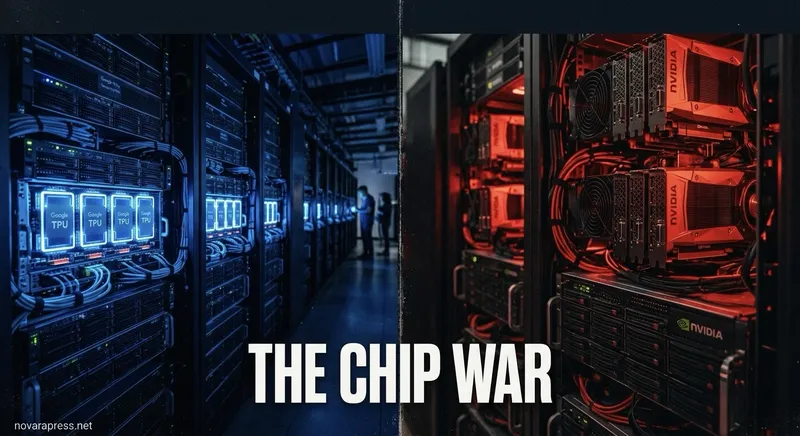
The AI Gold Rush Just Entered Its Most Dangerous Phase
Google is competing with Nvidia for dominance in the AI chip market, which has significant implications for the global economy. Nvidia previously held a monopoly on AI chip supply, leading to high demand and a market cap exceeding $3 trillion, but this era is coming to an end as new challengers emerge.
novarapress.net
7 min
4/22/2026
What Happens If OpenAI Dies?
Writer Ed Zitron argues that OpenAI faces a severe financing risk because its compute commitments, operating losses and capital requirements greatly exceed its current revenue and available funding sources. He cites reported figures that OpenAI lost $20.9 billion on $13.07 billion of revenue in 2025, generated $5.7 billion in revenue in the first quarter of 2026 while spending $12.1 billion on cost of revenue and training, and is approaching a $40 billion annualized revenue run rate in August 2026. Zitron criticizes annualized revenue as a promotional metric based on a recent four-week period rather than full-year results. Zitron estimates that OpenAI has more than $800 billion in compute-related obligations through 2030, including at least $147 billion expected through the end of 2027 across major cloud and infrastructure providers. He says OpenAI may need to raise $100 billion to $200 billion annually before reaching projected profitability, while its $122 billion March funding round valued it at $852 billion and relied primarily on Amazon, Nvidia and SoftBank. He argues that an Anthropic IPO could make an OpenAI listing more difficult by exposing both companies’ losses and economics to public-market scrutiny. Zitron speculates that a cash shortfall could lead to a rescue fundraising round, a Microsoft acquisition, a merger with Anthropic, or a collapse that disrupts cloud providers and infrastructure companies dependent on OpenAI spending.
wheresyoured.at
44 min
8/18/2026
Nvidia's Risky Business
Nvidia is navigating significant risks as it expands its business in the AI sector. The company's investments and market strategies are critical to its future growth amidst competitive pressures and technological advancements.
stratechery.com
19 min
8/11/2026
Commodification of Intelligence: Good, Bad, and Ugly Circular AI Deals
AI companies are facing criticism for circular financing and customer relationships, with examples including OpenAI raising funds from Microsoft to spend on Microsoft servers and CoreWeave financing debt through Nvidia purchases. Analysts draw parallels to the dot-com bubble of 1999, suggesting that current circular investments may lead to a similar outcome.
emergingtrajectories.com
8 min
7/29/2026
The AI Gold Rush Just Entered Its Most Dangerous Phase
Google is competing with Nvidia for dominance in the AI chip market, which has significant implications for the global economy. Nvidia previously held a monopoly on AI chip supply, leading to high demand and a market cap exceeding $3 trillion, but this era is coming to an end as new challengers emerge.
novarapress.net
7 min
4/22/2026
Don't Look Up
A premium newsletter is available for $70 a year or $7 a month, offering weekly content ranging from 5,000 to 18,000 words. The newsletter includes detailed analyses of NVIDIA, Anthropic, and OpenAI's finances, as well as insights into the AI bubble and guides on private credit and equity.
wheresyoured.at
40 min
8/11/2026
What Happens If OpenAI Dies?
Writer Ed Zitron argues that OpenAI faces a severe financing risk because its compute commitments, operating losses and capital requirements greatly exceed its current revenue and available funding sources. He cites reported figures that OpenAI lost $20.9 billion on $13.07 billion of revenue in 2025, generated $5.7 billion in revenue in the first quarter of 2026 while spending $12.1 billion on cost of revenue and training, and is approaching a $40 billion annualized revenue run rate in August 2026. Zitron criticizes annualized revenue as a promotional metric based on a recent four-week period rather than full-year results. Zitron estimates that OpenAI has more than $800 billion in compute-related obligations through 2030, including at least $147 billion expected through the end of 2027 across major cloud and infrastructure providers. He says OpenAI may need to raise $100 billion to $200 billion annually before reaching projected profitability, while its $122 billion March funding round valued it at $852 billion and relied primarily on Amazon, Nvidia and SoftBank. He argues that an Anthropic IPO could make an OpenAI listing more difficult by exposing both companies’ losses and economics to public-market scrutiny. Zitron speculates that a cash shortfall could lead to a rescue fundraising round, a Microsoft acquisition, a merger with Anthropic, or a collapse that disrupts cloud providers and infrastructure companies dependent on OpenAI spending.
wheresyoured.at
44 min
8/18/2026
The AI Demand Bubble
The AI demand bubble is analyzed through detailed financial assessments of companies like NVIDIA, Anthropic, and OpenAI. Subscription to a premium newsletter provides in-depth insights into the AI sector and related financial topics.
wheresyoured.at
39 min
8/4/2026
The AI Gold Rush Just Entered Its Most Dangerous Phase
Google is competing with Nvidia for dominance in the AI chip market, which has significant implications for the global economy. Nvidia previously held a monopoly on AI chip supply, leading to high demand and a market cap exceeding $3 trillion, but this era is coming to an end as new challengers emerge.
novarapress.net
7 min
4/22/2026
Don't Look Up
A premium newsletter is available for $70 a year or $7 a month, offering weekly content ranging from 5,000 to 18,000 words. The newsletter includes detailed analyses of NVIDIA, Anthropic, and OpenAI's finances, as well as insights into the AI bubble and guides on private credit and equity.
wheresyoured.at
40 min
8/11/2026
Commodification of Intelligence: Good, Bad, and Ugly Circular AI Deals
AI companies are facing criticism for circular financing and customer relationships, with examples including OpenAI raising funds from Microsoft to spend on Microsoft servers and CoreWeave financing debt through Nvidia purchases. Analysts draw parallels to the dot-com bubble of 1999, suggesting that current circular investments may lead to a similar outcome.
emergingtrajectories.com
8 min
7/29/2026
No more articles to load