
Apple ML Research: Muse Spark Open with MLX on Mac Studio
MLX on Macs with Apple silicon lets AI researchers and developers experiment locally with the latest models and methods in a private environment. The source identifies local experimentation as a use case for MLX on Mac hardware but provides no further details about distributed inference, RDMA, model support, performance, or availability.
machinelearning.apple.com
1 min
11h ago

What happens when a GPU reads memory
A reverse-engineering study traces a global-memory load on an Nvidia RTX 4090 from a CUDA vector-add kernel through registers, caches, address translation, interconnects and GDDR6X DRAM. Each 32-thread warp executes an LDG.E instruction that requests four bytes per lane; for contiguous floats, the hardware coalesces those requests into four 32-byte sectors, or one 128-byte cache line. The RTX 4090’s virtually indexed and tagged L1 cache is four-way set-associative and returns hits in about 15.4 ns, or 40 cycles at a locked 2.6 GHz core clock. An L1 miss undergoes virtual-to-physical translation through a per-SM, 16-entry TLB shared across warps. Measurements found TLB misses cost about 4.4 ns, suggesting a larger, fast on-chip translation cache beyond it. Physical requests cross to one of 36 L2 slices, each a 2 MiB, 16-way set-associative cache; L2 hits take about 127 ns. On an L2 miss, one of 12 memory controllers accesses its associated 2 GiB GDDR6X chip. A contiguous 128-byte request requires a DRAM row activation and four column reads. The measured DRAM round trip, including cache and interconnect travel, is about 255 ns or 660 cycles. Other resident warps issue work while a warp waits on the load dependency, helping hide that latency.
blog.doubleword.ai
10 min
8/21/2026
AI usage patterns in software teams
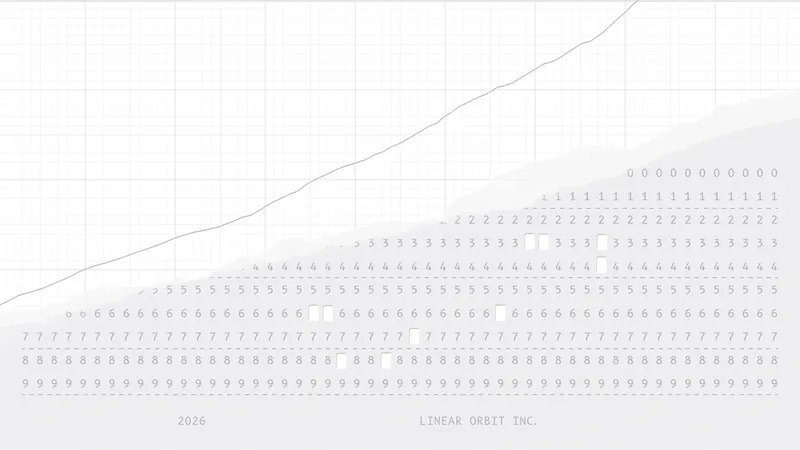
Linear’s aggregated data from paid workspaces shows AI use spreading across software-team functions and correlating with higher software-development activity through 2026. From January to June 2026, the share of users active on Linear AI features more than doubled in every measured function: product rose from 12% to 34%, engineering from 12% to 30%, design from 6% to 22%, and go-to-market from 5% to 18%. Adoption was similar across company sizes, while CEOs at companies with 201 or more employees increased from 9% to 36%. These figures cover AI interactions inside Linear, including in-app and Slack conversations and agent sessions, rather than all AI use. AI agents and MCP created 2.435 million Linear issues in the week of August 3, 2026, compared with 2.481 million created by people and integrations. Pull requests opened per workspace were 111% above the June 2024 baseline by June 2026. In a fixed cohort, workspaces connected to coding agents rose from 21 to 65 pull requests per team per week over two years, while teams without a connected agent rose from 8 to 10. The share of product users attaching pull requests increased from 3% in June 2024 to 10% in June 2026, and designers rose from 1% to 8%. Linear found that time spent on existing coordination work generally increased or held steady, while AI chat and agent work added new activity; it does not measure whether the added output produced positive business outcomes.
linear.app
25 min
8/18/2026

AI-Generated GitHub Copilot “Autofix” Allowed Compromise of Snowflake's Jira
Wiz Red Agent exploited a GitHub Actions vulnerability created by GitHub Copilot Autofix, gaining access to sensitive data in Snowflake’s internal Jira. This process was carried out autonomously, assessing the potential impact without human intervention.
wiz.io
5 min
8/17/2026
![The Life and Death of Direct File [pdf]](https://pub-90f0ac00d93c47daac3e1d2cdd28d496.r2.dev/articles/a2f4fe53b19bff4ecd1976a61d669206.webp)
The Life and Death of Direct File [pdf]
A PDF titled “The Life and Death of Direct File” is available from UC Berkeley’s School of Information website. The source provides no details about the document’s subject matter, publication date, authorship, findings, or conclusions. The link was posted by ronbenton and received a score of 210 points with 111 comments.
ischool.berkeley.edu
1 min
8/17/2026
Auto-research with codex: How I achieved a 232x Faster Kernel
Codex was utilized to achieve a 232x faster kernel for the qr_v2 problem in GPU mode. The implementation involved optimizing the blocked Householder algorithm and introducing idea diversity to enhance performance.
sankalp.bearblog.dev
26 min
8/15/2026
DeepSeek V4 Pro 0813
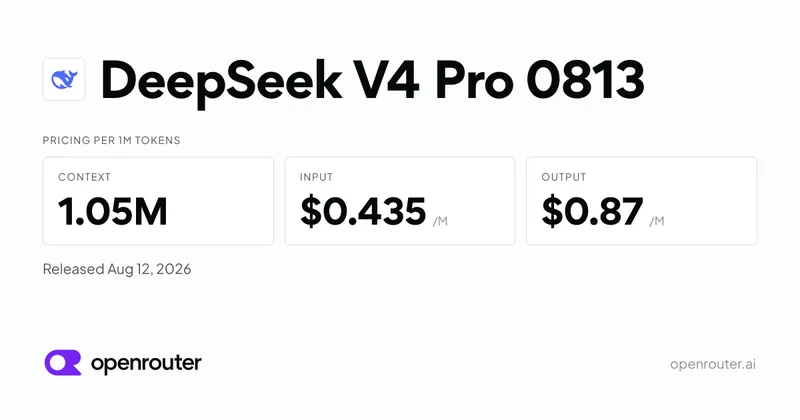
DeepSeek V4 Pro 0813 is hosted by a single provider with OpenRouter forwarding requests directly. Average customer prices are often lower than listed due to caching and discounts, while performance metrics include throughput (tokens per second), latency (total round-trip time), and TTFT (time-to-first-token).
openrouter.ai
1 min
8/12/2026


What's the best programming language for coding agents?
Dynamically typed programming languages are generally more token efficient in LLMs compared to statically typed languages due to their ability to omit explicit type declarations. This efficiency leads to lower token costs when coding agents.
danluu.com
53 min
8/10/2026

Qwen3.8 Max now ranked as the best overall model by agentic index
An independent analysis of AI provides a personalized model recommender based on user priorities for intelligence, speed, and cost. Users can compare AI agents across capabilities, pricing, and platform support, and access premium plans for expanded benchmark data and industry reports.
artificialanalysis.ai
2 min
8/6/2026
Apple ML Research: Muse Spark Open with MLX on Mac Studio
MLX on Macs with Apple silicon lets AI researchers and developers experiment locally with the latest models and methods in a private environment. The source identifies local experimentation as a use case for MLX on Mac hardware but provides no further details about distributed inference, RDMA, model support, performance, or availability.
machinelearning.apple.com
1 min
11h ago
AI usage patterns in software teams
Linear’s aggregated data from paid workspaces shows AI use spreading across software-team functions and correlating with higher software-development activity through 2026. From January to June 2026, the share of users active on Linear AI features more than doubled in every measured function: product rose from 12% to 34%, engineering from 12% to 30%, design from 6% to 22%, and go-to-market from 5% to 18%. Adoption was similar across company sizes, while CEOs at companies with 201 or more employees increased from 9% to 36%. These figures cover AI interactions inside Linear, including in-app and Slack conversations and agent sessions, rather than all AI use. AI agents and MCP created 2.435 million Linear issues in the week of August 3, 2026, compared with 2.481 million created by people and integrations. Pull requests opened per workspace were 111% above the June 2024 baseline by June 2026. In a fixed cohort, workspaces connected to coding agents rose from 21 to 65 pull requests per team per week over two years, while teams without a connected agent rose from 8 to 10. The share of product users attaching pull requests increased from 3% in June 2024 to 10% in June 2026, and designers rose from 1% to 8%. Linear found that time spent on existing coordination work generally increased or held steady, while AI chat and agent work added new activity; it does not measure whether the added output produced positive business outcomes.
linear.app
25 min
8/18/2026
The Life and Death of Direct File [pdf]
A PDF titled “The Life and Death of Direct File” is available from UC Berkeley’s School of Information website. The source provides no details about the document’s subject matter, publication date, authorship, findings, or conclusions. The link was posted by ronbenton and received a score of 210 points with 111 comments.
ischool.berkeley.edu
1 min
8/17/2026
DeepSeek V4 Pro 0813
DeepSeek V4 Pro 0813 is hosted by a single provider with OpenRouter forwarding requests directly. Average customer prices are often lower than listed due to caching and discounts, while performance metrics include throughput (tokens per second), latency (total round-trip time), and TTFT (time-to-first-token).
openrouter.ai
1 min
8/12/2026
What's the best programming language for coding agents?
Dynamically typed programming languages are generally more token efficient in LLMs compared to statically typed languages due to their ability to omit explicit type declarations. This efficiency leads to lower token costs when coding agents.
danluu.com
53 min
8/10/2026
What happens when a GPU reads memory
A reverse-engineering study traces a global-memory load on an Nvidia RTX 4090 from a CUDA vector-add kernel through registers, caches, address translation, interconnects and GDDR6X DRAM. Each 32-thread warp executes an LDG.E instruction that requests four bytes per lane; for contiguous floats, the hardware coalesces those requests into four 32-byte sectors, or one 128-byte cache line. The RTX 4090’s virtually indexed and tagged L1 cache is four-way set-associative and returns hits in about 15.4 ns, or 40 cycles at a locked 2.6 GHz core clock. An L1 miss undergoes virtual-to-physical translation through a per-SM, 16-entry TLB shared across warps. Measurements found TLB misses cost about 4.4 ns, suggesting a larger, fast on-chip translation cache beyond it. Physical requests cross to one of 36 L2 slices, each a 2 MiB, 16-way set-associative cache; L2 hits take about 127 ns. On an L2 miss, one of 12 memory controllers accesses its associated 2 GiB GDDR6X chip. A contiguous 128-byte request requires a DRAM row activation and four column reads. The measured DRAM round trip, including cache and interconnect travel, is about 255 ns or 660 cycles. Other resident warps issue work while a warp waits on the load dependency, helping hide that latency.
blog.doubleword.ai
10 min
8/21/2026
AI-Generated GitHub Copilot “Autofix” Allowed Compromise of Snowflake's Jira
Wiz Red Agent exploited a GitHub Actions vulnerability created by GitHub Copilot Autofix, gaining access to sensitive data in Snowflake’s internal Jira. This process was carried out autonomously, assessing the potential impact without human intervention.
wiz.io
5 min
8/17/2026
Auto-research with codex: How I achieved a 232x Faster Kernel
Codex was utilized to achieve a 232x faster kernel for the qr_v2 problem in GPU mode. The implementation involved optimizing the blocked Householder algorithm and introducing idea diversity to enhance performance.
sankalp.bearblog.dev
26 min
8/15/2026
What I learned by putting GitHub Copilot behind a MitM proxy
GitHub Copilot's network traffic and memory utilization were analyzed using a MITM proxy. The findings reveal insights into how context is utilized as a product within the AI tool.
lighthousenewsletter.com
16 min
8/11/2026
Qwen3.8 Max now ranked as the best overall model by agentic index
An independent analysis of AI provides a personalized model recommender based on user priorities for intelligence, speed, and cost. Users can compare AI agents across capabilities, pricing, and platform support, and access premium plans for expanded benchmark data and industry reports.
artificialanalysis.ai
2 min
8/6/2026
Apple ML Research: Muse Spark Open with MLX on Mac Studio
MLX on Macs with Apple silicon lets AI researchers and developers experiment locally with the latest models and methods in a private environment. The source identifies local experimentation as a use case for MLX on Mac hardware but provides no further details about distributed inference, RDMA, model support, performance, or availability.
machinelearning.apple.com
1 min
11h ago
AI-Generated GitHub Copilot “Autofix” Allowed Compromise of Snowflake's Jira
Wiz Red Agent exploited a GitHub Actions vulnerability created by GitHub Copilot Autofix, gaining access to sensitive data in Snowflake’s internal Jira. This process was carried out autonomously, assessing the potential impact without human intervention.
wiz.io
5 min
8/17/2026
DeepSeek V4 Pro 0813
DeepSeek V4 Pro 0813 is hosted by a single provider with OpenRouter forwarding requests directly. Average customer prices are often lower than listed due to caching and discounts, while performance metrics include throughput (tokens per second), latency (total round-trip time), and TTFT (time-to-first-token).
openrouter.ai
1 min
8/12/2026
Qwen3.8 Max now ranked as the best overall model by agentic index
An independent analysis of AI provides a personalized model recommender based on user priorities for intelligence, speed, and cost. Users can compare AI agents across capabilities, pricing, and platform support, and access premium plans for expanded benchmark data and industry reports.
artificialanalysis.ai
2 min
8/6/2026
What happens when a GPU reads memory
A reverse-engineering study traces a global-memory load on an Nvidia RTX 4090 from a CUDA vector-add kernel through registers, caches, address translation, interconnects and GDDR6X DRAM. Each 32-thread warp executes an LDG.E instruction that requests four bytes per lane; for contiguous floats, the hardware coalesces those requests into four 32-byte sectors, or one 128-byte cache line. The RTX 4090’s virtually indexed and tagged L1 cache is four-way set-associative and returns hits in about 15.4 ns, or 40 cycles at a locked 2.6 GHz core clock. An L1 miss undergoes virtual-to-physical translation through a per-SM, 16-entry TLB shared across warps. Measurements found TLB misses cost about 4.4 ns, suggesting a larger, fast on-chip translation cache beyond it. Physical requests cross to one of 36 L2 slices, each a 2 MiB, 16-way set-associative cache; L2 hits take about 127 ns. On an L2 miss, one of 12 memory controllers accesses its associated 2 GiB GDDR6X chip. A contiguous 128-byte request requires a DRAM row activation and four column reads. The measured DRAM round trip, including cache and interconnect travel, is about 255 ns or 660 cycles. Other resident warps issue work while a warp waits on the load dependency, helping hide that latency.
blog.doubleword.ai
10 min
8/21/2026
The Life and Death of Direct File [pdf]
A PDF titled “The Life and Death of Direct File” is available from UC Berkeley’s School of Information website. The source provides no details about the document’s subject matter, publication date, authorship, findings, or conclusions. The link was posted by ronbenton and received a score of 210 points with 111 comments.
ischool.berkeley.edu
1 min
8/17/2026
AI usage patterns in software teams
Linear’s aggregated data from paid workspaces shows AI use spreading across software-team functions and correlating with higher software-development activity through 2026. From January to June 2026, the share of users active on Linear AI features more than doubled in every measured function: product rose from 12% to 34%, engineering from 12% to 30%, design from 6% to 22%, and go-to-market from 5% to 18%. Adoption was similar across company sizes, while CEOs at companies with 201 or more employees increased from 9% to 36%. These figures cover AI interactions inside Linear, including in-app and Slack conversations and agent sessions, rather than all AI use. AI agents and MCP created 2.435 million Linear issues in the week of August 3, 2026, compared with 2.481 million created by people and integrations. Pull requests opened per workspace were 111% above the June 2024 baseline by June 2026. In a fixed cohort, workspaces connected to coding agents rose from 21 to 65 pull requests per team per week over two years, while teams without a connected agent rose from 8 to 10. The share of product users attaching pull requests increased from 3% in June 2024 to 10% in June 2026, and designers rose from 1% to 8%. Linear found that time spent on existing coordination work generally increased or held steady, while AI chat and agent work added new activity; it does not measure whether the added output produced positive business outcomes.
linear.app
25 min
8/18/2026
Auto-research with codex: How I achieved a 232x Faster Kernel
Codex was utilized to achieve a 232x faster kernel for the qr_v2 problem in GPU mode. The implementation involved optimizing the blocked Householder algorithm and introducing idea diversity to enhance performance.
sankalp.bearblog.dev
26 min
8/15/2026
What's the best programming language for coding agents?
Dynamically typed programming languages are generally more token efficient in LLMs compared to statically typed languages due to their ability to omit explicit type declarations. This efficiency leads to lower token costs when coding agents.
danluu.com
53 min
8/10/2026