
Seeing beyond BMI: Estimating cardiometabolic risk with smartphone imagery
Google Research introduced PhotoScan, an investigational deep-learning system that estimates body-fat percentage, Android-to-Gynoid fat ratio and Visceral-to-Subcutaneous fat ratio from standard 2D smartphone photos. The system was pre-trained on more than 35,000 UK Biobank participant records and fine-tuned using a cohort of 677 adults. It is intended to estimate body-composition markers associated with insulin resistance, which is commonly defined by a HOMA-IR score above 2.9 and can precede type 2 diabetes by years. In five-fold cross-validation on the PhotoBIA cohort, PhotoScan produced a mean absolute error of 2.15 for body-fat percentage, compared with 2.91 for smartwatch bioelectrical-impedance analysis. Independent validation in the MetabolicMosaic cohort produced errors of 2.13 for body-fat percentage, 0.085 for the Android-to-Gynoid ratio and 0.085 for the Visceral-to-Subcutaneous ratio. A gradient-boosting model using demographics plus PhotoScan metrics reached an AUROC of 0.760 for identifying insulin resistance, versus 0.692 for demographics alone and 0.773 for demographics plus DXA scan data. Adding smartwatch bioelectrical-impedance data did not improve insulin-resistance classification. Google describes PhotoScan as a research prototype rather than a clinical screening product.
research.google
6 min
8/20/2026

Semaglutide linked to 26% lower 5-year predicted dementia risk
Semaglutide is associated with a 26% reduction in the predicted risk of developing dementia over five years. This finding suggests potential cognitive benefits of the drug beyond its use for weight management and diabetes.
alz-journals.onlinelibrary.wiley.com
1 min
8/15/2026

Taxi drivers rarely die of Alzheimer's
Taxi and ambulance drivers have a lower risk of dying from Alzheimer’s disease compared to most other occupations, according to a 2024 study analyzing nearly 9 million U.S. death certificates. The study suggests that the reliance on complex mental maps and spatial reasoning in these jobs may offer protective benefits for brain health.
theconversation.com
5 min
8/9/2026

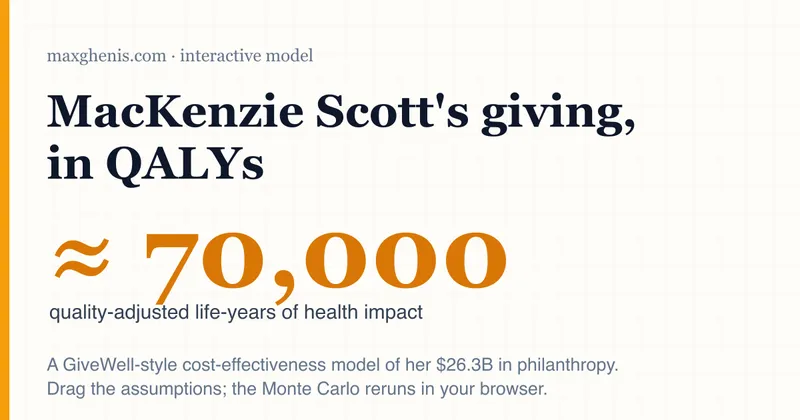
MacKenzie Scott's giving, in quality-adjusted life years
A Monte Carlo cost-effectiveness model estimates the health impact of MacKenzie Scott's $26.3 billion in philanthropy using Quality-Adjusted Life Years (QALYs). The model allows users to adjust assumptions, with results influenced by varying levels of trust in the cited effects of each study.
maxghenis.com
6 min
7/13/2026

Ultrasound imaging of the brain
Ultrasound imaging of the brain can decode visual stimuli from brain activity, offering insights into potential mind interfacing technologies. Current limitations include the need for bulky MRI machines and invasive procedures for brain access.
alephneuro.com
4 min
6/26/2026

Medical students are using popular research tool to pump out misleading studies
Medical students are increasingly using TriNetX, a research platform providing access to anonymized electronic health records for over 300 million patients, to produce studies. Concerns have arisen regarding the quality and reliability of these studies, with many being labeled as misleading.
science.org
7 min
6/25/2026
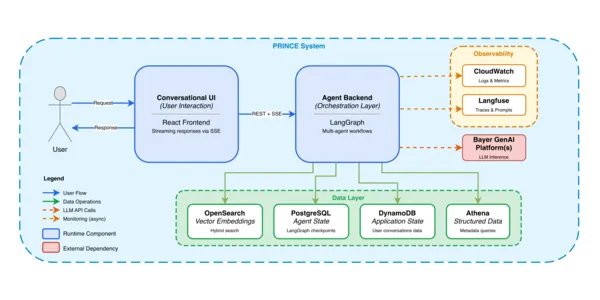
Building reliable agentic AI systems
The Preclinical Information Center (PRINCE) is a cloud-hosted platform developed by Bayer AG and Thoughtworks to enhance drug development in the pharmaceutical industry. PRINCE utilizes Agentic Retrieval-Augmented Generation and Text-to-SQL to integrate and analyze decades of safety study reports, evolving from a keyword-based search to an intelligent research assistant.
martinfowler.com
36 min
6/21/2026

Copper transport drug restores memory and clears toxic Alzheimer's proteins
A new drug targeting copper transport has been shown to restore memory and eliminate toxic proteins associated with Alzheimer's disease. This treatment offers potential therapeutic benefits for cognitive decline in Alzheimer's patients.
monash.edu
1 min
6/15/2026

New drug 'functionally cures' many hepatitis B virus infections
An experimental drug combined with standard antivirals has achieved a "functional cure" for 19% of participants in two trials involving chronic hepatitis B virus (HBV) infections. These results indicate that individuals can control the virus naturally without further treatment after a 6-month regimen.
science.org
5 min
6/8/2026
Seeing beyond BMI: Estimating cardiometabolic risk with smartphone imagery
Google Research introduced PhotoScan, an investigational deep-learning system that estimates body-fat percentage, Android-to-Gynoid fat ratio and Visceral-to-Subcutaneous fat ratio from standard 2D smartphone photos. The system was pre-trained on more than 35,000 UK Biobank participant records and fine-tuned using a cohort of 677 adults. It is intended to estimate body-composition markers associated with insulin resistance, which is commonly defined by a HOMA-IR score above 2.9 and can precede type 2 diabetes by years. In five-fold cross-validation on the PhotoBIA cohort, PhotoScan produced a mean absolute error of 2.15 for body-fat percentage, compared with 2.91 for smartwatch bioelectrical-impedance analysis. Independent validation in the MetabolicMosaic cohort produced errors of 2.13 for body-fat percentage, 0.085 for the Android-to-Gynoid ratio and 0.085 for the Visceral-to-Subcutaneous ratio. A gradient-boosting model using demographics plus PhotoScan metrics reached an AUROC of 0.760 for identifying insulin resistance, versus 0.692 for demographics alone and 0.773 for demographics plus DXA scan data. Adding smartwatch bioelectrical-impedance data did not improve insulin-resistance classification. Google describes PhotoScan as a research prototype rather than a clinical screening product.
research.google
6 min
8/20/2026
Taxi drivers rarely die of Alzheimer's
Taxi and ambulance drivers have a lower risk of dying from Alzheimer’s disease compared to most other occupations, according to a 2024 study analyzing nearly 9 million U.S. death certificates. The study suggests that the reliance on complex mental maps and spatial reasoning in these jobs may offer protective benefits for brain health.
theconversation.com
5 min
8/9/2026
MacKenzie Scott's giving, in quality-adjusted life years
A Monte Carlo cost-effectiveness model estimates the health impact of MacKenzie Scott's $26.3 billion in philanthropy using Quality-Adjusted Life Years (QALYs). The model allows users to adjust assumptions, with results influenced by varying levels of trust in the cited effects of each study.
maxghenis.com
6 min
7/13/2026
Medical students are using popular research tool to pump out misleading studies
Medical students are increasingly using TriNetX, a research platform providing access to anonymized electronic health records for over 300 million patients, to produce studies. Concerns have arisen regarding the quality and reliability of these studies, with many being labeled as misleading.
science.org
7 min
6/25/2026
Copper transport drug restores memory and clears toxic Alzheimer's proteins
A new drug targeting copper transport has been shown to restore memory and eliminate toxic proteins associated with Alzheimer's disease. This treatment offers potential therapeutic benefits for cognitive decline in Alzheimer's patients.
monash.edu
1 min
6/15/2026
Semaglutide linked to 26% lower 5-year predicted dementia risk
Semaglutide is associated with a 26% reduction in the predicted risk of developing dementia over five years. This finding suggests potential cognitive benefits of the drug beyond its use for weight management and diabetes.
alz-journals.onlinelibrary.wiley.com
1 min
8/15/2026
The privacy problems hidden in your period tracker
Some period tracking apps are sharing users' health data, raising privacy concerns. Stardust claims to protect user data but may have different definitions of privacy compared to users, according to a new report.
bbc.com
9 min
7/16/2026
Ultrasound imaging of the brain
Ultrasound imaging of the brain can decode visual stimuli from brain activity, offering insights into potential mind interfacing technologies. Current limitations include the need for bulky MRI machines and invasive procedures for brain access.
alephneuro.com
4 min
6/26/2026
Building reliable agentic AI systems
The Preclinical Information Center (PRINCE) is a cloud-hosted platform developed by Bayer AG and Thoughtworks to enhance drug development in the pharmaceutical industry. PRINCE utilizes Agentic Retrieval-Augmented Generation and Text-to-SQL to integrate and analyze decades of safety study reports, evolving from a keyword-based search to an intelligent research assistant.
martinfowler.com
36 min
6/21/2026
New drug 'functionally cures' many hepatitis B virus infections
An experimental drug combined with standard antivirals has achieved a "functional cure" for 19% of participants in two trials involving chronic hepatitis B virus (HBV) infections. These results indicate that individuals can control the virus naturally without further treatment after a 6-month regimen.
science.org
5 min
6/8/2026
Seeing beyond BMI: Estimating cardiometabolic risk with smartphone imagery
Google Research introduced PhotoScan, an investigational deep-learning system that estimates body-fat percentage, Android-to-Gynoid fat ratio and Visceral-to-Subcutaneous fat ratio from standard 2D smartphone photos. The system was pre-trained on more than 35,000 UK Biobank participant records and fine-tuned using a cohort of 677 adults. It is intended to estimate body-composition markers associated with insulin resistance, which is commonly defined by a HOMA-IR score above 2.9 and can precede type 2 diabetes by years. In five-fold cross-validation on the PhotoBIA cohort, PhotoScan produced a mean absolute error of 2.15 for body-fat percentage, compared with 2.91 for smartwatch bioelectrical-impedance analysis. Independent validation in the MetabolicMosaic cohort produced errors of 2.13 for body-fat percentage, 0.085 for the Android-to-Gynoid ratio and 0.085 for the Visceral-to-Subcutaneous ratio. A gradient-boosting model using demographics plus PhotoScan metrics reached an AUROC of 0.760 for identifying insulin resistance, versus 0.692 for demographics alone and 0.773 for demographics plus DXA scan data. Adding smartwatch bioelectrical-impedance data did not improve insulin-resistance classification. Google describes PhotoScan as a research prototype rather than a clinical screening product.
research.google
6 min
8/20/2026
The privacy problems hidden in your period tracker
Some period tracking apps are sharing users' health data, raising privacy concerns. Stardust claims to protect user data but may have different definitions of privacy compared to users, according to a new report.
bbc.com
9 min
7/16/2026
Medical students are using popular research tool to pump out misleading studies
Medical students are increasingly using TriNetX, a research platform providing access to anonymized electronic health records for over 300 million patients, to produce studies. Concerns have arisen regarding the quality and reliability of these studies, with many being labeled as misleading.
science.org
7 min
6/25/2026
New drug 'functionally cures' many hepatitis B virus infections
An experimental drug combined with standard antivirals has achieved a "functional cure" for 19% of participants in two trials involving chronic hepatitis B virus (HBV) infections. These results indicate that individuals can control the virus naturally without further treatment after a 6-month regimen.
science.org
5 min
6/8/2026
Semaglutide linked to 26% lower 5-year predicted dementia risk
Semaglutide is associated with a 26% reduction in the predicted risk of developing dementia over five years. This finding suggests potential cognitive benefits of the drug beyond its use for weight management and diabetes.
alz-journals.onlinelibrary.wiley.com
1 min
8/15/2026
MacKenzie Scott's giving, in quality-adjusted life years
A Monte Carlo cost-effectiveness model estimates the health impact of MacKenzie Scott's $26.3 billion in philanthropy using Quality-Adjusted Life Years (QALYs). The model allows users to adjust assumptions, with results influenced by varying levels of trust in the cited effects of each study.
maxghenis.com
6 min
7/13/2026
Building reliable agentic AI systems
The Preclinical Information Center (PRINCE) is a cloud-hosted platform developed by Bayer AG and Thoughtworks to enhance drug development in the pharmaceutical industry. PRINCE utilizes Agentic Retrieval-Augmented Generation and Text-to-SQL to integrate and analyze decades of safety study reports, evolving from a keyword-based search to an intelligent research assistant.
martinfowler.com
36 min
6/21/2026
Taxi drivers rarely die of Alzheimer's
Taxi and ambulance drivers have a lower risk of dying from Alzheimer’s disease compared to most other occupations, according to a 2024 study analyzing nearly 9 million U.S. death certificates. The study suggests that the reliance on complex mental maps and spatial reasoning in these jobs may offer protective benefits for brain health.
theconversation.com
5 min
8/9/2026
Ultrasound imaging of the brain
Ultrasound imaging of the brain can decode visual stimuli from brain activity, offering insights into potential mind interfacing technologies. Current limitations include the need for bulky MRI machines and invasive procedures for brain access.
alephneuro.com
4 min
6/26/2026
Copper transport drug restores memory and clears toxic Alzheimer's proteins
A new drug targeting copper transport has been shown to restore memory and eliminate toxic proteins associated with Alzheimer's disease. This treatment offers potential therapeutic benefits for cognitive decline in Alzheimer's patients.
monash.edu
1 min
6/15/2026