FLUX 3 Image Klein
Black Forest Labs has released FLUX 3 Image Klein, a 5.6-billion-parameter open-weights model for text-to-image generation, image editing, and multi-reference generation using up to 10 reference images. The model supports native 4K output, bounding-box controls for element placement or constrained edits, and pixel-perfect editing. Base and step-distilled versions are available under the FLUX Kommunity License, alongside FP8, INT8, and NVFP4 builds developed with NVIDIA support. Black Forest Labs says its internal evaluations rank Klein first among compared open-weight models for text-to-image generation, multi-reference generation, and image editing, ahead of larger models including Qwen-Image 2.1 and Krea 2. The company also says Klein scored above Ideogram V4.5 and FLUX.2 [pro] in its comparisons. INT8 weights let the model run through ComfyUI or Diffusers on NVIDIA GeForce RTX GPUs with 8GB of VRAM; the company reports roughly four seconds per 1-megapixel image on an RTX 5090 and under nine seconds on an RTX 4070. The distilled API model, flux-3-image-klein, starts at $0.009 per 1K image. Free commercial use applies to individuals and companies with under $5 million in annual revenue, while larger organizations require self-hosted licensing or API access.
bfl.ai
5 min
6h ago
DeepSeek-v4-flash-vision-exp
DeepSeek’s experimental deepseek-v4-flash-vision-exp model accepts image and text inputs for tasks including image description, screenshot text reading, and chart analysis. It supports JPEG, PNG, GIF, and WebP files, detecting formats from file contents rather than filenames or declared MIME types. Developers can provide images as inline base64 data URLs, public HTTP(S) URLs, or Files API uploads referenced by file_id. The model is available through OpenAI-compatible Chat Completions and Responses APIs, as well as DeepSeek’s Anthropic-compatible Messages endpoint. Inline image data counts toward a 48 MiB request-body limit. External image URLs may contain up to 8,192 characters, must download within 60 seconds, and are limited to 32 MiB per image. Files API references support images up to 64 MiB and allow uploaded images to be reused. Requests can contain up to 600 images, with total image limits of 64 MiB without file_id images and up to 200 MiB when file_id images are included. DeepSeek resizes images before inference and caps usage at 384 image tokens each. Images below about 384×384 pixels are enlarged, while larger images are reduced to roughly 800×800 pixels. A low-detail option downsizes image_url inputs to 512×512 for faster, cheaper processing. Images are accepted only in user messages for Chat Completions, and only the vision model supports them.
api-docs.deepseek.com
6 min
8/21/2026
Geolocating a random island using geometry and CUDA programming
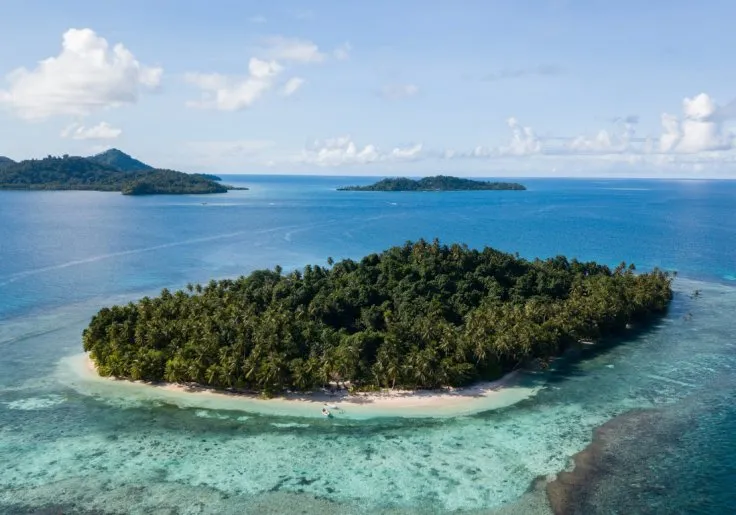
A geometry- and GPU-based geolocation process identified Oan resort on an islet in the Federated States of Micronesia as the location in Gralhix OSINT Exercise #004. The islet’s coordinates are 7.363444° N, 151.755750° E, and the camera was determined to face northwest, at a bearing of about 324.97°. The process found no useful EXIF or GPS data in the 736-by-515 WEBP image. It modeled three visible landmasses as a triangle, then searched OpenStreetMap’s 882 MB global land-polygon dataset for matching island configurations. Tropical-latitude, local-density, clustering, geometric, open-water, coral-cay-shape, vegetation, and elevation filters reduced more than 80.69 million candidate island triplets to 26. An NVIDIA GeForce RTX 3050 evaluated the initial 80.7 million triples in 204.1 milliseconds using one CUDA thread per triple, producing 158,784 initial matches. Further checks used Sentinel-2 imagery from Element84’s Earth Search catalog to require a normalized difference vegetation index above 0.6, and Copernicus GLO-30 elevation data to require a low resort islet and nearby terrain between 100 and 500 meters high. Manual satellite-map inspection of the final candidates selected the Micronesian location.
yassa9.github.io
10 min
8/19/2026
Roboflow Playground: Try and Compare 30 Computer Vision Models
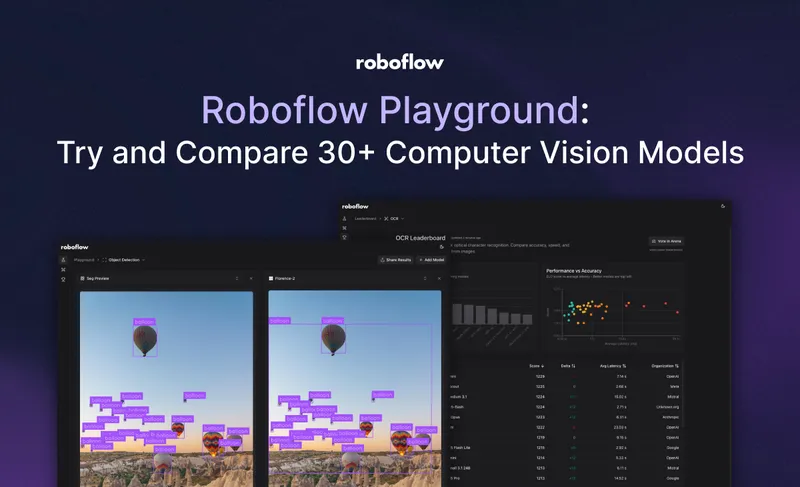
Roboflow launched Roboflow Playground on September 30, 2025, a browser-based tool for testing and comparing more than 30 computer-vision models. Users can submit the same image and prompt to as many as five compatible zero-shot models simultaneously, including models from Anthropic, OpenAI, Meta, Google, Mistral, and open-weight providers such as Florence-2, Qwen3.8 27B, Muse Glimmer 30B, and Llama-series releases. Playground supports object detection, image classification, optical character recognition, captioning, and open-prompt visual question answering. Available models vary by task: Gemini 3.6 Flash and SAM 3 can be selected for object detection, while SAM 3 cannot be used for visual question answering. The service lets users upload images, enter prompts, and inspect output side by side without separately provisioning cloud APIs or infrastructure for open-weight models. For object detection, Playground draws bounding boxes returned by each model. In a Roboflow example using prompts for a book and coffee, Florence-2 and YOLO World identified both objects with accurate boxes, while Claude 3.5 Sonnet located them generally but did not produce precise boxes. In an open-prompt example, Claude 4 Sonnet and GPT-4.1 identified a coffee cup on a table and described the surrounding scene. Roboflow says Playground is available free to try and that it plans to add models as they become available.
blog.roboflow.com
4 min
8/17/2026
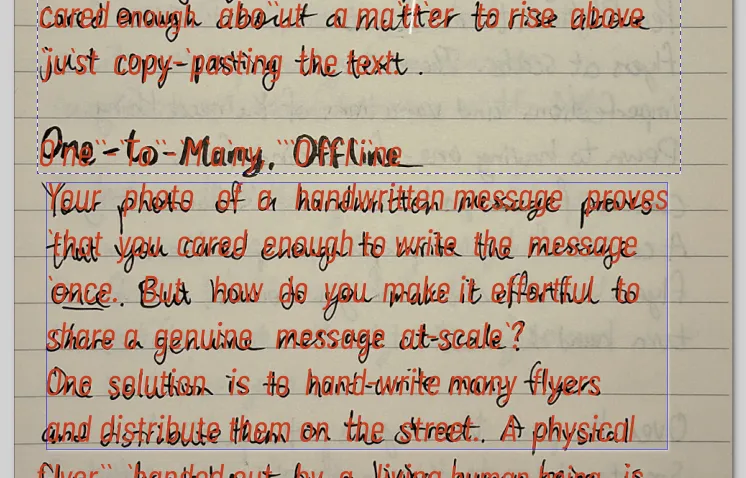
Proof of care in the age of AI
Text was handwritten and photographed, then converted into a copy-pasteable format using an SVG file with a text overlay. The design incorporates Barlow Condensed font and adjusts spacing with JavaScript to match the original handwriting dimensions.
jacobfilipp.com
1 min
7/14/2026
Claude-real-video - any LLM can watch a video
Claude-real-video allows Claude or any LLM to process videos by extracting scene-aware, deduplicated frames and transcripts from a URL or local file. This tool operates locally and provides a more comprehensive understanding of video content compared to traditional methods that rely on fixed frame sampling.
github.com
5 min
7/3/2026
FLUX 3 Image Klein
Black Forest Labs has released FLUX 3 Image Klein, a 5.6-billion-parameter open-weights model for text-to-image generation, image editing, and multi-reference generation using up to 10 reference images. The model supports native 4K output, bounding-box controls for element placement or constrained edits, and pixel-perfect editing. Base and step-distilled versions are available under the FLUX Kommunity License, alongside FP8, INT8, and NVFP4 builds developed with NVIDIA support. Black Forest Labs says its internal evaluations rank Klein first among compared open-weight models for text-to-image generation, multi-reference generation, and image editing, ahead of larger models including Qwen-Image 2.1 and Krea 2. The company also says Klein scored above Ideogram V4.5 and FLUX.2 [pro] in its comparisons. INT8 weights let the model run through ComfyUI or Diffusers on NVIDIA GeForce RTX GPUs with 8GB of VRAM; the company reports roughly four seconds per 1-megapixel image on an RTX 5090 and under nine seconds on an RTX 4070. The distilled API model, flux-3-image-klein, starts at $0.009 per 1K image. Free commercial use applies to individuals and companies with under $5 million in annual revenue, while larger organizations require self-hosted licensing or API access.
bfl.ai
5 min
6h ago
Geolocating a random island using geometry and CUDA programming
A geometry- and GPU-based geolocation process identified Oan resort on an islet in the Federated States of Micronesia as the location in Gralhix OSINT Exercise #004. The islet’s coordinates are 7.363444° N, 151.755750° E, and the camera was determined to face northwest, at a bearing of about 324.97°. The process found no useful EXIF or GPS data in the 736-by-515 WEBP image. It modeled three visible landmasses as a triangle, then searched OpenStreetMap’s 882 MB global land-polygon dataset for matching island configurations. Tropical-latitude, local-density, clustering, geometric, open-water, coral-cay-shape, vegetation, and elevation filters reduced more than 80.69 million candidate island triplets to 26. An NVIDIA GeForce RTX 3050 evaluated the initial 80.7 million triples in 204.1 milliseconds using one CUDA thread per triple, producing 158,784 initial matches. Further checks used Sentinel-2 imagery from Element84’s Earth Search catalog to require a normalized difference vegetation index above 0.6, and Copernicus GLO-30 elevation data to require a low resort islet and nearby terrain between 100 and 500 meters high. Manual satellite-map inspection of the final candidates selected the Micronesian location.
yassa9.github.io
10 min
8/19/2026
Mistral OCR 4.1
OCR 4.1 is a new OCR service from Mistral AI that includes native paragraph-level bounding box extraction, structural block labels, and block-level confidence scores. Pricing is set at €3.5 per 1000 pages and €4.38 per 1000 annotated pages.
docs.mistral.ai
1 min
8/13/2026
Homomorphically encrypted CIFAR-10 inference in 200ms
Belfort offers live encrypted inference using a ResNet-20 model under fully homomorphic encryption (FHE). The server processes images without ever accessing the original content.
sofar.belfortlabs.cloud
1 min
7/17/2026
Proof of care in the age of AI
Text was handwritten and photographed, then converted into a copy-pasteable format using an SVG file with a text overlay. The design incorporates Barlow Condensed font and adjusts spacing with JavaScript to match the original handwriting dimensions.
jacobfilipp.com
1 min
7/14/2026
DeepSeek-v4-flash-vision-exp
DeepSeek’s experimental deepseek-v4-flash-vision-exp model accepts image and text inputs for tasks including image description, screenshot text reading, and chart analysis. It supports JPEG, PNG, GIF, and WebP files, detecting formats from file contents rather than filenames or declared MIME types. Developers can provide images as inline base64 data URLs, public HTTP(S) URLs, or Files API uploads referenced by file_id. The model is available through OpenAI-compatible Chat Completions and Responses APIs, as well as DeepSeek’s Anthropic-compatible Messages endpoint. Inline image data counts toward a 48 MiB request-body limit. External image URLs may contain up to 8,192 characters, must download within 60 seconds, and are limited to 32 MiB per image. Files API references support images up to 64 MiB and allow uploaded images to be reused. Requests can contain up to 600 images, with total image limits of 64 MiB without file_id images and up to 200 MiB when file_id images are included. DeepSeek resizes images before inference and caps usage at 384 image tokens each. Images below about 384×384 pixels are enlarged, while larger images are reduced to roughly 800×800 pixels. A low-detail option downsizes image_url inputs to 512×512 for faster, cheaper processing. Images are accepted only in user messages for Chat Completions, and only the vision model supports them.
api-docs.deepseek.com
6 min
8/21/2026
Roboflow Playground: Try and Compare 30 Computer Vision Models
Roboflow launched Roboflow Playground on September 30, 2025, a browser-based tool for testing and comparing more than 30 computer-vision models. Users can submit the same image and prompt to as many as five compatible zero-shot models simultaneously, including models from Anthropic, OpenAI, Meta, Google, Mistral, and open-weight providers such as Florence-2, Qwen3.8 27B, Muse Glimmer 30B, and Llama-series releases. Playground supports object detection, image classification, optical character recognition, captioning, and open-prompt visual question answering. Available models vary by task: Gemini 3.6 Flash and SAM 3 can be selected for object detection, while SAM 3 cannot be used for visual question answering. The service lets users upload images, enter prompts, and inspect output side by side without separately provisioning cloud APIs or infrastructure for open-weight models. For object detection, Playground draws bounding boxes returned by each model. In a Roboflow example using prompts for a book and coffee, Florence-2 and YOLO World identified both objects with accurate boxes, while Claude 3.5 Sonnet located them generally but did not produce precise boxes. In an open-prompt example, Claude 4 Sonnet and GPT-4.1 identified a coffee cup on a table and described the surrounding scene. Roboflow says Playground is available free to try and that it plans to add models as they become available.
blog.roboflow.com
4 min
8/17/2026
Kimi K3 Now Available via Telnyx Inference API
Kimi K3, the first 2.8T parameter open-source model, is now on Telnyx Inference. 1M context window, native vision, configurable reasoning. Input $2.70/1M tokens.
telnyx.com
1 min
7/27/2026
Bonsai 27B: A 27B-Class model that runs on a phone
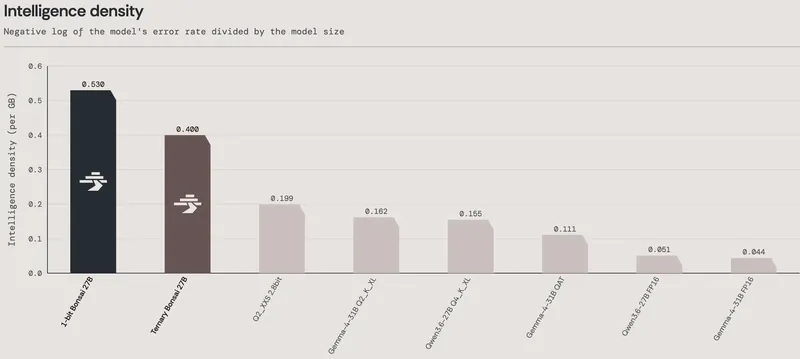
Bonsai 27B is the first 27B-class AI model capable of running on a phone, based on Qwen3.6 27B. It supports multi-step reasoning, structured tool calls, vision tasks, and computer-use agent capabilities.
prismml.com
6 min
7/14/2026
Claude-real-video - any LLM can watch a video
Claude-real-video allows Claude or any LLM to process videos by extracting scene-aware, deduplicated frames and transcripts from a URL or local file. This tool operates locally and provides a more comprehensive understanding of video content compared to traditional methods that rely on fixed frame sampling.
github.com
5 min
7/3/2026
FLUX 3 Image Klein
Black Forest Labs has released FLUX 3 Image Klein, a 5.6-billion-parameter open-weights model for text-to-image generation, image editing, and multi-reference generation using up to 10 reference images. The model supports native 4K output, bounding-box controls for element placement or constrained edits, and pixel-perfect editing. Base and step-distilled versions are available under the FLUX Kommunity License, alongside FP8, INT8, and NVFP4 builds developed with NVIDIA support. Black Forest Labs says its internal evaluations rank Klein first among compared open-weight models for text-to-image generation, multi-reference generation, and image editing, ahead of larger models including Qwen-Image 2.1 and Krea 2. The company also says Klein scored above Ideogram V4.5 and FLUX.2 [pro] in its comparisons. INT8 weights let the model run through ComfyUI or Diffusers on NVIDIA GeForce RTX GPUs with 8GB of VRAM; the company reports roughly four seconds per 1-megapixel image on an RTX 5090 and under nine seconds on an RTX 4070. The distilled API model, flux-3-image-klein, starts at $0.009 per 1K image. Free commercial use applies to individuals and companies with under $5 million in annual revenue, while larger organizations require self-hosted licensing or API access.
bfl.ai
5 min
6h ago
Roboflow Playground: Try and Compare 30 Computer Vision Models
Roboflow launched Roboflow Playground on September 30, 2025, a browser-based tool for testing and comparing more than 30 computer-vision models. Users can submit the same image and prompt to as many as five compatible zero-shot models simultaneously, including models from Anthropic, OpenAI, Meta, Google, Mistral, and open-weight providers such as Florence-2, Qwen3.8 27B, Muse Glimmer 30B, and Llama-series releases. Playground supports object detection, image classification, optical character recognition, captioning, and open-prompt visual question answering. Available models vary by task: Gemini 3.6 Flash and SAM 3 can be selected for object detection, while SAM 3 cannot be used for visual question answering. The service lets users upload images, enter prompts, and inspect output side by side without separately provisioning cloud APIs or infrastructure for open-weight models. For object detection, Playground draws bounding boxes returned by each model. In a Roboflow example using prompts for a book and coffee, Florence-2 and YOLO World identified both objects with accurate boxes, while Claude 3.5 Sonnet located them generally but did not produce precise boxes. In an open-prompt example, Claude 4 Sonnet and GPT-4.1 identified a coffee cup on a table and described the surrounding scene. Roboflow says Playground is available free to try and that it plans to add models as they become available.
blog.roboflow.com
4 min
8/17/2026
Homomorphically encrypted CIFAR-10 inference in 200ms
Belfort offers live encrypted inference using a ResNet-20 model under fully homomorphic encryption (FHE). The server processes images without ever accessing the original content.
sofar.belfortlabs.cloud
1 min
7/17/2026
Claude-real-video - any LLM can watch a video
Claude-real-video allows Claude or any LLM to process videos by extracting scene-aware, deduplicated frames and transcripts from a URL or local file. This tool operates locally and provides a more comprehensive understanding of video content compared to traditional methods that rely on fixed frame sampling.
github.com
5 min
7/3/2026
DeepSeek-v4-flash-vision-exp
DeepSeek’s experimental deepseek-v4-flash-vision-exp model accepts image and text inputs for tasks including image description, screenshot text reading, and chart analysis. It supports JPEG, PNG, GIF, and WebP files, detecting formats from file contents rather than filenames or declared MIME types. Developers can provide images as inline base64 data URLs, public HTTP(S) URLs, or Files API uploads referenced by file_id. The model is available through OpenAI-compatible Chat Completions and Responses APIs, as well as DeepSeek’s Anthropic-compatible Messages endpoint. Inline image data counts toward a 48 MiB request-body limit. External image URLs may contain up to 8,192 characters, must download within 60 seconds, and are limited to 32 MiB per image. Files API references support images up to 64 MiB and allow uploaded images to be reused. Requests can contain up to 600 images, with total image limits of 64 MiB without file_id images and up to 200 MiB when file_id images are included. DeepSeek resizes images before inference and caps usage at 384 image tokens each. Images below about 384×384 pixels are enlarged, while larger images are reduced to roughly 800×800 pixels. A low-detail option downsizes image_url inputs to 512×512 for faster, cheaper processing. Images are accepted only in user messages for Chat Completions, and only the vision model supports them.
api-docs.deepseek.com
6 min
8/21/2026
Mistral OCR 4.1
OCR 4.1 is a new OCR service from Mistral AI that includes native paragraph-level bounding box extraction, structural block labels, and block-level confidence scores. Pricing is set at €3.5 per 1000 pages and €4.38 per 1000 annotated pages.
docs.mistral.ai
1 min
8/13/2026
Geolocating a random island using geometry and CUDA programming
A geometry- and GPU-based geolocation process identified Oan resort on an islet in the Federated States of Micronesia as the location in Gralhix OSINT Exercise #004. The islet’s coordinates are 7.363444° N, 151.755750° E, and the camera was determined to face northwest, at a bearing of about 324.97°. The process found no useful EXIF or GPS data in the 736-by-515 WEBP image. It modeled three visible landmasses as a triangle, then searched OpenStreetMap’s 882 MB global land-polygon dataset for matching island configurations. Tropical-latitude, local-density, clustering, geometric, open-water, coral-cay-shape, vegetation, and elevation filters reduced more than 80.69 million candidate island triplets to 26. An NVIDIA GeForce RTX 3050 evaluated the initial 80.7 million triples in 204.1 milliseconds using one CUDA thread per triple, producing 158,784 initial matches. Further checks used Sentinel-2 imagery from Element84’s Earth Search catalog to require a normalized difference vegetation index above 0.6, and Copernicus GLO-30 elevation data to require a low resort islet and nearby terrain between 100 and 500 meters high. Manual satellite-map inspection of the final candidates selected the Micronesian location.
yassa9.github.io
10 min
8/19/2026
Kimi K3 Now Available via Telnyx Inference API
Kimi K3, the first 2.8T parameter open-source model, is now on Telnyx Inference. 1M context window, native vision, configurable reasoning. Input $2.70/1M tokens.
telnyx.com
1 min
7/27/2026
Proof of care in the age of AI
Text was handwritten and photographed, then converted into a copy-pasteable format using an SVG file with a text overlay. The design incorporates Barlow Condensed font and adjusts spacing with JavaScript to match the original handwriting dimensions.
jacobfilipp.com
1 min
7/14/2026