

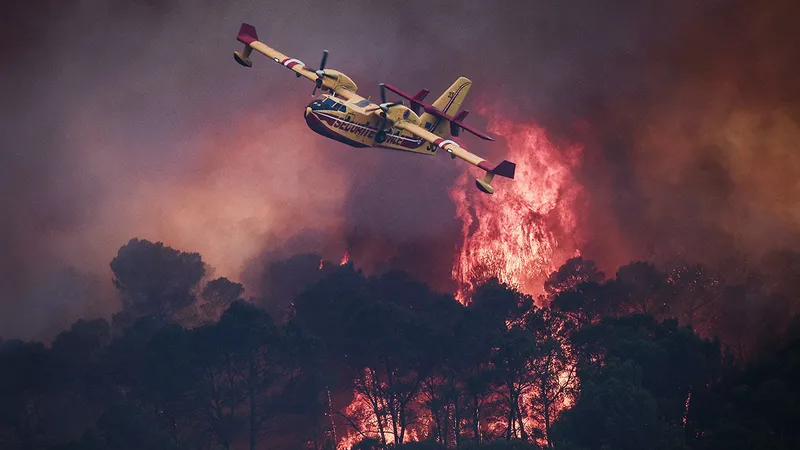
Europe's fires are just the start
From 2006 to 2025, France experienced an average of 15,000 hectares burned by fires each year. In 2023, a fire near Bordeaux burned nearly three times that area in just six days, while over 300,000 people were evacuated due to advancing fires near Madrid.
economist.com
1 min
7/30/2026
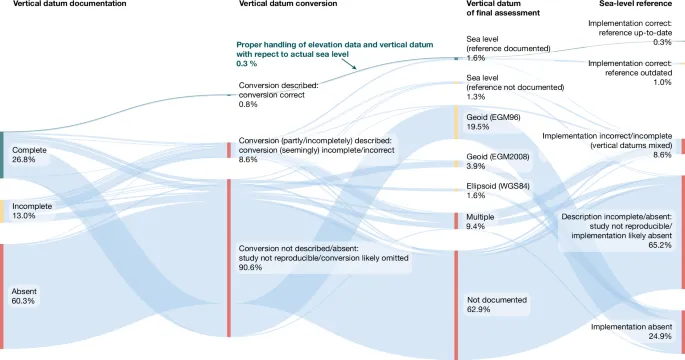
Sea level much higher than assumed in most coastal hazard assessments
More than 99% of evaluated coastal hazard impact assessments inadequately handled sea-level and land elevation data. This mismanagement leads to incorrect judgments of sea level relative to the coast, affecting the reliability of assessments related to sea-level rise and hazards.
nature.com
55 min
3/4/2026

We are entering a period of overlapping crises
Hamish Campbell argues that climate breakdown, inequality, technological disruption, war, political instability and weakening democratic institutions are reinforcing one another. He warns that responses centered on “exit culture” — including private security and bunkers for wealthy people, ethnonationalist politics, religious escape narratives, and technological promises involving AI, automation, space or digital transcendence — cannot resolve systemic ecological and social crises. Campbell also rejects the idea that institutional collapse is inherently progressive, saying it can produce mutual aid and democratic organization but is more likely to lead to authoritarianism, scapegoating, violence and stronger hierarchies when communities are unprepared. Campbell calls for grassroots democratic resilience built before crises intensify: local relationships, communication systems, knowledge of resources, practical skills, shared decision-making and methods for handling disagreement. He advocates shifting from individual survivalism toward mutual aid and collective care. He presents the Open Media Network (OMN), the Fediverse and ActivityPub as examples of federated technology that can let independent communities communicate, share knowledge and exchange resources without giving up autonomy. Campbell says technology should support social processes rather than replace them with centralized control, and argues that cooperation and solidarity can provide an alternative to fear-driven scapegoating and authoritarian politics.
hamishcampbell.com
6 min
1d ago
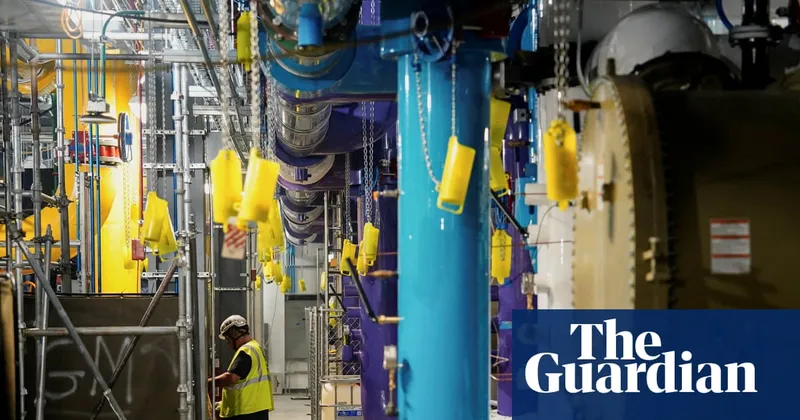
Datacentres drive up big tech's carbon emissions to a third of those of France
Microsoft, Amazon, and Google emitted 119 million metric tonnes of carbon dioxide equivalent in the financial year ending March 2026, a nearly 20% increase from the previous year's 101 million metric tonnes. Their combined emissions now represent about a third of France's total carbon emissions.
theguardian.com
3 min
7/12/2026
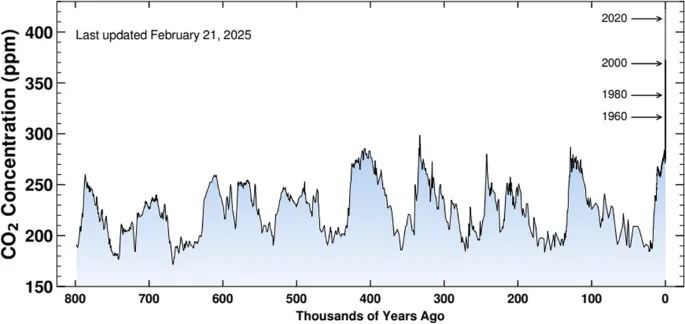
CO2 overload, detected in human blood, suggests toxic atmosphere within 50 years
Anthropogenic activities are raising carbon dioxide (CO2) levels in the atmosphere, which may adversely affect human physiology. Analysis of serum bicarbonate, calcium, and phosphorus levels from the U.S. National Health and Nutrition Examination Survey (NHANES) from 1999 to 2020 provides insights into the potential impact of elevated CO2 on human health.
link.springer.com
34 min
7/17/2026
Global warming has accelerated significantly
Posted by morsch. Score: 633 points. Comments: 600.
researchgate.net
1 min
3/6/2026
Europe's fires are just the start
From 2006 to 2025, France experienced an average of 15,000 hectares burned by fires each year. In 2023, a fire near Bordeaux burned nearly three times that area in just six days, while over 300,000 people were evacuated due to advancing fires near Madrid.
economist.com
1 min
7/30/2026
We are entering a period of overlapping crises
Hamish Campbell argues that climate breakdown, inequality, technological disruption, war, political instability and weakening democratic institutions are reinforcing one another. He warns that responses centered on “exit culture” — including private security and bunkers for wealthy people, ethnonationalist politics, religious escape narratives, and technological promises involving AI, automation, space or digital transcendence — cannot resolve systemic ecological and social crises. Campbell also rejects the idea that institutional collapse is inherently progressive, saying it can produce mutual aid and democratic organization but is more likely to lead to authoritarianism, scapegoating, violence and stronger hierarchies when communities are unprepared. Campbell calls for grassroots democratic resilience built before crises intensify: local relationships, communication systems, knowledge of resources, practical skills, shared decision-making and methods for handling disagreement. He advocates shifting from individual survivalism toward mutual aid and collective care. He presents the Open Media Network (OMN), the Fediverse and ActivityPub as examples of federated technology that can let independent communities communicate, share knowledge and exchange resources without giving up autonomy. Campbell says technology should support social processes rather than replace them with centralized control, and argues that cooperation and solidarity can provide an alternative to fear-driven scapegoating and authoritarian politics.
hamishcampbell.com
6 min
1d ago
CO2 overload, detected in human blood, suggests toxic atmosphere within 50 years
Anthropogenic activities are raising carbon dioxide (CO2) levels in the atmosphere, which may adversely affect human physiology. Analysis of serum bicarbonate, calcium, and phosphorus levels from the U.S. National Health and Nutrition Examination Survey (NHANES) from 1999 to 2020 provides insights into the potential impact of elevated CO2 on human health.
link.springer.com
34 min
7/17/2026
The risk of a hothouse Earth trajectory
A hothouse Earth trajectory poses significant risks to global ecosystems and human societies. Research emphasizes the urgency of mitigating climate change to prevent irreversible damage to the planet's climate system.
cell.com
13 min
2/11/2026
Sea level much higher than assumed in most coastal hazard assessments
More than 99% of evaluated coastal hazard impact assessments inadequately handled sea-level and land elevation data. This mismanagement leads to incorrect judgments of sea level relative to the coast, affecting the reliability of assessments related to sea-level rise and hazards.
nature.com
55 min
3/4/2026
Datacentres drive up big tech's carbon emissions to a third of those of France
Microsoft, Amazon, and Google emitted 119 million metric tonnes of carbon dioxide equivalent in the financial year ending March 2026, a nearly 20% increase from the previous year's 101 million metric tonnes. Their combined emissions now represent about a third of France's total carbon emissions.
theguardian.com
3 min
7/12/2026
Global warming has accelerated significantly
Posted by morsch. Score: 633 points. Comments: 600.
researchgate.net
1 min
3/6/2026
Sea level much higher than assumed in most coastal hazard assessments
More than 99% of evaluated coastal hazard impact assessments inadequately handled sea-level and land elevation data. This mismanagement leads to incorrect judgments of sea level relative to the coast, affecting the reliability of assessments related to sea-level rise and hazards.
nature.com
55 min
3/4/2026
CO2 overload, detected in human blood, suggests toxic atmosphere within 50 years
Anthropogenic activities are raising carbon dioxide (CO2) levels in the atmosphere, which may adversely affect human physiology. Analysis of serum bicarbonate, calcium, and phosphorus levels from the U.S. National Health and Nutrition Examination Survey (NHANES) from 1999 to 2020 provides insights into the potential impact of elevated CO2 on human health.
link.springer.com
34 min
7/17/2026
The risk of a hothouse Earth trajectory
A hothouse Earth trajectory poses significant risks to global ecosystems and human societies. Research emphasizes the urgency of mitigating climate change to prevent irreversible damage to the planet's climate system.
cell.com
13 min
2/11/2026
We are entering a period of overlapping crises
Hamish Campbell argues that climate breakdown, inequality, technological disruption, war, political instability and weakening democratic institutions are reinforcing one another. He warns that responses centered on “exit culture” — including private security and bunkers for wealthy people, ethnonationalist politics, religious escape narratives, and technological promises involving AI, automation, space or digital transcendence — cannot resolve systemic ecological and social crises. Campbell also rejects the idea that institutional collapse is inherently progressive, saying it can produce mutual aid and democratic organization but is more likely to lead to authoritarianism, scapegoating, violence and stronger hierarchies when communities are unprepared. Campbell calls for grassroots democratic resilience built before crises intensify: local relationships, communication systems, knowledge of resources, practical skills, shared decision-making and methods for handling disagreement. He advocates shifting from individual survivalism toward mutual aid and collective care. He presents the Open Media Network (OMN), the Fediverse and ActivityPub as examples of federated technology that can let independent communities communicate, share knowledge and exchange resources without giving up autonomy. Campbell says technology should support social processes rather than replace them with centralized control, and argues that cooperation and solidarity can provide an alternative to fear-driven scapegoating and authoritarian politics.
hamishcampbell.com
6 min
1d ago
Europe's fires are just the start
From 2006 to 2025, France experienced an average of 15,000 hectares burned by fires each year. In 2023, a fire near Bordeaux burned nearly three times that area in just six days, while over 300,000 people were evacuated due to advancing fires near Madrid.
economist.com
1 min
7/30/2026
Datacentres drive up big tech's carbon emissions to a third of those of France
Microsoft, Amazon, and Google emitted 119 million metric tonnes of carbon dioxide equivalent in the financial year ending March 2026, a nearly 20% increase from the previous year's 101 million metric tonnes. Their combined emissions now represent about a third of France's total carbon emissions.
theguardian.com
3 min
7/12/2026
No more articles to load