CO2 overload, detected in human blood, suggests toxic atmosphere within 50 years
link.springer.com
July 17, 2026
34 min read
46/100
Summary
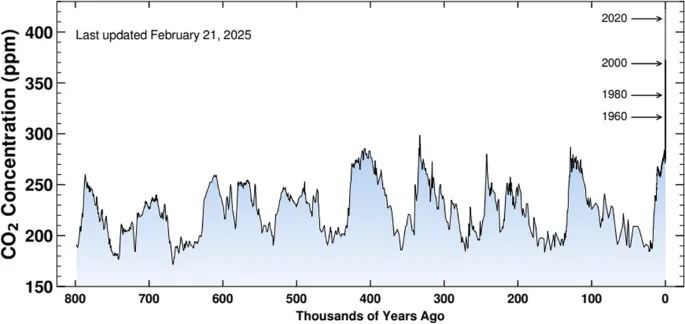
Anthropogenic activities are raising carbon dioxide (CO2) levels in the atmosphere, which may adversely affect human physiology. Analysis of serum bicarbonate, calcium, and phosphorus levels from the U.S. National Health and Nutrition Examination Survey (NHANES) from 1999 to 2020 provides insights into the potential impact of elevated CO2 on human health.
Key Takeaways
- Average bicarbonate levels in the U.S. population have increased from 1999 to 2020, correlating with rising atmospheric CO2 concentrations.
- Calcium and phosphorus levels in the same population have steadily decreased during this period.
- Projections indicate that blood bicarbonate values could reach the limit of the healthy range within 50 years, with calcium and phosphorus potentially reaching their limits by the end of the century.
- Elevated atmospheric CO2 levels may lead to adverse health effects due to CO2 accumulation in the body, highlighting the need for significant reductions in CO2 emissions.
Community Sentiment
Positives
- Smart technology is revolutionizing energy efficiency, with simple devices allowing users to optimize their energy consumption based on renewable availability — a small step for personal use but a leap for reducing emissions.
- Interesting insights on CO2 levels and human adaptation show we might be more resilient than we think, challenging the notion of an imminent toxic atmosphere. This could shift how we approach environmental concerns.
Concerns
- There's a troubling disconnect between technology's potential and reality; without serious clean energy infrastructure, all the smart switches in the world won't save us from rising CO2 — it's a social issue, not just a tech one.
- Claiming our current CO2 levels are safe feels like wishful thinking; just because we can tolerate high levels in the short term doesn't mean it's sustainable or healthy in the long run.
Related Articles
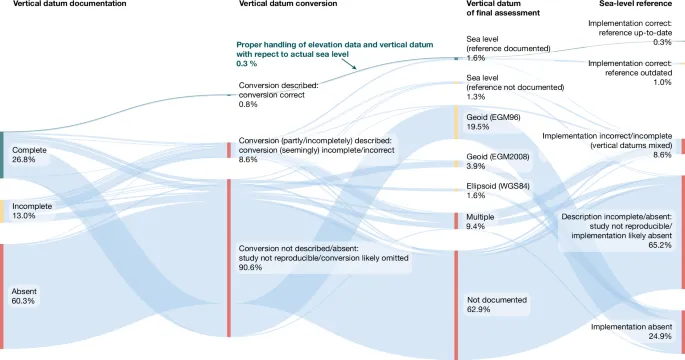
Sea level much higher than assumed in most coastal hazard assessments
Mar 4, 2026

The risk of a hothouse Earth trajectory
Feb 11, 2026

We are entering a period of overlapping crises
Oct 15, 2026

Europe's fires are just the start
Jul 30, 2026
Datacentres drive up big tech's carbon emissions to a third of those of France
Jul 12, 2026