
US data centers tripled annual water consumption to 17B gallons
US data centers consumed an estimated 17 billion gallons of water in 2023, roughly three times the estimated total in 2014, according to a Congressional Research Service report published by the Library of Congress. The estimate includes water used directly for cooling and indirectly to generate the electricity powering facilities. More than 80% of the total water footprint came from electricity generation, while direct consumption accounted for a relatively small share of overall US water use. The federal government does not systematically track data-center water consumption, so the figure is an estimate assembled from incomplete state and local data rather than a facility-by-facility national accounting. Cooling choices shift demand between water and electricity. Evaporative systems generally use less energy but consume substantial water, while air-cooled systems reduce on-site water use while generally requiring more power. Municipal drinking-water systems supplied 97% of water used by US data centers in the CRS estimate, creating local competition for constrained supplies. The report says AI infrastructure is increasing electricity demand through denser specialized hardware, and consumption may have risen since its data ended in 2023. US water reporting remains fragmented because states and local utilities set requirements, and some municipal service agreements limit disclosure. Members of Congress have introduced bills on reporting and water reuse, though most remain at the introduction stage. European Union rules require data-center operators to report annual freshwater consumption.
forgeeks.net
6 min
8/25/2026

How much energy do data centers and artificial intelligence use?
Data centers account for approximately 1.5% of global electricity consumption, with demand concentrated in specific regions. The rapid adoption of artificial intelligence raises concerns about its increasing energy demand and potential environmental impacts.
ourworldindata.org
11 min
7/23/2026
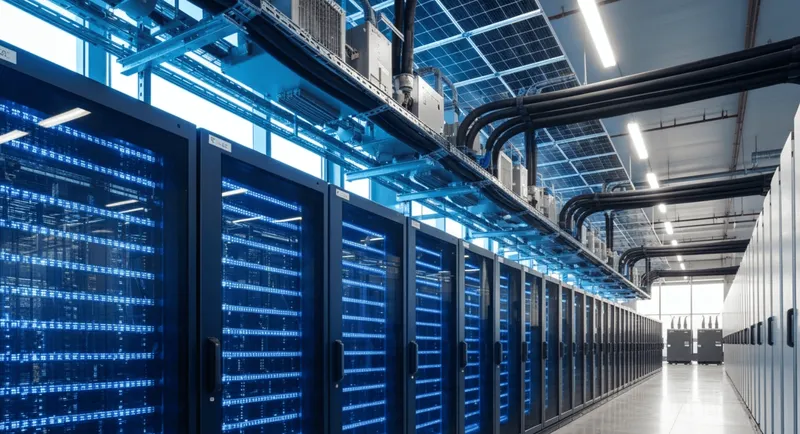
Most Americans say "not in my backyard" to AI data centers
53% of U.S. residents oppose building AI data centers in their area, while 34% support it, according to a Redfin survey. Concerns include the strain on electricity and water resources, as well as potential disruptions from noise and large structures.
redfin.com
8 min
7/22/2026
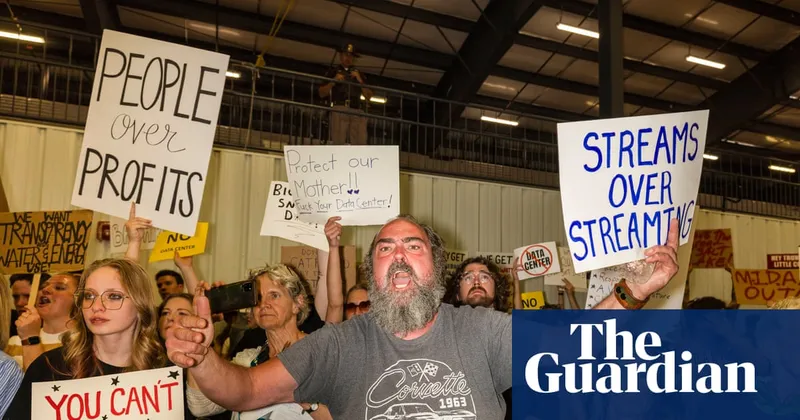
Residents furious as Utah approves datacenter twice the size of Manhattan
Utah has approved the construction of a datacenter that will span over 40,000 acres, more than twice the size of Manhattan. The facility, known as Stratos, will require approximately 9GW of power, raising concerns about its energy consumption and impact on local water supplies.
theguardian.com
5 min
5/13/2026
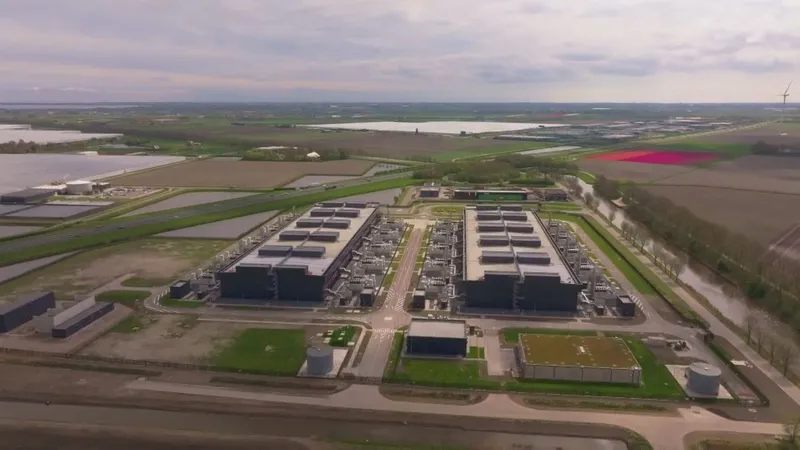
Maine is about to become the first state to ban major new data centers
Maine's legislature has advanced bill LD 307, which imposes a moratorium on permits for new data centers requiring more than 20 megawatts of electricity. This decision is driven by concerns that the growing demand for AI technology is exacerbating high electricity costs in the state.
gadgetreview.com
2 min
4/9/2026
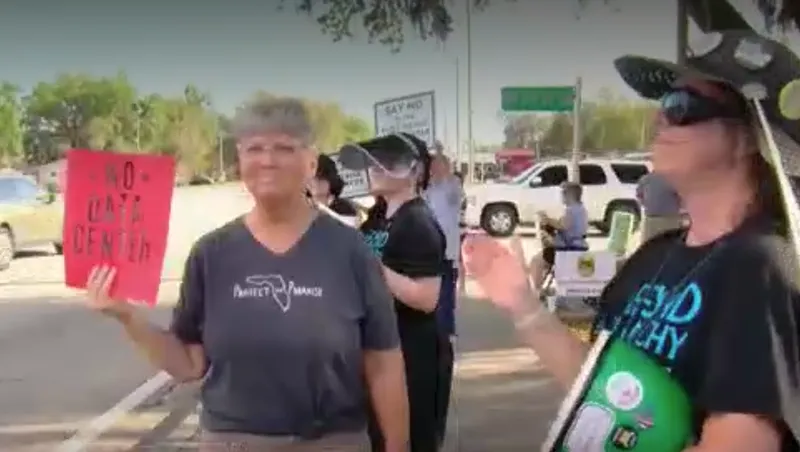
Florida lawmakers debate who will pay the price of AI data centers
Florida lawmakers are debating the impact of AI data centers on local communities, focusing on concerns about increased electric bills, noise, and water usage. Residents in Polk and Citrus counties are expressing opposition to proposed AI data centers at local commission meetings.
wfla.com
1 min
3/12/2026

Does that use a lot of energy?
A tool provides estimates of daily energy consumption for various products and activities, measured in watt-hours (Wh). It aims to clarify the differences in energy usage to help users understand the impact of different activities on overall energy consumption.
hannahritchie.github.io
16 min
3/4/2026

Altman on AI energy: it also takes 20 years of eating food to train a human
Sam Altman emphasizes that training an AI model requires significant energy, comparable to the 20 years and nutrition needed for human intelligence development. Demis Hassabis suggests testing AI by training it with a knowledge cutoff of 1911 to evaluate its ability to derive concepts like general relativity independently.
old.reddit.com
1 min
2/22/2026
Covering electricity price increases from our data centers
Anthropic will cover electricity price increases for consumers linked to its data centers as it invests in American AI infrastructure. Training a single frontier AI model will soon require gigawatts of power, and the US AI sector will need at least 50 gigawatts of capacity in the coming years.
anthropic.com
3 min
2/11/2026
US data centers tripled annual water consumption to 17B gallons
US data centers consumed an estimated 17 billion gallons of water in 2023, roughly three times the estimated total in 2014, according to a Congressional Research Service report published by the Library of Congress. The estimate includes water used directly for cooling and indirectly to generate the electricity powering facilities. More than 80% of the total water footprint came from electricity generation, while direct consumption accounted for a relatively small share of overall US water use. The federal government does not systematically track data-center water consumption, so the figure is an estimate assembled from incomplete state and local data rather than a facility-by-facility national accounting. Cooling choices shift demand between water and electricity. Evaporative systems generally use less energy but consume substantial water, while air-cooled systems reduce on-site water use while generally requiring more power. Municipal drinking-water systems supplied 97% of water used by US data centers in the CRS estimate, creating local competition for constrained supplies. The report says AI infrastructure is increasing electricity demand through denser specialized hardware, and consumption may have risen since its data ended in 2023. US water reporting remains fragmented because states and local utilities set requirements, and some municipal service agreements limit disclosure. Members of Congress have introduced bills on reporting and water reuse, though most remain at the introduction stage. European Union rules require data-center operators to report annual freshwater consumption.
forgeeks.net
6 min
8/25/2026
Most Americans say "not in my backyard" to AI data centers
53% of U.S. residents oppose building AI data centers in their area, while 34% support it, according to a Redfin survey. Concerns include the strain on electricity and water resources, as well as potential disruptions from noise and large structures.
redfin.com
8 min
7/22/2026
Maine is about to become the first state to ban major new data centers
Maine's legislature has advanced bill LD 307, which imposes a moratorium on permits for new data centers requiring more than 20 megawatts of electricity. This decision is driven by concerns that the growing demand for AI technology is exacerbating high electricity costs in the state.
gadgetreview.com
2 min
4/9/2026
Does that use a lot of energy?
A tool provides estimates of daily energy consumption for various products and activities, measured in watt-hours (Wh). It aims to clarify the differences in energy usage to help users understand the impact of different activities on overall energy consumption.
hannahritchie.github.io
16 min
3/4/2026
Covering electricity price increases from our data centers
Anthropic will cover electricity price increases for consumers linked to its data centers as it invests in American AI infrastructure. Training a single frontier AI model will soon require gigawatts of power, and the US AI sector will need at least 50 gigawatts of capacity in the coming years.
anthropic.com
3 min
2/11/2026
How much energy do data centers and artificial intelligence use?
Data centers account for approximately 1.5% of global electricity consumption, with demand concentrated in specific regions. The rapid adoption of artificial intelligence raises concerns about its increasing energy demand and potential environmental impacts.
ourworldindata.org
11 min
7/23/2026
Residents furious as Utah approves datacenter twice the size of Manhattan
Utah has approved the construction of a datacenter that will span over 40,000 acres, more than twice the size of Manhattan. The facility, known as Stratos, will require approximately 9GW of power, raising concerns about its energy consumption and impact on local water supplies.
theguardian.com
5 min
5/13/2026
Florida lawmakers debate who will pay the price of AI data centers
Florida lawmakers are debating the impact of AI data centers on local communities, focusing on concerns about increased electric bills, noise, and water usage. Residents in Polk and Citrus counties are expressing opposition to proposed AI data centers at local commission meetings.
wfla.com
1 min
3/12/2026
Altman on AI energy: it also takes 20 years of eating food to train a human
Sam Altman emphasizes that training an AI model requires significant energy, comparable to the 20 years and nutrition needed for human intelligence development. Demis Hassabis suggests testing AI by training it with a knowledge cutoff of 1911 to evaluate its ability to derive concepts like general relativity independently.
old.reddit.com
1 min
2/22/2026
US data centers tripled annual water consumption to 17B gallons
US data centers consumed an estimated 17 billion gallons of water in 2023, roughly three times the estimated total in 2014, according to a Congressional Research Service report published by the Library of Congress. The estimate includes water used directly for cooling and indirectly to generate the electricity powering facilities. More than 80% of the total water footprint came from electricity generation, while direct consumption accounted for a relatively small share of overall US water use. The federal government does not systematically track data-center water consumption, so the figure is an estimate assembled from incomplete state and local data rather than a facility-by-facility national accounting. Cooling choices shift demand between water and electricity. Evaporative systems generally use less energy but consume substantial water, while air-cooled systems reduce on-site water use while generally requiring more power. Municipal drinking-water systems supplied 97% of water used by US data centers in the CRS estimate, creating local competition for constrained supplies. The report says AI infrastructure is increasing electricity demand through denser specialized hardware, and consumption may have risen since its data ended in 2023. US water reporting remains fragmented because states and local utilities set requirements, and some municipal service agreements limit disclosure. Members of Congress have introduced bills on reporting and water reuse, though most remain at the introduction stage. European Union rules require data-center operators to report annual freshwater consumption.
forgeeks.net
6 min
8/25/2026
Residents furious as Utah approves datacenter twice the size of Manhattan
Utah has approved the construction of a datacenter that will span over 40,000 acres, more than twice the size of Manhattan. The facility, known as Stratos, will require approximately 9GW of power, raising concerns about its energy consumption and impact on local water supplies.
theguardian.com
5 min
5/13/2026
Does that use a lot of energy?
A tool provides estimates of daily energy consumption for various products and activities, measured in watt-hours (Wh). It aims to clarify the differences in energy usage to help users understand the impact of different activities on overall energy consumption.
hannahritchie.github.io
16 min
3/4/2026
How much energy do data centers and artificial intelligence use?
Data centers account for approximately 1.5% of global electricity consumption, with demand concentrated in specific regions. The rapid adoption of artificial intelligence raises concerns about its increasing energy demand and potential environmental impacts.
ourworldindata.org
11 min
7/23/2026
Maine is about to become the first state to ban major new data centers
Maine's legislature has advanced bill LD 307, which imposes a moratorium on permits for new data centers requiring more than 20 megawatts of electricity. This decision is driven by concerns that the growing demand for AI technology is exacerbating high electricity costs in the state.
gadgetreview.com
2 min
4/9/2026
Altman on AI energy: it also takes 20 years of eating food to train a human
Sam Altman emphasizes that training an AI model requires significant energy, comparable to the 20 years and nutrition needed for human intelligence development. Demis Hassabis suggests testing AI by training it with a knowledge cutoff of 1911 to evaluate its ability to derive concepts like general relativity independently.
old.reddit.com
1 min
2/22/2026
Most Americans say "not in my backyard" to AI data centers
53% of U.S. residents oppose building AI data centers in their area, while 34% support it, according to a Redfin survey. Concerns include the strain on electricity and water resources, as well as potential disruptions from noise and large structures.
redfin.com
8 min
7/22/2026
Florida lawmakers debate who will pay the price of AI data centers
Florida lawmakers are debating the impact of AI data centers on local communities, focusing on concerns about increased electric bills, noise, and water usage. Residents in Polk and Citrus counties are expressing opposition to proposed AI data centers at local commission meetings.
wfla.com
1 min
3/12/2026
Covering electricity price increases from our data centers
Anthropic will cover electricity price increases for consumers linked to its data centers as it invests in American AI infrastructure. Training a single frontier AI model will soon require gigawatts of power, and the US AI sector will need at least 50 gigawatts of capacity in the coming years.
anthropic.com
3 min
2/11/2026
No more articles to load