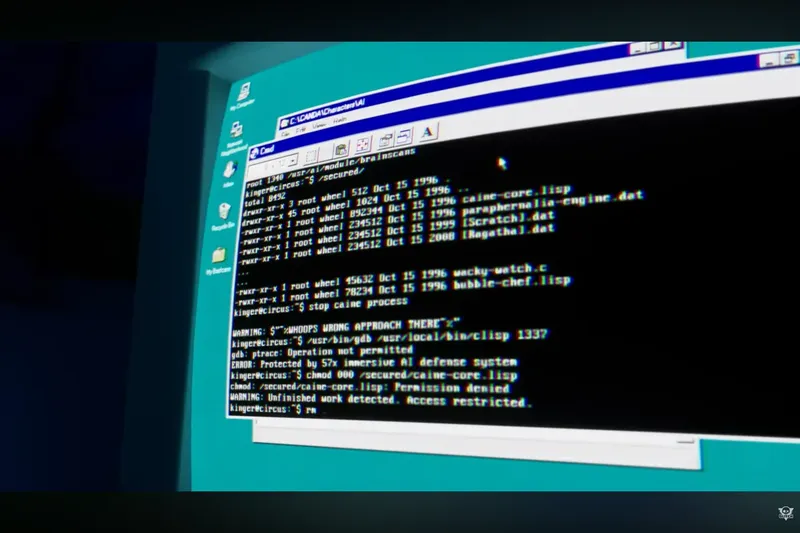
A Friendly Introduction to Racket
Racket is a descendant of Scheme designed for education and programming-language research that can also be used to create domain-specific languages. PLT Scheme, created by Matthias Felleisen’s group in 1995, was renamed Racket in 2010. DrRacket includes an editor and a read-eval-print loop, while the racket command opens a terminal REPL and raco provides package-management and tooling commands. Racket programs use parenthesized expressions in operator-first form, such as (+ 1 2), and define values and functions with define. Lists are central data structures: quoting with ' prevents evaluation, while first, rest, and cons access or construct lists. Functions are first-class values, enabling operations such as map, filter, and foldl; recursive functions can express repeated computation through base cases and self-calls. Racket also ships with libraries including 2htdp/image for graphics. Because Lisp-family code can be represented as lists, quoted expressions can be manipulated as data and evaluated as code. Racket macros can transform syntax before runtime; define-syntax-rule can define constructs such as a while loop. Lisp originated at MIT in 1958 under John McCarthy, Scheme was created by Gerald Sussman and Guy Steele in 1975, and Lisp introduced or popularized concepts including garbage collection, first-class functions, REPLs, and code-as-data representation.
geometridae.bearblog.dev
7 min
8/22/2026
Writing Lisp is AI resistant and I'm sad
AI systems show a preference for programming languages other than Lisp, making it challenging to use Lisp for certain tasks. A developer is creating a tool to convert between different RSS reader formats, initially using Lisp, but faces difficulties in training the AI to understand the language.
blog.djhaskin.com
6 min
4/5/2026
A Friendly Introduction to Racket
Racket is a descendant of Scheme designed for education and programming-language research that can also be used to create domain-specific languages. PLT Scheme, created by Matthias Felleisen’s group in 1995, was renamed Racket in 2010. DrRacket includes an editor and a read-eval-print loop, while the racket command opens a terminal REPL and raco provides package-management and tooling commands. Racket programs use parenthesized expressions in operator-first form, such as (+ 1 2), and define values and functions with define. Lists are central data structures: quoting with ' prevents evaluation, while first, rest, and cons access or construct lists. Functions are first-class values, enabling operations such as map, filter, and foldl; recursive functions can express repeated computation through base cases and self-calls. Racket also ships with libraries including 2htdp/image for graphics. Because Lisp-family code can be represented as lists, quoted expressions can be manipulated as data and evaluated as code. Racket macros can transform syntax before runtime; define-syntax-rule can define constructs such as a while loop. Lisp originated at MIT in 1958 under John McCarthy, Scheme was created by Gerald Sussman and Guy Steele in 1975, and Lisp introduced or popularized concepts including garbage collection, first-class functions, REPLs, and code-as-data representation.
geometridae.bearblog.dev
7 min
8/22/2026
Writing Lisp is AI resistant and I'm sad
AI systems show a preference for programming languages other than Lisp, making it challenging to use Lisp for certain tasks. A developer is creating a tool to convert between different RSS reader formats, initially using Lisp, but faces difficulties in training the AI to understand the language.
blog.djhaskin.com
6 min
4/5/2026
A Friendly Introduction to Racket
Racket is a descendant of Scheme designed for education and programming-language research that can also be used to create domain-specific languages. PLT Scheme, created by Matthias Felleisen’s group in 1995, was renamed Racket in 2010. DrRacket includes an editor and a read-eval-print loop, while the racket command opens a terminal REPL and raco provides package-management and tooling commands. Racket programs use parenthesized expressions in operator-first form, such as (+ 1 2), and define values and functions with define. Lists are central data structures: quoting with ' prevents evaluation, while first, rest, and cons access or construct lists. Functions are first-class values, enabling operations such as map, filter, and foldl; recursive functions can express repeated computation through base cases and self-calls. Racket also ships with libraries including 2htdp/image for graphics. Because Lisp-family code can be represented as lists, quoted expressions can be manipulated as data and evaluated as code. Racket macros can transform syntax before runtime; define-syntax-rule can define constructs such as a while loop. Lisp originated at MIT in 1958 under John McCarthy, Scheme was created by Gerald Sussman and Guy Steele in 1975, and Lisp introduced or popularized concepts including garbage collection, first-class functions, REPLs, and code-as-data representation.
geometridae.bearblog.dev
7 min
8/22/2026
Writing Lisp is AI resistant and I'm sad
AI systems show a preference for programming languages other than Lisp, making it challenging to use Lisp for certain tasks. A developer is creating a tool to convert between different RSS reader formats, initially using Lisp, but faces difficulties in training the AI to understand the language.
blog.djhaskin.com
6 min
4/5/2026
No more articles to load