A Friendly Introduction to Racket
geometridae.bearblog.dev
August 22, 2026
7 min read
60/100
Summary
Racket is a descendant of Scheme designed for education and programming-language research that can also be used to create domain-specific languages. PLT Scheme, created by Matthias Felleisen’s group in 1995, was renamed Racket in 2010. DrRacket includes an editor and a read-eval-print loop, while the racket command opens a terminal REPL and raco provides package-management and tooling commands. Racket programs use parenthesized expressions in operator-first form, such as (+ 1 2), and define values and functions with define. Lists are central data structures: quoting with ' prevents evaluation, while first, rest, and cons access or construct lists. Functions are first-class values, enabling operations such as map, filter, and foldl; recursive functions can express repeated computation through base cases and self-calls. Racket also ships with libraries including 2htdp/image for graphics. Because Lisp-family code can be represented as lists, quoted expressions can be manipulated as data and evaluated as code. Racket macros can transform syntax before runtime; define-syntax-rule can define constructs such as a while loop. Lisp originated at MIT in 1958 under John McCarthy, Scheme was created by Gerald Sussman and Guy Steele in 1975, and Lisp introduced or popularized concepts including garbage collection, first-class functions, REPLs, and code-as-data representation.
Key Takeaways
- Racket was renamed from PLT Scheme in 2010 and supports language-oriented programming, including the creation of new syntactic constructs.
- Racket uses operator-first parenthesized expressions, and its quote syntax turns expressions into unevaluated list data.
- First-class functions and list operations such as map, filter, and foldl support functional programming patterns in Racket.
- Racket macros can receive and transform program syntax before execution, allowing programmers to extend the language with constructs such as while loops.
What the discussion said
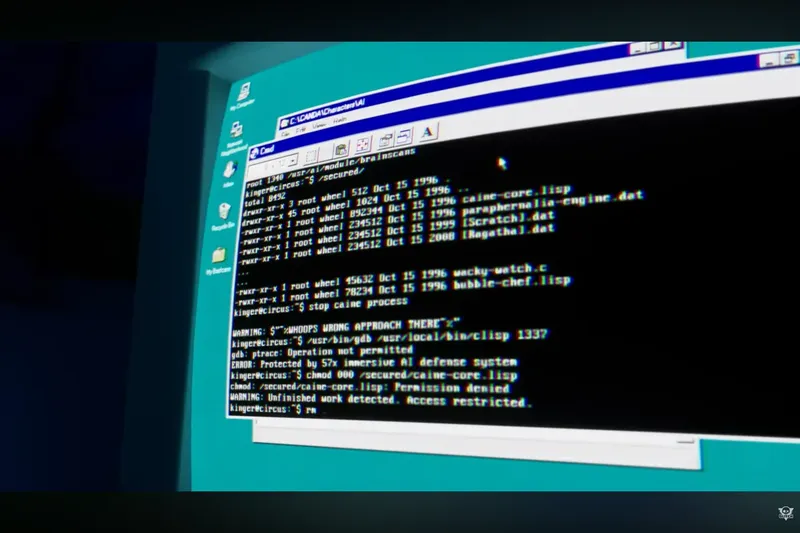
The thread did not meaningfully discuss AI or machine learning. Its attention stayed on Racket as a programming language: whether there are compelling end-user applications beyond libraries and developer tools, whether its deployment story limits real-world adoption, and whether the linked material genuinely qualifies as an approachable introduction. One brief aside connected Lisp to the fictional creative AI in an animated series, with readers debating the plausibility of the depicted implementation and debugging setup. That exchange was about a fictional technical reference rather than model capability, training, safety, deployment, or AI’s real-world impact. As a result, there is no defensible AI-specific consensus to extract. Readers neither praised nor criticized an AI system, an ML technique, AI accessibility, or AI safety. Any attempt to convert the general enthusiasm for learning Racket, complaints about tutorial pacing, or concerns about native executables into AI sentiment would overstate what the comments actually say.