Stop Making TUIs
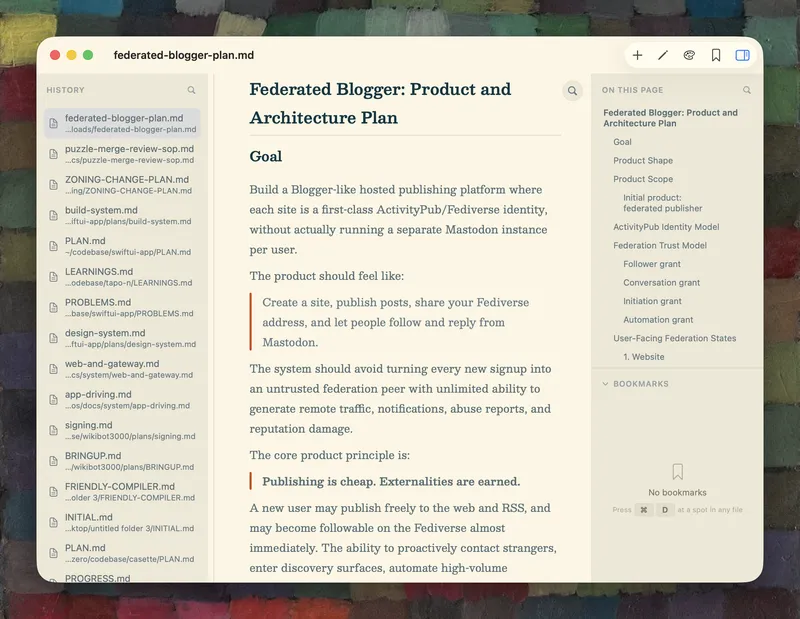
A macOS developer used AI coding agents to generate several private SwiftUI applications, including MDV.app, a Markdown viewer; a SageMath frontend that renders output in LaTeX and exposes mathematical operations through point-and-click controls; DJ Roomba, an Apple Music player with an LLM playlist agent; a self-driving wiki; a GPT-5-backed food macro tracker; a TP-Link sensor monitor; and a menu-bar universal remote for Apple TV, Roku TV, and a Denon receiver. The developer says these programs were built by copying a template directory, describing the desired software to Claude or Codex, and letting agents build and test it with computer-use capabilities. The developer argues that AI agents have made native macOS interfaces practical for people who previously avoided UI work, and urges programmers to favor native graphical interfaces over new terminal user interfaces. They distinguish command-line interfaces, which they consider useful for automation and remote operations, from TUIs, which they characterize as constrained by terminal capabilities. They say SwiftUI supplies standard behavior for scrolling, drag and drop, text selection, windows, images, and accessibility that TUI frameworks must recreate imperfectly. Cross-platform consistency remains, in their view, the strongest case for TUIs. The developer’s macOS workflow uses SwiftUI, a Makefile-driven build process, and skills covering macOS design, typography, SwiftUI, and Swift style.
sockpuppet.org
15 min
8/21/2026
Extensible Software in the age of LLMs
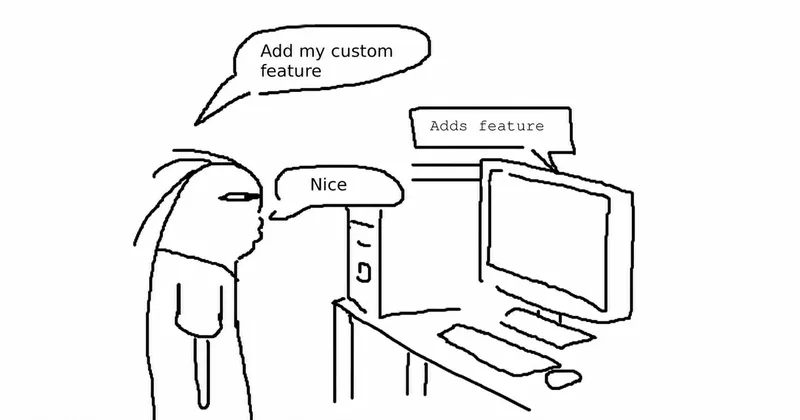
LLM-assisted coding can enable “software for one”: small, personalized applications and extensions that address users’ long-tail needs without forcing every feature into a product’s default interface. The proposed model for web applications combines a stable, accountable core with user-created code that can react to events, run on schedules, add views, transform data, and automate tasks. Potential uses include tailored AI agents, internal corporate tools, support-ticket workflows, and custom observability visualizations. Extensions could be generated from natural-language requests and shared with other users. Running user code inside web services requires low execution cost, fast cold starts, strict resource limits, tenant isolation, and controlled access to data and external actions. The author argues that narrow capability-based interfaces are safer than giving extensions API keys or unrestricted network access: code receives only specific approved functions or bindings, limiting data exposure and possible actions. Salesforce has operated a multi-tenant programmable platform since 2007 through its Apex language and event-driven customization model. The source identifies interpreters, V8 isolates, microVMs, and WebAssembly with WASI as possible execution technologies. It highlights Cloudflare Dynamic Workers as a production-oriented option, citing built-in observability, tenant-scoped storage, durable workflows, source control, and hosted LLM access. The author discloses employment at Cloudflare.
jeremymorrell.dev
25 min
8/19/2026

Why TUIs Are Back
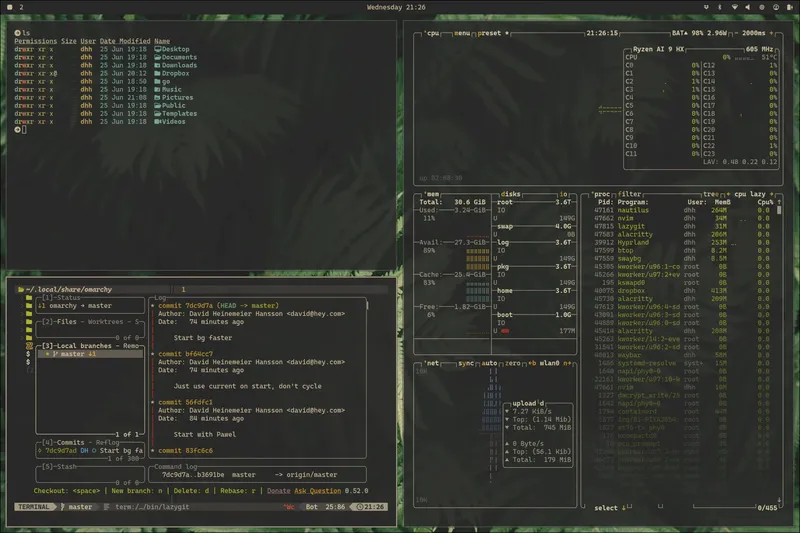
Terminal User Interfaces (TUIs) are experiencing a resurgence, offering immediate feedback and appealing to tech enthusiasts. DHH's Omarchy incorporates TUIs, web applications, and native applications, reflecting a trend similar to the evolution of code editors over the past decade.
wiki.alcidesfonseca.com
7 min
5/3/2026
Stop Making TUIs
A macOS developer used AI coding agents to generate several private SwiftUI applications, including MDV.app, a Markdown viewer; a SageMath frontend that renders output in LaTeX and exposes mathematical operations through point-and-click controls; DJ Roomba, an Apple Music player with an LLM playlist agent; a self-driving wiki; a GPT-5-backed food macro tracker; a TP-Link sensor monitor; and a menu-bar universal remote for Apple TV, Roku TV, and a Denon receiver. The developer says these programs were built by copying a template directory, describing the desired software to Claude or Codex, and letting agents build and test it with computer-use capabilities. The developer argues that AI agents have made native macOS interfaces practical for people who previously avoided UI work, and urges programmers to favor native graphical interfaces over new terminal user interfaces. They distinguish command-line interfaces, which they consider useful for automation and remote operations, from TUIs, which they characterize as constrained by terminal capabilities. They say SwiftUI supplies standard behavior for scrolling, drag and drop, text selection, windows, images, and accessibility that TUI frameworks must recreate imperfectly. Cross-platform consistency remains, in their view, the strongest case for TUIs. The developer’s macOS workflow uses SwiftUI, a Makefile-driven build process, and skills covering macOS design, typography, SwiftUI, and Swift style.
sockpuppet.org
15 min
8/21/2026
Extensible Software in the age of LLMs
LLM-assisted coding can enable “software for one”: small, personalized applications and extensions that address users’ long-tail needs without forcing every feature into a product’s default interface. The proposed model for web applications combines a stable, accountable core with user-created code that can react to events, run on schedules, add views, transform data, and automate tasks. Potential uses include tailored AI agents, internal corporate tools, support-ticket workflows, and custom observability visualizations. Extensions could be generated from natural-language requests and shared with other users. Running user code inside web services requires low execution cost, fast cold starts, strict resource limits, tenant isolation, and controlled access to data and external actions. The author argues that narrow capability-based interfaces are safer than giving extensions API keys or unrestricted network access: code receives only specific approved functions or bindings, limiting data exposure and possible actions. Salesforce has operated a multi-tenant programmable platform since 2007 through its Apex language and event-driven customization model. The source identifies interpreters, V8 isolates, microVMs, and WebAssembly with WASI as possible execution technologies. It highlights Cloudflare Dynamic Workers as a production-oriented option, citing built-in observability, tenant-scoped storage, durable workflows, source control, and hosted LLM access. The author discloses employment at Cloudflare.
jeremymorrell.dev
25 min
8/19/2026
Why TUIs Are Back
Terminal User Interfaces (TUIs) are experiencing a resurgence, offering immediate feedback and appealing to tech enthusiasts. DHH's Omarchy incorporates TUIs, web applications, and native applications, reflecting a trend similar to the evolution of code editors over the past decade.
wiki.alcidesfonseca.com
7 min
5/3/2026
Stop Making TUIs
A macOS developer used AI coding agents to generate several private SwiftUI applications, including MDV.app, a Markdown viewer; a SageMath frontend that renders output in LaTeX and exposes mathematical operations through point-and-click controls; DJ Roomba, an Apple Music player with an LLM playlist agent; a self-driving wiki; a GPT-5-backed food macro tracker; a TP-Link sensor monitor; and a menu-bar universal remote for Apple TV, Roku TV, and a Denon receiver. The developer says these programs were built by copying a template directory, describing the desired software to Claude or Codex, and letting agents build and test it with computer-use capabilities. The developer argues that AI agents have made native macOS interfaces practical for people who previously avoided UI work, and urges programmers to favor native graphical interfaces over new terminal user interfaces. They distinguish command-line interfaces, which they consider useful for automation and remote operations, from TUIs, which they characterize as constrained by terminal capabilities. They say SwiftUI supplies standard behavior for scrolling, drag and drop, text selection, windows, images, and accessibility that TUI frameworks must recreate imperfectly. Cross-platform consistency remains, in their view, the strongest case for TUIs. The developer’s macOS workflow uses SwiftUI, a Makefile-driven build process, and skills covering macOS design, typography, SwiftUI, and Swift style.
sockpuppet.org
15 min
8/21/2026
Why TUIs Are Back
Terminal User Interfaces (TUIs) are experiencing a resurgence, offering immediate feedback and appealing to tech enthusiasts. DHH's Omarchy incorporates TUIs, web applications, and native applications, reflecting a trend similar to the evolution of code editors over the past decade.
wiki.alcidesfonseca.com
7 min
5/3/2026
Extensible Software in the age of LLMs
LLM-assisted coding can enable “software for one”: small, personalized applications and extensions that address users’ long-tail needs without forcing every feature into a product’s default interface. The proposed model for web applications combines a stable, accountable core with user-created code that can react to events, run on schedules, add views, transform data, and automate tasks. Potential uses include tailored AI agents, internal corporate tools, support-ticket workflows, and custom observability visualizations. Extensions could be generated from natural-language requests and shared with other users. Running user code inside web services requires low execution cost, fast cold starts, strict resource limits, tenant isolation, and controlled access to data and external actions. The author argues that narrow capability-based interfaces are safer than giving extensions API keys or unrestricted network access: code receives only specific approved functions or bindings, limiting data exposure and possible actions. Salesforce has operated a multi-tenant programmable platform since 2007 through its Apex language and event-driven customization model. The source identifies interpreters, V8 isolates, microVMs, and WebAssembly with WASI as possible execution technologies. It highlights Cloudflare Dynamic Workers as a production-oriented option, citing built-in observability, tenant-scoped storage, durable workflows, source control, and hosted LLM access. The author discloses employment at Cloudflare.
jeremymorrell.dev
25 min
8/19/2026
No more articles to load