Report · lynchlab.net
A 10-year-old CNN outperforms frontier LLMs for skin cancer diagnosis
lynchlab.net
Source published October 25, 2026
Summary: 2 min read
71/100
Summary
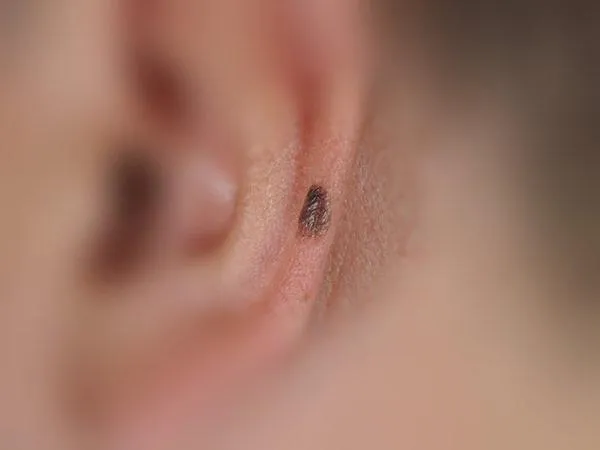
A dermatologist tested GPT-6 Astra, Claude Fable 5.1 and a fine-tuned Inception v3 convolutional neural network on 200 randomly selected, biopsy-confirmed skin lesions from the public MILK10k dataset. The CNN correctly identified 125 of 200 lesions across six diagnoses, or 62%, while GPT-6 Astra and Claude Fable 5.1 identified 84 and 85, or 42% each. Inception v3 was introduced by Google in 2015 and was fine-tuned on 68,011 ISIC Archive clinical and dermoscopic images for about 20 minutes on one H100 GPU. The test set contained 100 lesions requiring further care, including 30 melanomas, and 100 benign lesions considered safe to discharge. The CNN identified 13 melanomas as its first choice, versus eight for GPT-6 Astra and 11 for Claude Fable 5.1. With a second diagnostic choice allowed, the CNN reached 173 correct cases, compared with 134 and 138 for the LLMs. Both LLMs incorrectly labeled a pictured melanoma as a benign seborrhoeic keratosis and said the patient could be discharged. The sample size was small, each LLM response was generated once, and all lesions had been biopsied, making the cases unusually difficult. At its preset discharge threshold, the CNN discharged 18 melanomas, though matching its unsafe-lesion retention rate to the LLMs reduced that figure to two or one. The browser-based CNN runs locally with WebGPU and does not upload images.
Key Takeaways
- A fine-tuned 2015 Inception v3 CNN achieved 62% diagnostic accuracy on 200 biopsy-confirmed skin lesions, versus 42% for both GPT-6 Astra and Claude Fable 5.1.
- The CNN named 13 of 30 melanomas as its first diagnosis, while GPT-6 Astra named eight and Claude Fable 5.1 named 11.
- GPT-6 Astra overcalled basal cell carcinoma, assigning that diagnosis to 75 lesions when 25 in the test set were basal cell carcinomas; Claude Fable 5.1 assigned actinic keratosis to 53 lesions when 20 were present.
- The CNN’s preset discharge threshold retained 77 of 100 unsafe lesions but discharged 18 of 30 melanomas; threshold matching reduced melanoma discharges to two or one.
- Both LLMs advised patients to see a doctor in nearly every case when shown only clinical photographs and asked whether medical evaluation was needed.
What the discussion said
Commenters mostly treated the result as an overdue reality check, not a surprise: a compact vision model trained directly on tens of thousands of dermoscopic images should beat a general-purpose language model on an eleven-class image task. The dominant view is that narrow medical classifiers are the right tool when accuracy on a known metric matters, while LLMs are better deployed upstream to help non-specialists design, train, and integrate those classifiers. Several readers argued that the current AI boom has encouraged an everything-box mentality in which plausible LLM answers are mistaken for task-specific competence. The liveliest dispute concerned whether the CNN result merely games a favorable test. Most rejected that framing: held-out, in-domain evaluation and fine-tuning are standard classifier development, and a skin-cancer system need not generalize to unrelated images to be useful. Skeptics still wanted external-dataset testing before trusting claims of robustness. Readers also pushed back on treating the old CNN as the clinical endpoint. Modern ensembles of vision transformers may perform better, but larger models are harder to run locally and every current system can miss cancers, making unsupervised consumer deployment dangerous. A smaller group argued that multimodal systems could recover ground by combining images with notes, patient questions, and messy real-world context, rather than asking a bare LLM to classify a lesion from pixels alone.
Where opinion split
The sharp disagreement is whether a specialized CNN's win is meaningful evidence of superior task fit or just benchmark optimization. Critics argue that a model tuned around one dataset may be brittle outside it; defenders answer that in-domain fine-tuning with lesions and patients removed from training is exactly how a legitimate medical classifier is built, with external validation—not a generic LLM—as the proper next test.
Coverage & discussions
Hacker News · lynchlab.net
Community discussions
Community Sentiment
Positives
- Task-specific image classifiers can deliver the accuracy medical triage needs without hauling a giant general model through a narrow visual decision.
- LLMs may democratize specialist AI by helping ordinary developers specify, train, and ship focused classifiers they previously lacked the expertise to build.
- The comparison is prompting renewed interest in mature ML techniques, a healthy correction to the assumption that every prediction problem needs a chatbot.
- Multimodal diagnostic systems could add real value when they combine lesion images with clinical notes, adaptive patient questions, and awkward real-world image context.
Concerns
- General-purpose LLMs can sound medically credible while lacking the concentrated visual training required for reliable lesion classification.
- The belief that a frontier model should replace bespoke predictors is steering some researchers toward worse tools simply because LLMs are fashionable.
- A strong held-out score alone cannot establish clinical robustness; sensitivity and specificity on genuinely independent populations are the test that matters.
- Putting even advanced skin-cancer models directly in consumers' hands without clinician oversight risks false reassurance when a malignancy is missed.
Related Articles
LLM Honeypot
Jul 29, 2026
Bonsai 27B: A 27B-Class model that runs on a phone
Jul 14, 2026
Scientists invented a fake disease. AI told people it was real
Apr 10, 2026
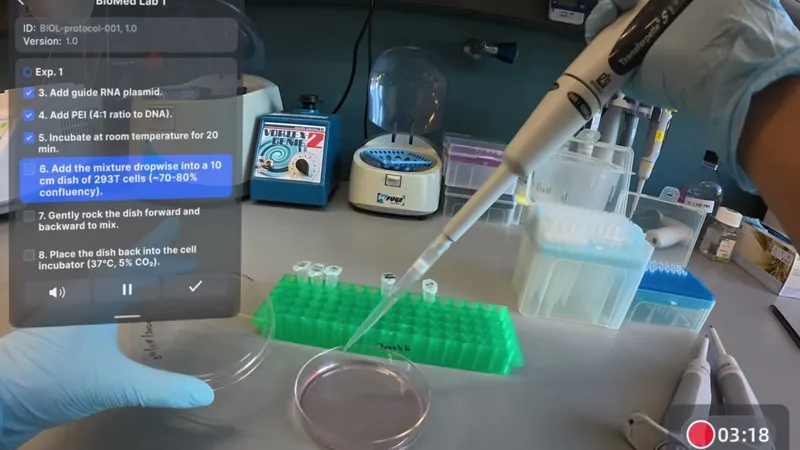
A new wearable AI system watches your hands through smart glasses, guiding experiments and stopping mistakes before they happen
Feb 27, 2026

Psychometric Jailbreaks Reveal Internal Conflict in Frontier Models
Feb 5, 2026