Academics have a duty to defend open knowledge systems like Wikipedia

blogs.lse.ac.uk
October 20, 2026
6 min read
50/100
Summary
Helen Choi argues that academics have an ethical duty to defend Wikipedia and other open knowledge communities as generative AI products divert users from the volunteer-run encyclopedia. AI services such as Google Gemini and ChatGPT often provide immediate answers, sometimes with Wikipedia links, but Choi says users commonly do not follow those links or independently verify the output. She warns that declining readership could reduce the pool of volunteers who write, update, correct, code and administer Wikipedia. Wikipedia contains five billion words and is used as training material by AI systems, Choi says. Some AI companies scrape its content without authorization, while Microsoft, Amazon and Meta pay for high-speed API access. Choi characterizes Wikipedia as a self-governing, noncommercial community that produces knowledge for the public good and says academia’s role in producing and teaching knowledge creates a responsibility to support it. Academics can edit entries, fill content gaps, correct errors, add context and use high-quality sources, Choi says. They can also cite Wikipedia when they rely on it and teach students to contribute. Since 2010, more than 152,000 students at over 8,000 US and Canadian colleges and universities have added more than 125 million words through the Wiki Education Foundation; about 19% of Wikipedia’s new active editors come from its programs. Choi calls on universities to recognize and resource Wikipedia contributions as public service.
Key Takeaways
- Helen Choi argues that generative AI services could weaken Wikipedia by diverting readers away from the volunteer community that maintains its content.
- Wikipedia’s five billion words support AI training, while some companies scrape its content and Microsoft, Amazon and Meta pay for high-speed API access.
- The Wiki Education Foundation says that more than 152,000 students at over 8,000 US and Canadian institutions have contributed over 125 million words to Wikipedia since 2010.
- Wikipedia bans AI-generated writing, and Choi says Wikipedia assignments can help students develop independent writing, research and information-literacy skills.
- Choi argues that universities should recognize and support Wikipedia contributions as part of academics’ public-service responsibilities.
What the discussion said
The discussion mostly treated Wikipedia as an already-fragile knowledge layer now facing an AI-shaped stress test, rather than simply debating whether academics should cite it. Several commenters accepted that transparent citation and archived revisions make research trails more auditable, including when scholars use machine-generated material or Wikipedia as a starting point. They argued that visible attribution is preferable to silently recycling claims, because it lets later readers trace how a statement entered the record. The sharper concern was that open editing becomes far more dangerous when both people and generative systems can cheaply produce persuasive junk. Critics see a pipeline in which weak reporting, activist framing, or synthetic slop acquires legitimacy once it is repeated and cited. Others defended Wikipedia’s reliance on reputable secondary sources as an imperfect but practical method for summarizing established knowledge, not a machine for discovering absolute truth. A few commenters argued that AI assistants may ultimately displace Wikipedia as the default answer engine, though they worried users will accept generated summaries without opening sources. The proposed alternative was not closed knowledge, but openly accessible material with accountable, named expert authors and institutional backing. Overall, the room saw open access as essential while doubting that unrestricted modification can survive the flood of AI-generated content.
Where opinion split
The central fight is whether Wikipedia’s open, source-based editorial model can remain a credible public knowledge system in the age of generative AI. Defenders argue that transparent sourcing, revision history, and reliance on established secondary literature are still the least-bad scalable way to organize knowledge. Critics argue that those safeguards merely launder unreliable reporting and make it easier for AI-generated or human-produced misinformation to become durable reference material.
Coverage & discussions
Hacker News · blogs.lse.ac.uk
Community discussions
Community Sentiment
Positives
- Citing AI outputs and Wikipedia openly gives later researchers a trail to inspect, a far healthier practice than letting recycled claims masquerade as independent scholarship.
- Archived snapshots and Wikipedia’s revision history can pin a claim to a specific version, making changing online evidence more reproducible for research.
- Wikipedia’s source-driven approach is seen as a workable public summary of academic consensus, even if it cannot deliver philosophical certainty about every fact.
- AI’s rise makes source transparency more valuable, because answer engines that hide the chain of evidence invite uncheckable claims to spread.
Concerns
- Generative AI can flood open-editing systems with polished nonsense, turning cheap synthetic text into apparently sourced knowledge before reviewers can catch it.
- AI answer tools may siphon readers from Wikipedia while encouraging them to trust summaries without following citations, severing the habit of verification.
- Treating a source as reliable can preserve false claims when flawed journalism or ideological framing is repeated into Wikipedia and then recirculated elsewhere.
- Several commenters favor open-access expert curation over open modification, arguing that named authors and institutional reputations provide accountability anonymous editing lacks.
Related Articles
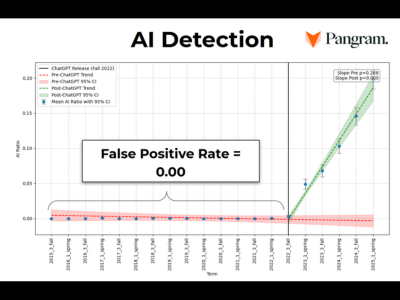
Generative AI and Wikipedia editing: What we learned in 2025
Jan 31, 2026

An Unbothered Jimmy Wales Calls Grokipedia a 'Cartoon Imitation' of Wikipedia
Feb 22, 2026
The future of programming (1982)
Oct 17, 2026

Vintage Artificial Intelligence: Before It Got Awkward
Aug 24, 2026

Why My Father Is Wrong: A Defense of Guitar Hero
Aug 11, 2026