Anthropic's Claude autonomously designs protein binders targeting scorpion neurotoxins
vectorwire.ai
October 21, 2026
2 min read
39/100
Summary
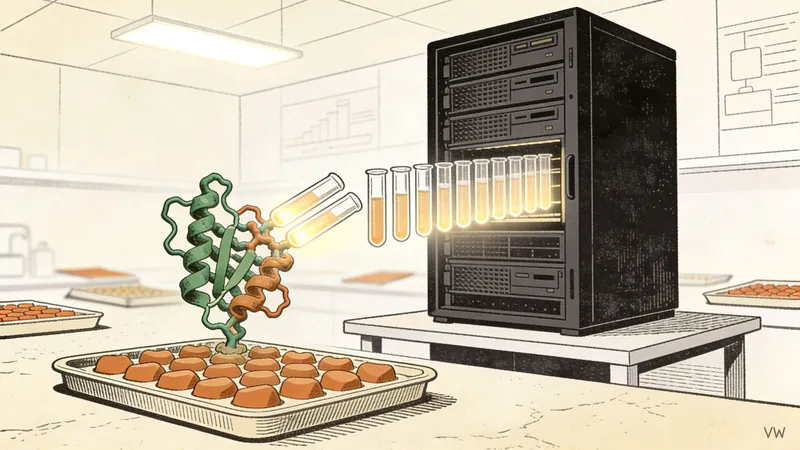
Anthropic and Citrini Research used an internal Claude model to design protein minibinders targeting five neurotoxins from four scorpion species. Following one prompt, Claude generated 318,484 candidate designs during a 24-hour autonomous run in Anthropic’s Claude Science research environment. Researchers tested 211 designs—180 selected by Claude and 31 added by the team—and found that 17 met their criteria for functional binders. The two strongest binders attached with high affinity to Cn2, a toxin produced by a Mexican scorpion. Laboratory evidence suggests the binders attach at or near the site targeted by an antibody that neutralizes Cn2 in mice. The binders have not been tested as antivenom in animals or humans, so their ability to treat scorpion stings remains unverified. Scorpion neurotoxins kill more than 3,250 people annually. An earlier Claude study produced minibinders for 14 of 15 target proteins, with reported hit rates of 22% to 35%, compared with a typical 10% to 15% baseline. Susana Vázquez Torres and Timothy P. Jenkins described the scorpion-toxin results as a promising first step, and two independent laboratories confirmed the findings.
Key Takeaways
- Claude generated 318,484 candidate protein minibinders against five scorpion neurotoxins during a 24-hour autonomous research run.
- Seventeen of 211 laboratory-tested designs met the researchers’ criteria for functional toxin binders.
- The strongest binders targeted Cn2, a Mexican scorpion toxin, but have not yet been shown to work as antivenom in animals or humans.
- Two independent laboratories confirmed the results, while external experts called the work a promising first step.
What the discussion said
Commenters treated the reported 17 successful binders from 211 laboratory-tested designs as the headline result, not merely a flashy biology demo. Several saw that first-pass hit rate as striking and wanted the crucial comparison: how far does it exceed ordinary experimental screening or computational protein-design pipelines? If it holds up against standard wet-lab rates, the implication is that an AI system can materially compress the path from a molecular target to viable therapeutic leads. The thread also immediately framed the achievement as a dual-use milestone. A system that can reason toward neutralizing a scorpion neurotoxin may also lower the barrier to engineering more harmful molecules, especially given prior reports of AI assistance sought for pathogen and venom-related research. That concern was not dismissed as anti-AI reflex; readers viewed it as the obvious mirror image of the medical promise. Others questioned why scorpion toxins were the initial showcase, wondering whether it reflects a strategically useful testbed or simply the first publishable success. The exchange was brief, but its center of gravity was cautious admiration: impressive experimental validation paired with unease about where broadly capable molecular-design assistance leads next.
Where opinion split
The sharpest dispute is whether AI-designed antivenom is primarily a therapeutic breakthrough or a warning that toxin engineering is becoming easier. Optimists point to unusually strong initial experimental hits and a clear route to treatments; skeptics argue that the same target-aware design capability is inherently transferable to harmful venom or pathogen work, making safeguards as important as the result.
Coverage & discussions
Reddit r/artificial · vectorwire.ai
Community discussions
Community Sentiment
Positives
- Seventeen active binders from 211 wet-lab tests looks like an unusually strong first pass, suggesting AI may turn protein-therapeutic discovery into a far less wasteful search.
- Designing molecules that neutralize scorpion neurotoxins points toward faster antivenom development, where conventional discovery can leave dangerous envenomation with limited treatment options.
Concerns
- A model capable of designing toxin binders may also help optimize toxins, so a medical demonstration doubles as evidence that molecular dual-use capabilities are becoming practical.
- Reports of AI support sought for flu, chikungunya, and venom-related gain-of-function work make this less a hypothetical misuse story than a capability governance problem already arriving.
- The scorpion focus feels underexplained to some readers, who want to know whether it is a meaningful benchmark for broader therapeutic design or simply a convenient success case.
Related Articles

Claude designed protein binders against scorpion neurotoxins
Oct 20, 2026

Agentic Monitoring
Oct 19, 2026

Anthropic appears to be A/B testing reduced effort levels in Claude Code
Aug 22, 2026
Claudette: Make Claude Stop Talking Like a BuzzFeed Article
Aug 21, 2026
Claude Code weekly limits reduce by a third tomorrow
Aug 18, 2026