Bonsai 27B: A 27B-Class model that runs on a phone
prismml.com
July 14, 2026
6 min read
🔥🔥🔥🔥🔥
71/100
Summary
Bonsai 27B is the first 27B-class AI model capable of running on a phone, based on Qwen3.6 27B. It supports multi-step reasoning, structured tool calls, vision tasks, and computer-use agent capabilities.
Key Takeaways
- Bonsai 27B is the first 27B-class AI model capable of running on a phone, utilizing either ternary or 1-bit weights to reduce memory requirements significantly.
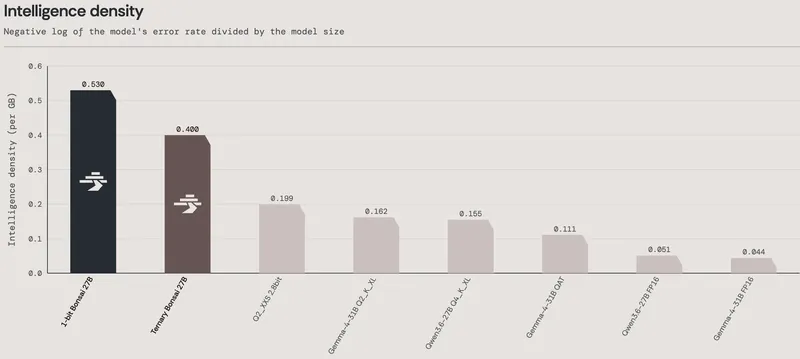
- Ternary Bonsai 27B retains 95% of the performance of full-precision models, while 1-bit Bonsai 27B retains 90%, making them suitable for complex tasks like multi-step reasoning and tool calling.
- The model supports a full 262K-token context and includes a compact vision tower for multimodal tasks, allowing it to process various inputs beyond text.
- Bonsai 27B enables sustained AI workloads that require multiple model calls, addressing limitations of cloud-only execution by allowing local processing of user data and workflows.
Coverage & discussions
Hacker News · prismml.com
Community discussions
Community Sentiment
Positives
- The Bonsai 27B model's ability to run on a phone is a game changer, making powerful AI accessible anywhere — it's like carrying a supercomputer in your pocket!
- Commenters are excited about the quantization techniques used, suggesting that retaining most intelligence while reducing model size is a significant achievement.
- The comparison with Gemma 4 indicates Bonsai 27B excels in math and coding, showing that smaller models can still pack a punch in specific tasks.
- The community is buzzing about the potential for real-time applications on mobile, hinting at a new era of AI-powered tools right at our fingertips.
Concerns
- Skeptics are calling out the model's reasoning flaws, pointing out it gets stuck in loops — a major red flag for practical applications.
- Concerns about the accuracy of the model's outputs, like the recipe's protein content, suggest it's not quite ready for critical tasks yet.
- Some users feel that mundane queries shouldn't require AI, arguing that phone-sized models need to deliver unique capabilities to justify their existence.