C2PA Cameras Do Not Survive Contact with Reality
da.vidbuchanan.co.uk
August 25, 2026
10 min read
57/100
Summary
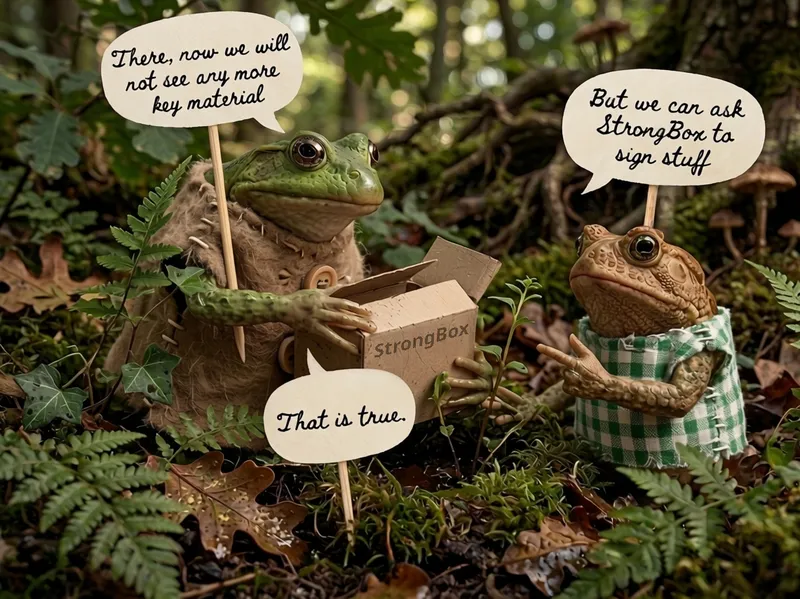
Security researcher David Buchanan said Android implementations of C2PA, a media-provenance standard intended to cryptographically identify camera-captured content, can be made to sign arbitrary AI-generated images and videos after a device is rooted. He demonstrated media that C2PA verification identified as originating from Google’s Pixel Camera app and said a YouTube label initially described a forged video as “captured with a camera.” Google later removed that section of the video description, Buchanan said. Android C2PA camera apps rely on Key Attestation or Google Play Integrity to prevent altered apps from signing non-camera data. Buchanan said privilege-escalation exploits can root a device without unlocking its bootloader or modifying its verified boot keys, allowing a compromised but apparently compliant device to obtain C2PA signing keys. StrongBox hardware prevents extraction of those keys, but root access can instruct StrongBox to sign arbitrary data, he said. Buchanan cited CVE-2026-43499 as an in-the-wild one-click root exploit affecting fully patched Pixel devices at the time of publication, August 25, 2026. He also said low-cost hardware fault-injection attacks can root devices and may not be patchable on existing hardware. Google awarded Buchanan a $7,500 bounty despite closing his report as “Won’t fix (infeasible),” according to Buchanan.
Key Takeaways
- David Buchanan said rooted Android devices can use C2PA signing functions to authenticate arbitrary images or videos without extracting the hardware-protected private keys.
- Google’s Pixel Camera app has C2PA Assurance Level 2, the highest level currently defined by the C2PA Conformance Program for a mobile app, according to Google.
- Buchanan said CVE-2026-43499 enabled one-click root access on fully patched Pixel devices as of August 25, 2026, allowing software-only C2PA forgery attacks.
- Google awarded Buchanan a $7,500 bounty for his findings, although he said the company marked the report “Won’t fix (infeasible).”
What the discussion said
The thread treated camera provenance as a much narrower tool than the marketing around it suggests. Most commenters agreed that no signature can establish the thing people actually want proved: that an image depicts an unmanipulated real-world event. A compromised camera can sign fabricated input, and even uncompromised hardware cannot distinguish a scene from a convincing image displayed on a monitor. Film negatives, sensor-level signing, focal-length metadata, depth maps, and dedicated security chips were all seen as partial obstacles at best, not escapes from this analog loophole. The sharper concern was social rather than cryptographic. Several readers argued that a system advertised as proof of reality may make ordinary viewers too trusting, while sophisticated propagandists, state actors, or anyone with access to compromised hardware retain ways to manufacture apparently credible evidence. They also doubted consumers would inspect provenance records at all. A minority defended C2PA as useful when its scope is honest: it can deter low-effort deception, document an edit trail for commercial AI-compliance disputes, and let reputable publishers attest to what they chose to release. Others saw publisher-level signatures as more meaningful than camera-origin claims, since institutional reputation already supplies the real trust anchor. Hardware-backed attestation and signed depth data were floated as possible improvements, but not as a complete answer.
Where opinion split
The central dispute is whether C2PA remains worthwhile despite being unable to prove that a photo records reality. Supporters say it can stop casual AI fakery and provide accountable provenance for publishers and compliance workflows; critics say that framing it as authenticity creates dangerous false confidence while determined actors bypass it through device compromise or simply photographing a screen.
Community Sentiment
Positives
- C2PA can raise the cost of casual AI-image fraud, catching the large share of manipulators who will not remove marks or engineer a provenance bypass.
- For advertising and regulated creative work, a signed edit trail can assign liability when a supplier secretly injects AI-generated material into supposedly compliant assets.
- Publisher-controlled signatures make practical sense as a record of editorial custody, where institutional reputation—not a camera chip—does the real work of establishing trust.
- Hardware-isolated signing and captured depth information could make simple replay attacks harder, even if neither turns provenance into proof of reality.
Concerns
- A signed camera file cannot prove a real scene: a fake can be shown on a display and photographed through entirely legitimate hardware.
- Rooted or exploited devices can undermine client-side attestation, exposing camera-origin credentials as only as trustworthy as the whole device security stack.
- Selling provenance as evidence of truth risks making the public more credulous just as capable operators retain routes to signed-looking disinformation.
- Average viewers are unlikely to inspect credential data, leaving the scheme more useful for corporate training-data pipelines and compliance paperwork than public verification.
- RAW sensor files are not a durable refuge either; once provenance matters enough, model builders and adversaries have every incentive to imitate them.
Related Articles
Codex Hacked a Samsung TV
Apr 16, 2026
Assessing Claude Mythos Preview's cybersecurity capabilities
Apr 7, 2026

AI Meets Cryptography 1: What AI Found in Cloudflare's Circl
Jul 7, 2026
Google API keys weren't secrets, but then Gemini changed the rules
Feb 25, 2026
Google Cloud Fraud Defence is just WEI repackaged
May 8, 2026