Report · fortune.com
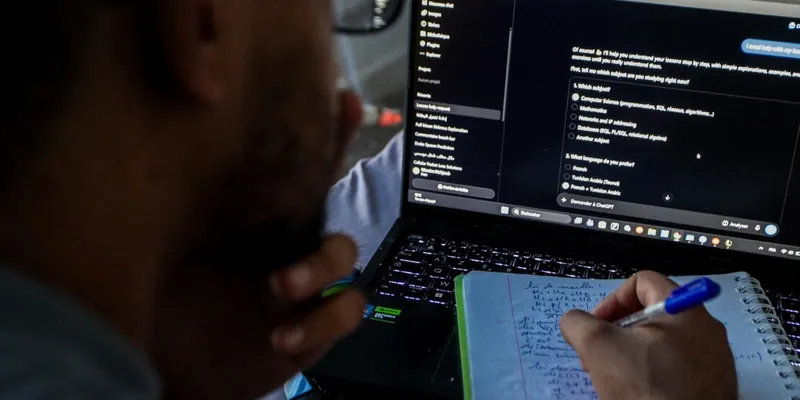
ChatGPT now lets you lock private chats with a PIN—but forgetting it could erase them for good
fortune.com
Source published October 27, 2026
Summary: 2 min read
24/100
Summary
OpenAI has begun gradually rolling out Locked Chats for ChatGPT, allowing users to hide selected conversations from regular history, pinned chats, and search results. Locked conversations are stored under Projects > Locked chats and require a four-digit account PIN to open; supported mobile devices can also use Face ID, Touch ID, or device authentication. The feature is available across ChatGPT’s Free, Go, Plus, Pro, Business, Enterprise, and Edu plans, with some conversations—including temporary, archived, group, shared-link, Codex, and scheduled-task chats—ineligible. Resetting a forgotten PIN permanently deletes every locked chat, memories stored only in those chats, and content protected only by the old PIN. OpenAI says neither its support staff nor workspace administrators can restore or unlock that content, while changing a PIN that users still know preserves it. Locked Chats do not add end-to-end encryption, alter retention periods, or change whether chats are used to improve OpenAI’s models under a user’s existing settings. Enterprise and Edu locked chats remain available in compliance logs. New information from locked chats can be used across other locked chats when Memory is enabled, but not in regular conversations. Existing shared links remain accessible until separately deleted. Temporary Chat offers different protections: it does not appear in history, does not update memory, and is not used for model improvement, though OpenAI may retain copies for up to 30 days for safety.
Key Takeaways
- ChatGPT Locked Chats hide selected conversations behind a four-digit PIN and place them outside normal chat history, search, and pinned chats.
- Resetting a forgotten Locked Chats PIN permanently deletes protected chats, files, and chat-only memories, with no recovery option from OpenAI or workspace administrators.
- Locked Chats do not provide end-to-end encryption, change OpenAI’s retention policies, or alter a user’s model-training data-control setting.
- Temporary Chat does not save conversations to history or memory and is not used for model improvement, although OpenAI may retain it for up to 30 days for safety purposes.
What the discussion said
The thread barely treats the PIN feature as a meaningful privacy advance. Readers see local chat locking as table stakes: a PIN is supposed to deny access without the credential, so presenting the risk of losing access after forgetting it as a surprising drawback strikes them as confused framing rather than product news. One response explicitly argues that this is simply how PIN-based protection works. The sharper criticism is about the boundary of that protection. Commenters distinguish hiding conversations from someone holding the device from protecting them from the AI provider itself. In that view, a client-facing lock may prevent casual snooping, but it does nothing to change OpenAI’s access to or handling of chat data, which is the privacy question they actually care about. Readers also push back on the implication that forgotten credentials would necessarily destroy conversations permanently, suggesting the headline overstates what the feature can guarantee or what deletion means. There is no serious debate over whether a PIN can be useful; the skepticism is directed at marketing a basic local safeguard as robust private-chat protection and at treating account-data erasure as an obvious consequence.
Where opinion split
The central dispute is whether the PIN lock amounts to meaningful privacy. Defenders of the basic mechanism say losing the PIN blocking access is the normal, necessary behavior of a real lock. Critics answer that it only shields chats from the device user or nearby viewers, while leaving provider-level access untouched and making the article’s permanent-erasure framing questionable.
Coverage & discussions
Reddit r/artificial · fortune.com
Community discussions
Community Sentiment
Positives
- A PIN gate is doing the minimum a private-chat lock should do: without the secret, a person with the device should not be able to open the conversations.
Concerns
- The feature appears to protect chats from casual local access, not from OpenAI’s own access or data practices, so it falls far short of end-to-end privacy.
- Treating forgotten-PIN consequences as permanent chat destruction looks misleading, because a local lock does not by itself establish that provider-held data is irrecoverably erased.
- The announcement is being criticized for dressing up a baseline security control as a substantial privacy improvement.
Related Articles
AI ruling prompts warnings from US lawyers: Your chats could be used against you
Apr 15, 2026
Improving GPT‑5.6 Sol in ChatGPT, expanding GPT‑5.6 Luna access for free users
Aug 6, 2026

Experts sound alarm after ChatGPT Health fails to recognise medical emergencies
Feb 27, 2026

Cancel ChatGPT AI boycott surges after OpenAI pentagon military deal
Mar 4, 2026
We Took over ChatGPT Accounts
Oct 31, 2026