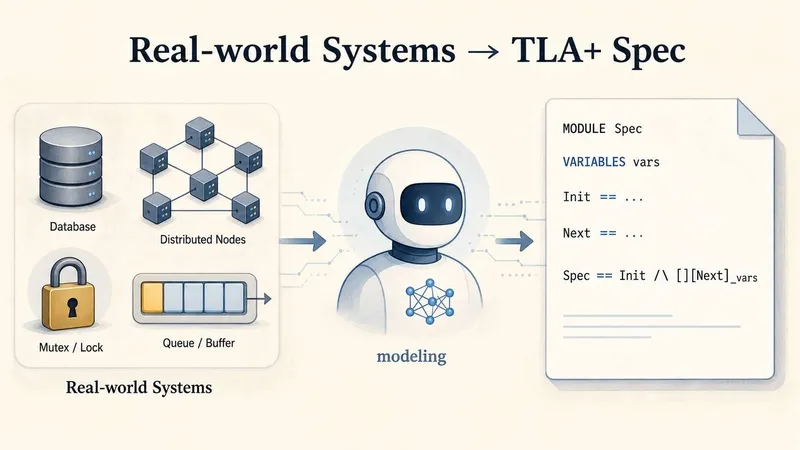
DSLs Enable Reliable Use of LLMs

martinfowler.com
July 15, 2026
17 min read
🔥🔥🔥🔥🔥
52/100
Summary
Domain-Specific Languages (DSLs) provide clear boundaries for Large Language Models (LLMs) to ensure accurate code generation. Tickloom serves as an example of a DSL that illustrates distributed system behavior and enables iterative development alongside LLMs as a natural language interface.
Key Takeaways
- Domain-Specific Languages (DSLs) provide clear boundaries that guide Large Language Models (LLMs) in generating code accurately.
- The iterative process of refining specifications and generating code helps uncover design decisions that are not apparent in initial high-level specifications.
- LLMs serve as brainstorming partners during the design phase and as natural language interfaces once the domain vocabulary is established.
- A DSL can act as the key source of truth for software systems, facilitating communication and evolution of the codebase through a shared conceptual model.
Community Sentiment
Positives
- DSLs are a fantastic bridge for transforming ambiguous specs into defined language, allowing LLMs to thrive in structured environments.
- Having a DSL that aligns with formats like JSON/YAML makes everything smoother, much like static type checking — it cuts down on errors dramatically.
- Some users report great success with LLMs and less common DSLs, suggesting that clear structure is key to effective communication with AI.
- One commenter has created a powerful framework using Claude that feels like a DSL on steroids, showcasing how tailored approaches can enhance AI integration.
Concerns
- The upfront cost of designing and maintaining a DSL can be significant, and if it expands too much, you might as well let the LLM generate the final code directly.
- In practice, some find that DSLs don't deliver the expected performance; they can obscure clarity and lead to worse results compared to traditional coding.
- Critics highlight that while DSLs seem logical, they often fail in real-world applications, particularly when LLMs struggle with the constraints of formal structures.