Report · nypost.com
Google illegally cut down 250K trees in Finland for data center
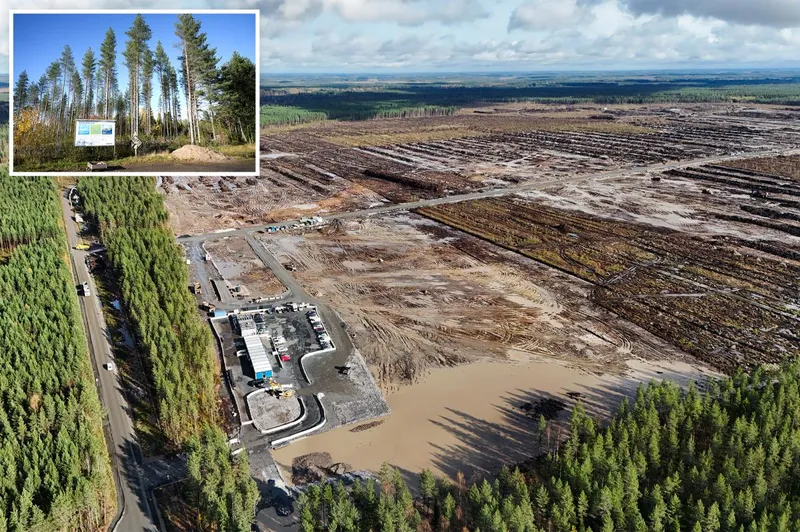
nypost.com
Source published October 24, 2026
Summary: 1 min read
60/100
Summary
Finnish regulators ordered Google project subsidiary Tuike Finland Oy to suspend operations at two planned data-center sites near Muhos and Kajaani after extensive site preparation, including tree removal, began before a mandatory environmental impact assessment was completed. The Finnish Licensing and Supervision Agency set an Oct. 23 deadline and said the work could alter the environment in ways the assessment process is meant to identify. Google is developing the sites as part of a $15 billion Nordic AI-infrastructure investment announced in September. The Guardian estimated that clearing near Muhos in northern Finland removed about 250,000 trees across 816 acres. Regulators cited removed trees and topsoil, construction roads and storage areas, altered ditches and culverts, and stormwater work. Residents and conservation advocates said the deforestation displaced wildlife, including wolves that entered nearby Otanmäki, and muddied water sources feeding the Oulujoki River. Google’s Finland chief, Antti Järvinen, said the company believed it had legal approval to begin the clearing and apologized. Google said it would protect water sources and replant trees on about 321 acres. Finnish Association for Nature Conservation chair Hanna Halmeenpää called Google’s conduct “pure arrogance,” while residents also raised concerns about noise and broader effects on the local environment.
Key Takeaways
- Finnish authorities halted work at Google’s two planned data-center sites after concluding that extensive preparatory work had begun before an environmental impact assessment was completed.
- About 816 acres of woodland near Muhos were cleared, with The Guardian estimating that roughly 250,000 trees were removed.
- Google said it believed it had approval to start the tree cutting; Antti Järvinen apologized and said the company would protect water sources and replant about 321 acres.
- Residents and conservation advocates said the clearing displaced wildlife and caused nearby water sources to turn brown, affecting streams that feed the Oulujoki River.
What the discussion said
The thread treated the headline’s tree count as a distraction from the AI infrastructure question underneath it: whether a hyperscale data-center build can bypass environmental review simply because the cleared land is commercial forestry and the project is strategically useful. Several commenters stressed that the tract was planted forest, not irreplaceable old growth, in a country with vast timber resources and routine harvesting. From that view, the raw number of felled trees is engineered for outrage, while hosting AI capacity in Europe brings real economic and security value. But the stronger pushback was not sentimental attachment to individual trees. Readers argued that the required assessment exists to identify runoff, habitat, and other impacts before irreversible clearing begins; after the land is stripped, the regulator cannot perform that job honestly. They saw the incident as a revealing first test of whether a giant AI-infrastructure customer faces the same rules as an ordinary landowner. A smaller group also challenged the premise that any European data center advances European autonomy, warning that US-owned operators may leave European data exposed to foreign jurisdiction while exporting profits. There was broad irritation at sensational source framing, although disagreement remained over whether the underlying violation was trivial or a serious governance failure.
Where opinion split
The central fight was whether the clearing is a minor permit-order mistake on ordinary managed forest or a serious breach of environmental law by AI infrastructure. Defenders argued that Finland routinely harvests and replants forests, and European AI capacity should not be derailed by a comparatively small cleared area. Critics replied that the assessment must precede clearing precisely because it determines impacts that cannot be assessed afterward, and corporate scale is no excuse for ignoring that sequence.
Coverage & discussions
Hacker News · nypost.com
Community discussions
Community Sentiment
Positives
- European AI data-center capacity is seen by some commenters as strategically valuable, reducing the risk that critical compute remains entirely outside the continent.
- Because the site was managed commercial forest in a heavily forested country, several readers argue the tree total alone says little about the project’s actual ecological cost.
Concerns
- Starting an AI data-center build before mandated environmental review makes the review meaningless, since runoff, habitat, and other site impacts cannot be evaluated properly after clearing.
- The episode fuels the perception that hyperscale AI infrastructure expects exemptions from rules that would expose an ordinary landowner to penalties.
- US-controlled data centers may weaken rather than strengthen European AI sovereignty if data remains subject to US legal reach and profits leave the region.
- Treating the forest as disposable PR collateral makes AI data centers easier targets for public opposition, even where the underlying compute investment has real value.
Related Articles

Google cleared 300 hectares of Finnish forest
Oct 22, 2026

US data centers tripled annual water consumption to 17B gallons
Aug 25, 2026

Jason Kelce Encourages People To Mail Jars Of Pee To AI Data Centers In Bizarre New Ad—And We Don't Know What To Think
Aug 20, 2026

Field measurements of neighborhood-scale air temperature impacts of data centers
Aug 18, 2026

Americans hate AI so much that politicians are losing their jobs over it
Jul 20, 2026