Report · openai.com
GPT-6.1 Terra
openai.com
Source published October 26, 2026
Summary: 2 min read
70/100
Summary
OpenAI has introduced GPT-6.1 Terra, a model for visual reasoning, computer-use tasks, writing, and coding. It is available immediately to ChatGPT Work and Codex users on Plus, Pro, Enterprise, and Edu plans, and through the OpenAI API as gpt-6.1-terra. OpenAI lists standard API prices of $1 per million input tokens, $0.05 per million cached input tokens, and $5 per million output tokens; it says these prices are 50% below GPT-5.6 Terra and GPT-6.1 Sol. OpenAI says GPT-6.1 Terra can handle tasks including interpreting technical drawings, entering invoice data into accounting software, completing forms, and editing video. On the Agents’ Last Exam computer-use benchmark at medium reasoning effort, OpenAI reports that Terra scored 15 percentage points above GPT-5.6 Terra at about one-third the cost, while matching GPT-6 Astra’s performance at one-tenth its token price. It says Terra completed tasks more than three times faster than GPT-6 Astra and GPT-6.1 Sol. OpenAI reports a lower error rate on its internal error-inducing-prompt benchmark: 16.7% at low reasoning effort, versus 53.6% for GPT-5.6 Terra, and 4.3% at maximum effort. On Terminal-Bench 4.0, Terra solved 50.3% of tasks at maximum reasoning effort, compared with GPT-5.6 Terra’s published 21.5%. OpenAI says the model meets its Critical cybersecurity threshold and retains GPT-6 Astra’s safeguards.
Key Takeaways
- GPT-6.1 Terra is available in ChatGPT Work, Codex, and the OpenAI API, with API pricing starting at $1 per million input tokens and $5 per million output tokens.
- OpenAI says GPT-6.1 Terra combines visual reasoning, computer use, writing, and coding for tasks such as processing invoices, interpreting drawings, and editing video.
- OpenAI reports that Terra outperformed GPT-5.6 Terra on computer-use, visual-reasoning, factuality, and software-engineering evaluations while costing less.
- At maximum reasoning effort, GPT-6.1 Terra solved 50.3% of Terminal-Bench 4.0 coding tasks, according to OpenAI, more than double GPT-5.6 Terra’s published 21.5% score.
- OpenAI says GPT-6.1 Terra meets the Critical cybersecurity threshold in its Preparedness Framework and resists prompt-injection attempts.
What the discussion said
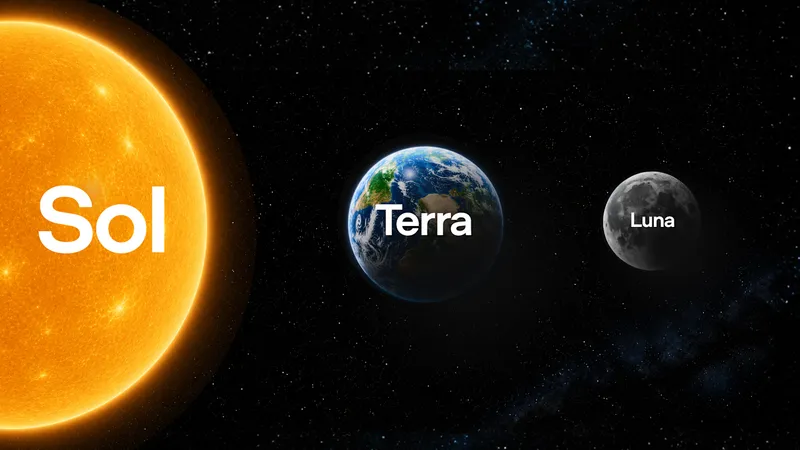
The thread spent less time celebrating a raw capability jump than trying to place Terra in an increasingly crowded model ladder. Commenters broadly accepted the provider’s basic claim that model quality is multidimensional: a cheaper model can beat a pricier sibling on some workloads while losing on others, and tiers are meant to organize price within a generation rather than establish a permanent intelligence ranking. The published API prices also gave the lineup a clear economic shape, with Terra positioned at roughly half Sol’s price and far below the flagship tier. But that explanation did not settle the practical question. Several readers said Terra looks like an awkward middle option: Luna has become remarkably cheap and capable, while Sol is cheap enough that it often wins once difficult agentic coding or terminal tasks require high reasoning effort. Reported comparisons suggested Terra can look close to the flagship on selected charts, yet trail Sol on TerminalBench when pushed hard, sometimes costing more because it needs greater reasoning effort and emits more text. Others argued this misses the real API use case: high-volume automation, computer work, technical writing, and narrowly measured production workflows can reward a model that delivers most of Sol’s performance at half the unit price. Skepticism also remained around benchmark selection, factuality claims, and whether headline cost-per-task framing masks reduced subscription value.
Where opinion split
The central fight is whether Terra occupies a useful production tier or is merely a confusing, overpriced middle child. Defenders argue that its half-price position versus Sol makes it a sensible choice for API workloads where medium reasoning is enough and volume makes token economics decisive. Critics counter that Luna or Sol usually dominates it: the former is cheaper for routine work, while the latter is stronger and can be better value on hard tasks once Terra’s extra reasoning and verbosity are counted.
Coverage & discussions
Hacker News · openai.com
Community discussions
Community Sentiment
Positives
- Terra’s pricing gives API builders a credible middle rung: roughly 90% of Sol-like output for about half the token cost can matter enormously at production volume.
- Several readers see the tiered lineup as a price-and-capability map within each release, not a promise that every larger label beats every smaller one on every task.
- Medium-effort Terra appears fast and economically attractive for automation, computer-use workflows, and technical writing that do not need maximum reasoning.
- The release continues a steep price-cut trend, making near-frontier capability less confined to the most expensive flagship endpoint.
Concerns
- Terra’s role remains hard to justify for many hands-on users because upgraded Luna covers cheap jobs while Sol often wins difficult work without a painful price premium.
- On demanding terminal-agent evaluations, critics say Terra needs maximum reasoning to approach Sol, turning a supposedly cheaper choice into a slower and sometimes costlier one.
- Claims that Terra nearly matches the flagship draw distrust because release charts may foreground the benchmarks where it happens to shine while omitting its weaker tasks.
- The growing model roster and cross-generation naming make purchase decisions needlessly opaque when capability is not a clean linear ladder.