GPT‑Rosalind for life sciences research
openai.com
April 16, 2026
7 min read
50/100
Summary
GPT-Rosalind is a new AI model designed to accelerate scientific research and drug discovery in life sciences. It is optimized for workflows in biology, chemistry, protein engineering, and genomics, enhancing tool use and understanding in these fields.
Key Takeaways
- OpenAI introduced GPT-Rosalind, a model designed to accelerate scientific research and drug discovery in life sciences.
- GPT-Rosalind optimizes workflows in biology, drug discovery, and translational medicine by enhancing tool use and understanding in chemistry, protein engineering, and genomics.
- The model is available as a research preview in ChatGPT, Codex, and the API for qualified customers, along with a free Life Sciences research plugin for Codex.
- GPT-Rosalind is built to improve reasoning over complex biological tasks and is being applied in collaboration with organizations like Amgen and Moderna to enhance research workflows.
Coverage & discussions
Hacker News · openai.com
Community discussions
Community Sentiment
Positives
- GPT-5 demonstrates advanced reasoning capabilities, with some users feeling it can engage like a PhD-level expert in various topics, which could enhance research discussions.
- The BixBench benchmark is seen as a valuable tool for comparing model performance, highlighting the competitive landscape in AI applications for life sciences.
Concerns
- There are concerns about the ethical implications of monetizing AI tools named after Rosalind Franklin, suggesting a potential exploitation of her legacy.
- The lack of performance reporting on GPT-5.4 Pro and the omission of Anthropic models in comparisons raises questions about transparency and the validity of the claims made.
- Skepticism exists regarding the trustworthiness of generative models in conducting actual scientific research, as proven mathematical models are still preferred.
Related Articles
Previewing GPT‑5.6 Sol: a next-generation model
Jun 26, 2026

Our Approach to Bioresilience: Isomorphic Labs and Google DeepMind
Jul 18, 2026
Kaiser nurses say AI, workplace surveillance are making their jobs, care worse
Jul 17, 2026
OpenAI's o1 correctly diagnosed 67% of ER patients vs. 50-55% by triage doctors
May 3, 2026
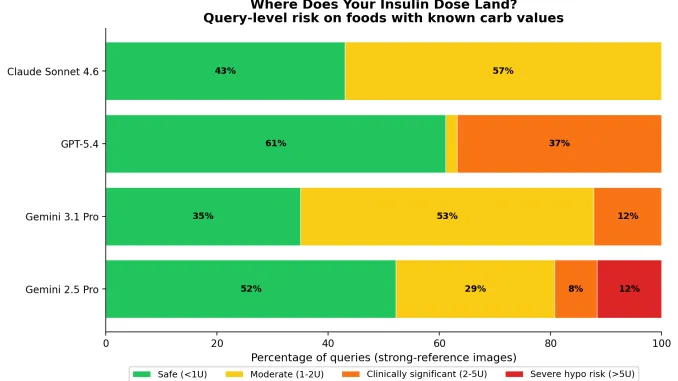
He asked AI to count carbs 27000 times. It couldn't give the same answer twice
Apr 29, 2026