It's not a fear of "AI communism"; it's a fear of competitive market capitalism
observationalepidemiology.blogspot.com
August 4, 2026
4 min read
🔥🔥🔥🔥🔥
50/100
Summary
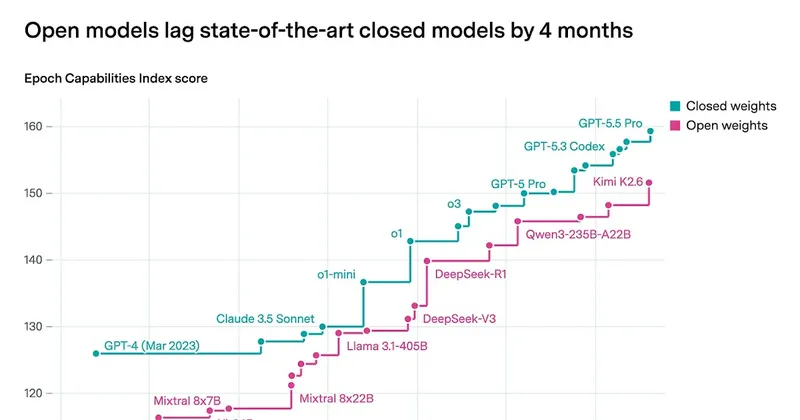
The economics of developing and monetizing frontier AI models may provide a competitive advantage for approximately four months before open-weight versions become available. Concerns exist regarding the implications of this competitive market capitalism on the AI landscape.
Key Takeaways
- Capital expenditures related to the AI sector have reached approximately two trillion dollars, with projections exceeding five trillion dollars by the end of 2030.
- Major AI companies, including OpenAI and Anthropic, face significant challenges in maintaining high profit margins due to increasing competition from open-weight models.
- The emergence of competitive Chinese open-weight AI models, such as Kimi K3, poses a threat to proprietary models from companies like OpenAI and Anthropic.
- There is a growing consensus in the financial world that the AI market is experiencing a bubble that may lead to a significant financial crisis.
Coverage & discussions
Hacker News · observationalepidemiology.blogspot.com
Community discussions
Community Sentiment
Positives
- Open-weight models are seen as a game changer, potentially democratizing access to powerful AI tools and preventing monopolistic pricing from big players like OpenAI.
- The competitive landscape for LLMs is heating up, which could lead to more innovation and better performance across the board.
Concerns
- Concerns are rampant that LLMs could encode structural biases, making them tools of ideological control rather than unbiased information sources.
- The fear of totalitarian regimes leveraging AI technology raises alarms about the ethical implications and potential misuse of these models.