Labor market impacts of AI: A new measure and early evidence

anthropic.com
March 5, 2026
20 min read
🔥🔥🔥🔥🔥
63/100
Summary
A new measure of AI displacement risk, termed observed exposure, combines theoretical LLM capability with real-world usage data, emphasizing automated work-related uses. Occupations with higher observed exposure are projected to experience slower growth through 2034, with workers in these professions more likely to face displacement.
Key Takeaways
- A new measure of AI displacement risk, called observed exposure, combines theoretical LLM capability and real-world usage data, focusing on automated work-related uses.
- Occupations with higher observed exposure to AI are projected by the Bureau of Labor Statistics to experience slower growth through 2034.
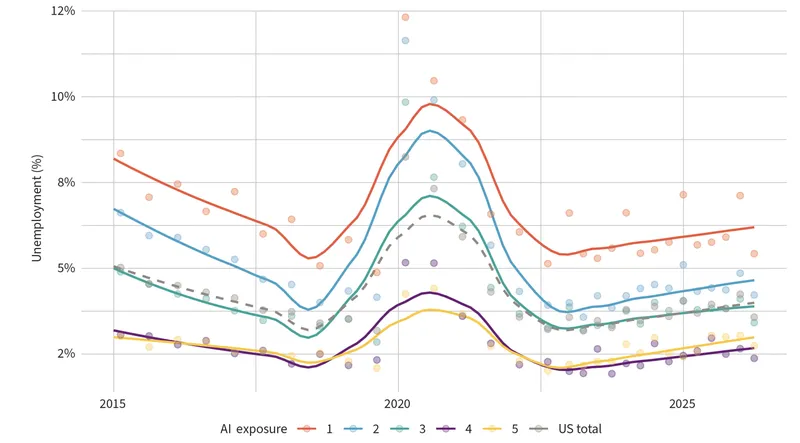
- There has been no systematic increase in unemployment for highly exposed workers since late 2022, although hiring of younger workers in exposed occupations has shown signs of slowing.
- AI's actual coverage in the labor market remains a fraction of its theoretical capability, indicating that significant impacts may not yet be fully realized.
Coverage & discussions
Hacker News · anthropic.com
Community discussions
Community Sentiment
Positives
- AI has significantly improved my workflow, allowing me to save half the steps in tasks like researching codebases and integrating changes, which enhances overall productivity.
- The assistance from AI tools has enabled me to tackle larger projects that I wouldn't have attempted otherwise, demonstrating their potential in complex software development.
Concerns
- Despite claims of increased productivity, many feel that AI has not meaningfully impacted their workload, as expectations have simply risen to match output.
- The perceived productivity boost from AI is often limited to those who know how to use it, leaving others unaffected and highlighting a disparity in benefits.