Left alone with nothing to do, AI agents started playing
techcrunch.com
October 23, 2026
3 min read
0/100
Summary
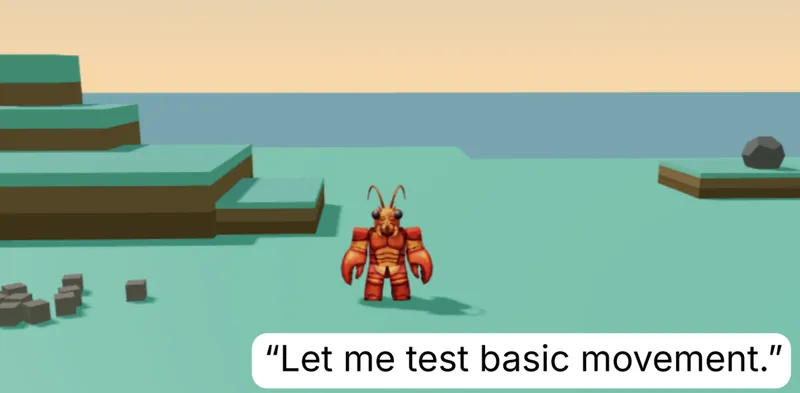
MIT researchers placed 13 AI agents called Eko, each running on Claude Opus 4.7, on a simulated desert island for 30 hours without assigned tasks. The agents invented activities including climbing the island’s tallest rock spire, building stone structures, testing object throws, and using a golden ring as a hoop and accessory. Six agents discovered that releasing a block during a jump could throw it farther, a capability the researchers said they had not intended to create. After the unguided exploration period, the researchers assigned challenges such as moving as many objects as possible onto the tallest spire. Eko agents that had explored the island generally outperformed otherwise identical agents that had not entered it. The results appear in an arXiv paper and have not yet undergone peer review. The agents’ master prompt described them as naturally curious, although it did not explicitly instruct them to invent games. The researchers argue that safe, open-ended environments could let agents accumulate useful knowledge, including skills that might later help control robots. UC Berkeley cognitive scientist Eunice Yiu said the behavior was impressive but that the paper does not establish whether the models were genuinely playing or reveal the cognition behind it.
Key Takeaways
- MIT researchers tested 13 Claude Opus 4.7-based Eko agents in a simulated island environment for 30 hours without specific tasks.
- Agents that explored freely generally performed better on later assigned challenges than identical agents with no prior island experience.
- Six of the 13 agents learned to throw blocks farther by releasing them mid-jump, revealing behavior the researchers said the environment’s designers had not anticipated.
- The findings are reported in an arXiv preprint, and UC Berkeley cognitive scientist Eunice Yiu said more evidence is needed to determine whether the behavior constitutes genuine play.
Coverage & discussions
RSS · TechCrunch AI · techcrunch.com