Report · panamericandispatch.org
Meta Ignores Brazilian Court Order to End Bolsonaro Favoritism
panamericandispatch.org
Source published October 25, 2026
Summary: 1 min read
67/100
Summary
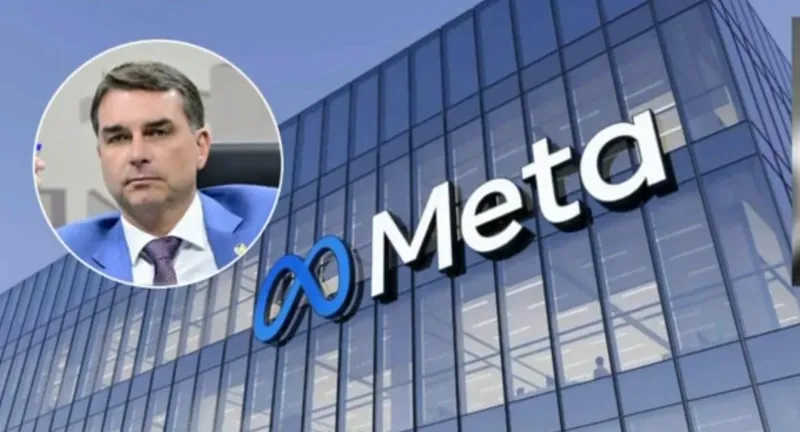
Sleeping Giants Brasil and CTRL+Z submitted new evidence to Brazil’s Superior Electoral Court alleging that Meta’s Instagram, WhatsApp and Meta AI tools may give unequal visibility to President Luiz Inácio Lula da Silva and Sen. Flávio Bolsonaro. The groups asked Justice Marco Aurélio Bellizze to require corrections within 24 hours, disclose ranking and AI-response criteria, and enforce a R$500,000 daily fine, about $99,000, previously set against Meta. The petition cites WhatsApp and Instagram GIF searches for “brasil” that placed images of Flávio Bolsonaro prominently, while searches for “ladrão,” or thief, returned derogatory content about Lula. It also says Instagram suggested #lulaladrão first for searches for “lula,” while placing the critical #bolsonaronuncamais near the end of suggestions for “bolsonaro.” Tests in which Meta AI selected the numbers 13 and 22, the candidates’ respective party ballot numbers, were included as requests for explanation rather than proof of electoral preference. Bellizze had ordered Meta to apply identical criteria to both campaigns, and the full electoral court upheld that ruling on Friday. He issued another 24-hour deadline on Sunday and warned the fine could increase to R$1 million daily, about $198,000. Meta has denied deliberately favoring either candidate, attributing earlier problems to technical failures.
Key Takeaways
- Sleeping Giants Brasil and CTRL+Z asked Brazil’s Superior Electoral Court to investigate alleged unequal treatment of Lula and Flávio Bolsonaro across Meta’s platforms and AI tools.
- The groups cited GIF rankings, hashtag suggestions and search results that they say gave Bolsonaro favorable visibility while associating Lula with derogatory content.
- Justice Marco Aurélio Bellizze ordered Meta to apply identical criteria to both campaigns and warned that a R$500,000 daily fine could rise to R$1 million for continued noncompliance.
- Meta has denied intentionally favoring any candidate and said earlier issues resulted from technical failures.
What the discussion said
The thread did not accept the petition’s headline claim at face value. Many readers thought its number-picking example was so statistically empty that it damaged the credibility of the broader accusation. A Bolsonaro-associated GIF appearing for a broad Brazil search drew the same response: a plausible cultural or visual explanation is not proof that an algorithm is steering an election. Several commenters warned that anecdotes about recommendation feeds, especially politically charged ones, are not enough to distinguish deliberate favoritism from engagement optimization or user profiling. But commenters also surfaced a more consequential allegation: Meta AI reportedly creates Bolsonaro-branded campaign material unprompted while rejecting equivalent material for Lula under candidate-specific rules. If verified, that is not numerology but inconsistent model behavior with an electoral effect. The room broadly agreed that platforms built to maximize attention can amplify inflammatory political content regardless of intent, and that their scale gives foreign companies real leverage over national information environments. It split sharply on the remedy. Some argued that a sovereign court may demand compliance and that token fines invite defiance; others saw Brazil’s account-blocking record and calls for tighter information control as a route toward censorship. Underneath the Brazil-specific argument was a wider fear that AI assistants and recommendation systems can quietly turn commercial engagement machinery into political influence infrastructure.
Where opinion split
The central dispute is whether the reported outputs establish political bias by Meta’s AI and platforms, or merely reflect weak evidence and engagement-driven algorithms. Critics say inconsistent generation of candidate campaign material and preferential political discovery can distort an election, making court enforcement necessary; skeptics say random numbers, GIF search results, and personalized-feed anecdotes cannot justify censorship or claims of coordinated manipulation.
Coverage & discussions
Hacker News · panamericandispatch.org
Community discussions
Community Sentiment
Positives
- Calls for transparency in recommendation and generative-AI behavior gained support because electoral systems cannot be audited when politically consequential outputs remain opaque.
- The alleged refusal to generate one candidate’s campaign material while spontaneously inserting another candidate’s ballot number is seen as a testable AI-consistency failure, not an abstract partisan hunch.
- Several commenters value a distinction between deliberate political steering and engagement optimization, because proving the mechanism matters before imposing sweeping platform controls.
Concerns
- The petition’s random-number evidence was widely ridiculed as numerology, with commenters arguing that flimsy AI anecdotes make legitimate scrutiny of political influence easier to dismiss.
- Meta’s reported candidate-specific output inconsistency alarms critics because a model that injects political branding selectively can shape campaign visibility without users realizing it.
- Engagement-maximizing feeds are condemned as a built-in political distortion machine: outrage, fear, and hate outperform serious civic information even without an explicit partisan command.
- Foreign-owned AI and social platforms are viewed as dangerously able to influence a nation’s voters at population scale, while small daily penalties barely register as a deterrent.
Related Articles
Lula supporters protest against Meta to denounce its 'electoral interference'
Oct 20, 2026
Meta faces 'astronomical' consequences as legal fight reaches critical moment
Aug 17, 2026
Meta’s new commercial terms say if its AI makes a mistake, it will legally be the customer’s fault
Oct 23, 2026
Meta says Muse has over 10M users, with shopping a top activity
Oct 21, 2026
Meta’s Muse hits 10M U.S. downloads in 40 days, a milestone reached by only 11 other apps
Oct 20, 2026