Microsoft and CMU team up to train early career software engineers

cs.cmu.edu
October 17, 2026
4 min read
44/100
Summary
Carnegie Mellon University and Microsoft have launched the Preceptorship for AI-accelerated Software Engineering, or PRAISE, to train early-career Microsoft software engineers to use AI in their work. Participants take online courses through CMU’s Kenneth C. Griffin School of Computer Science while receiving structured guidance and mentorship from senior Microsoft engineers on day-to-day engineering tasks. The program followed an October 2025 visit to CMU by Microsoft Azure CTO, deputy CISO and technical fellow Mark Russinovich, a CMU alumnus. Russinovich said AI tools help senior engineers but do not provide junior engineers the same level of benefit, and that AI does not eliminate the need for junior engineers, human judgment or accountability. CMU teaching professor Michael Hilton said junior engineers historically developed expertise through tasks that AI can now affect. Microsoft employees in the certificate program are taking Machine Learning in Production and Preceptorship in AI-Augmented Software Engineering I this semester. Spring courses include DevOps: Engineering for Secure Development and Deployment and the second preceptorship course. The coursework covers incorporating machine learning into software, using AI development tools, and secure software deployment. Credits can apply toward a master’s degree in software engineering. CMU plans to expand the certificate program and may eventually include other industry partners.
Key Takeaways
- CMU and Microsoft launched the PRAISE program for early-career Microsoft software engineers, combining online CMU coursework with workplace mentorship from senior engineers.
- The program is designed to develop AI-accelerated software engineering skills while emphasizing judgment, accountability and practical application in Microsoft engineering work.
- Current courses include Machine Learning in Production and AI-Augmented Software Engineering, followed by DevOps and a second preceptorship course in the spring.
- PRAISE coursework can be applied toward a master’s degree in software engineering at Carnegie Mellon University.
What the discussion said
The thread treated the program less as a routine university partnership than as a symptom of AI hollowing out software’s traditional apprenticeship ladder. Several commenters see a real pipeline problem: if AI absorbs entry-level implementation work, companies may eventually discover that they have stopped producing the experienced engineers needed to direct, verify, and integrate AI-driven development. One optimistic countercurrent argues that dramatically cheaper software will unlock an enormous backlog of automation, so demand could expand rather than simply collapse. Most of the energy, though, was bleak and skeptical. Some readers say hand-writing code has already ceased to be the core skill; the scarce value is specifying the right product, judging generated output, and taking architectural responsibility. Others pushed this farther, predicting that even senior review and architecture will soon be automated. That confidence met a practical rebuttal from experienced engineers who still find flawed AI-generated changes slipping through because users cannot tell whether code is correct. Commenters also questioned whether a fixed training curriculum can stay relevant while models change monthly, although others defended durable engineering fundamentals. The program was therefore seen either as a necessary attempt to preserve human expertise in an AI-heavy workflow or as belated PR training people for a shrinking occupation.
Where opinion split
The sharp dispute is whether AI eliminates software-engineering jobs or makes software cheap enough to create more of them. Pessimists argue that implementation, review, and eventually architecture will be automated, leaving few roles beyond high-level product judgment; optimists argue that AI-driven productivity will expose vast unmet demand and make experienced oversight more, not less, essential.
Community Sentiment
Positives
- AI-assisted development could make custom software cheap enough to automate the vast stock of manual organizational work, expanding demand instead of merely cutting headcount.
- A structured early-career program may protect the experience pipeline before AI removes junior tasks and leaves industry short of people able to supervise complex systems.
- Long-lived engineering fundamentals still matter beneath the rapid model churn, giving training value beyond whichever coding assistant dominates this year.
Concerns
- The training initiative reads to skeptics as an awkward response to AI eliminating the very junior roles it claims to prepare people for.
- Writing code by hand is increasingly treated as a dead-end specialty; workers must define products and detect bad outputs rather than merely implement tickets.
- Experienced reviewers still catch low-quality AI-generated changes every week, while heavy reliance on assistants can erode developers’ ability to recognize incorrect behavior.
- A curriculum designed around today’s tools risks teaching skills with a one- or two-year shelf life as coding models and workflows accelerate.
Related Articles
There is no spoon – A software engineers primer for demystified ML
Mar 29, 2026
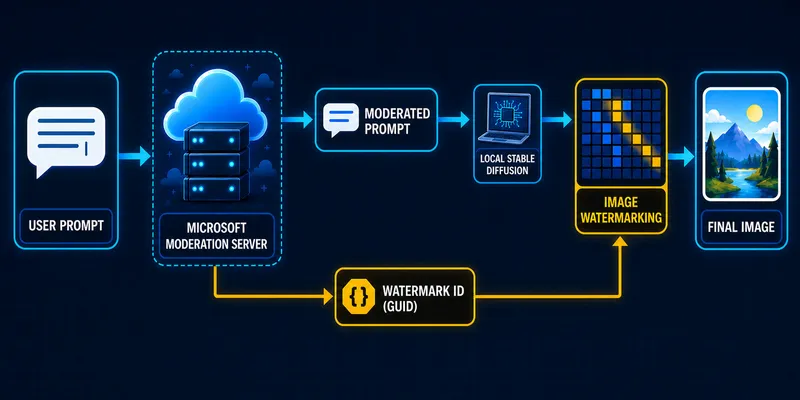
MS Paint and Photos inivisibly watermark even locally generated output with GUID
Aug 24, 2026
We are not going anywhere
Aug 24, 2026

AI boosted homework scores, then exam scores dropped: Study
Aug 21, 2026

How to compromise your system with a job interview
Aug 20, 2026