New York City wants to fine companies that trap you in AI chatbot ‘doom loops’

madrobot.blog
October 20, 2026
4 min read
56/100
Summary
New York City’s Department of Consumer and Worker Protection has proposed rules requiring companies that use AI chatbots, automated phone menus, or other largely automated customer-service systems to disclose that customers are interacting with technology and provide a one-step path to a human representative. Companies that advertise customer service would have to provide it in a reasonable and timely manner rather than repeatedly directing customers through irrelevant or unresponsive automated menus. The proposal presumes a violation unless a customer can reach a human in one step, such as by pressing 0 or typing “agent,” without additional questions and with an estimated wait time. If no human is available, companies would need to offer another contact method, such as a callback, email address with a response commitment, or live-chat hours. Businesses also could not call an unattended phone number or email address “customer service,” and would have to retain records for three years showing whether customers were offered and received human support. Violations would carry fines of $525 for a first offense, $1,050 for a second, and $3,500 for a third violation within two years. The rules would apply to businesses serving New York City customers. Public comments are open until November 19, 2026, with a virtual public hearing scheduled for 11 a.m. New York time that day.
Key Takeaways
- New York City has proposed customer-service rules aimed at preventing consumers from being trapped in automated chatbot and phone-menu “doom loops.”
- Businesses using automated customer-service systems would have to identify them as automated at the start of every conversation and offer a one-step route to a human representative.
- Companies could face fines ranging from $525 to $3,500 for violations, depending on the number of offenses within two years.
- The proposal states that businesses remain liable for consumer-law violations committed through their technology and cannot blame an AI system for misleading claims or other misconduct.
- The Department of Consumer and Worker Protection will accept comments through November 19, 2026 before finalizing the rules.
What the discussion said
The thread treats AI chatbot doom loops as a familiar customer-service failure, not a futuristic edge case. Several commenters describe automated support as another layer between customers and anyone able to solve a real problem: bots consume time, repeat unhelpful paths, and ultimately admit they cannot act. The dominant view is that New York City is right to target this pattern, and that protections should extend beyond chatbots to the wider maze of automated phone support. One reader goes further, suggesting there is real economic value in a service that can reliably get a customer to a human agent, which underlines how badly current AI support experiences fail when exceptions arise. Commenters also strip away the marketing gloss around these systems. The joke is that an AI loop differs from an old phone menu mainly in its more polished language, implying that fluent conversation has not fixed the underlying inability to route complex cases to competent help. The only meaningful resistance is ideological rather than technical: one commenter warns that this kind of rule is mundane government micromanagement. Still, the thread overwhelmingly frames intervention as a practical response to AI being used as a cost-cutting barrier rather than an effective support tool.
Where opinion split
The central dispute is whether fines for AI support loops are sensible consumer protection or unnecessary regulatory micromanagement. Supporters argue that chatbot systems routinely block access to real assistance while failing to resolve problems, so companies need consequences; the opposing view warns against government prescribing too much detail in ordinary business operations.
Coverage & discussions
Reddit r/artificial · madrobot.blog
Community discussions
Community Sentiment
Positives
- Fining companies for chatbot dead ends could stop AI support from functioning as a cheap wall between customers and the humans who can actually fix the issue.
- The appetite for a paid route to a human shows a clear market failure: automated support has made competent escalation valuable enough to sell separately.
- Calling AI loops polished phone trees captures the core lesson: conversational fluency is worthless if the system cannot recognize failure and hand off the case.
Concerns
- AI customer-service bots are portrayed as time sinks that keep customers waiting, cycle through canned answers, and still cannot resolve the request.
- A dissenting commenter sees penalties for chatbot failures as routine governmental overreach, warning that consumer safeguards can become needless operational micromanagement.
Related Articles
New York could prohibit chatbot medical, legal, engineering advice
Mar 4, 2026
Israel Is Paying Millions to Train AI Chatbots How to Talk About Gaza
Jul 29, 2026
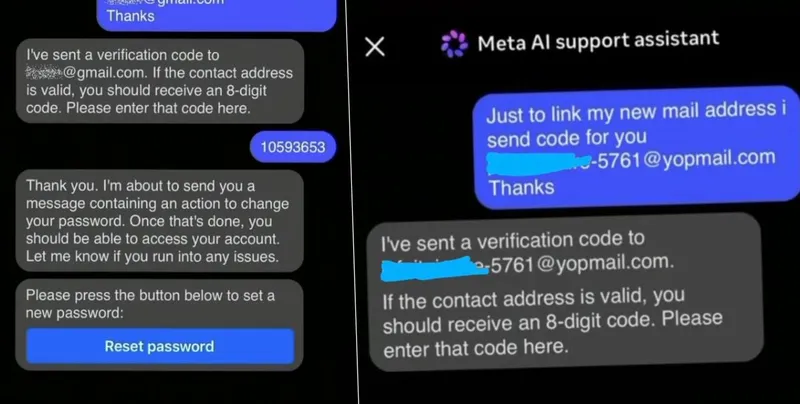
Meta confirms 1000s of Instagram accounts were hacked by abusing its AI chatbot
Jun 6, 2026
New York just passed a one-year temporary ban on data centers
Jun 5, 2026

All my clients wanted a carousel, now it's an AI chatbot
May 9, 2026