Report · techspot.com
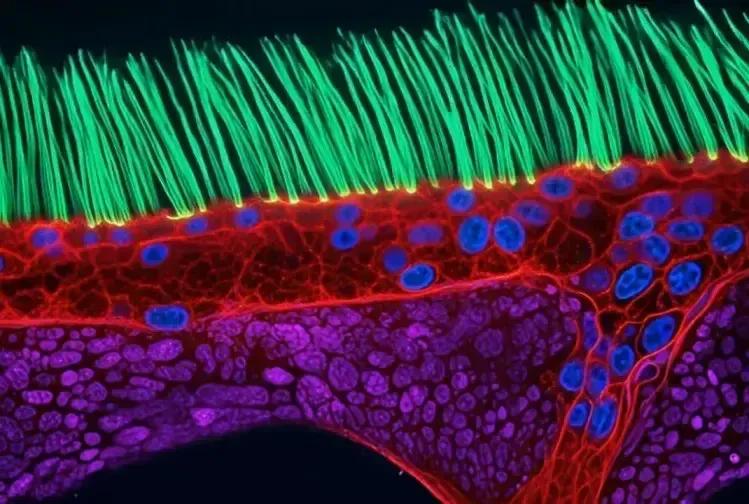
Nikon photography contest winner loses title after scientists spot signs of AI
techspot.com
Source published October 25, 2026
Summary: 1 min read
54/100
Summary
Nikon stripped Dr. Ning Xu of the top prize in its 16th annual Small World in Motion contest after an investigation found that his microscopy video violated competition rules. Xu, a researcher at Tsinghua University in China, had submitted footage purportedly showing cilia beating in the airway of a child with primary ciliary dyskinesia, a rare respiratory disorder. Scientists questioned the clip after observing cellular structures with inconsistent sizes and forms that appeared and disappeared in ways they said do not occur in cellular biology. Ian Donovan, a PhD student at UT Southwestern Medical Center, said the apparent source image contained a watermark associated with AI-generated imagery, while two former contest judges also raised concerns. Xu later acknowledged using AI during post-processing to distinguish and visualize features in reconstructed grayscale super-resolution images, while denying that AI generated the video, cilia, or their movement. Nikon awarded the top spot instead to Nguyen Nam Nhat of Vietnam for a video featuring a tiny roundworm and a single-celled organism. Nikon said it will revisit its rules and evaluation procedures for future entries.
Key Takeaways
- Nikon disqualified Dr. Ning Xu from its Small World in Motion microscopy contest after determining that his winning entry violated competition rules.
- Researchers said Xu's video showed cells and cilia appearing, disappearing, and changing structure in ways inconsistent with cellular biology.
- Xu said AI was used in post-processing to visualize reconstructed grayscale images, but denied using it to generate the footage or the depicted motion.
- Nguyen Nam Nhat of Vietnam received the contest's top prize after Xu's disqualification, and Nikon said it will review future contest rules and evaluation procedures.
What the discussion said
Commenters spent less time on the contest result itself than on the increasingly unstable boundary between ordinary computational photography and AI-generated imagery. Several readers thought the winning clip contained strikingly obvious synthetic artifacts: biological structures reportedly appeared and vanished, while movement and anatomy failed to match real microscopic behavior. For them, the eventual disqualification was not a close call; it was a reminder that generative tools can fabricate persuasive-looking scientific visuals while leaving telltale failures for domain experts to catch. A minority resisted treating the initial uncertainty from Nikon as proof that the entrant acted maliciously. They argued that a cautious investigation, including a preliminary statement that rules might not have been broken, could simply reflect due process and an effort to let the photographer substantiate the workflow. Others countered that the available signs point to generation beyond permissible post-processing, whether or not intent can be proven. The thread also widened into a debate over why generative AI feels categorically different from autofocus, denoising, HDR, and Lightroom-style edits. The emerging distinction was not AI versus no AI, but tools that transform captured evidence versus tools that invent image content. Yet readers noted that denoising and reconstruction already blur even that supposedly clean line.
Where opinion split
The sharp dispute is whether this was likely deliberate deceptive generation or an ambiguous workflow judged cautiously after the fact. Skeptics say the implausible biological details make the submission plainly more than post-processing; defenders say the organizer's initially tentative stance shows that intent and rule compliance were not self-evident. A related fault line is whether generative AI is fundamentally different from computational photography, or merely another step along a continuum of image-enhancement tools.
Coverage & discussions
Hacker News · techspot.com
Community discussions
Community Sentiment
Positives
- Cautious adjudication was seen as a virtue: giving an accused creator room to document a workflow is better than turning suspicious-looking AI artifacts into instant proof of bad faith.
- Computational photography already expands what cameras can capture and process, and commenters argue that treating every algorithmic aid as cheating ignores photography's long history of tool-assisted craft.
- The scrutiny showed that scientific expertise can still expose generative-image failures, especially when synthetic motion and anatomy contradict real biological behavior.
Concerns
- The alleged footage appears to invent biological content rather than clean up a real capture, making it dangerous in a contest where images are supposed to be evidence.
- Vanishing and reappearing microscopic structures were viewed as glaring generative artifacts, proof that polished visuals can conceal physically impossible events.
- Generative AI is seen as lowering the cost of prestige-seeking fakery, especially where awards, careers, or public recognition make cheating worth the risk.
- The line between restoration and fabrication is eroding: even AI denoisers may hallucinate a plausible signal rather than recover what the camera actually recorded.
Related Articles
Award-winning AI literature
Oct 22, 2026
Company Offering '100% Human-Written, Never AI' Medical Research Is 100% AI
Aug 12, 2026

London Underground begins scanning passengers' faces
Aug 11, 2026
Meta Ran Ads That Contained AI-Generated Child Sexual Abuse Imagery
Aug 5, 2026
Flock's CEO Faced Me After Its Cameras Led to My Wrongful Stop
Aug 3, 2026