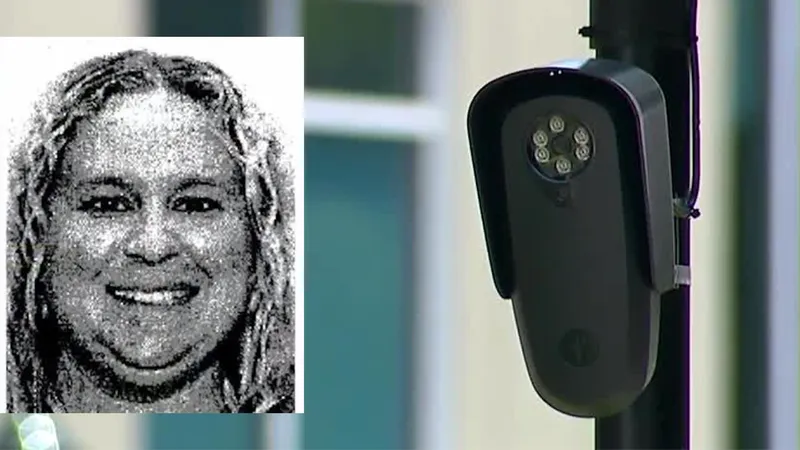
Ousted Savannah police officer gave ICE agent husband access to Flock system
wjcl.com
October 19, 2026
7 min read
69/100
Summary
Former Savannah Police Department officer Amber Harpe was fired after investigators found she gave her Flock license-plate reader system credentials to her husband, ICE agent Tyler Harpe. Department records show he lacked a Department of Homeland Security Flock account and used her account for hundreds of searches connected to ICE investigations. The Savannah Police Department concluded that sharing credentials gave an unauthorized person access to sensitive police software, obscured the actual user in audit records and violated departmental information-management policy. An audit found 983 searches involving 97 identifiable license plates across Georgia, New Jersey, Maryland, Florida, South Carolina and North Carolina between January and July 2026. Forty-eight South Carolina plates accounted for 788 searches, and department documents said most registered vehicle owners identified in the audit were Hispanic. Tyler Harpe told investigators the searches targeted people with active arrest warrants who were already the subjects of ICE target packages, denied personal use and estimated he used the account for about four months. The investigation found no violation of Georgia’s automated-license-plate-reader law, but SPD leaders said state authority to share data for legitimate law-enforcement purposes did not permit credential sharing. Harpe’s termination took effect September 26 after an appeal was denied; she later withdrew a Civil Service Board appeal.
Key Takeaways
- Savannah Police fired Amber Harpe for providing her Flock system username and password to her husband, ICE agent Tyler Harpe, who did not have independent federal access to the system.
- An internal audit identified 983 searches through Harpe’s account between January and July 2026, involving 97 license plates from six states.
- Tyler Harpe told investigators he used the account to locate ICE targets with active arrest warrants and denied using it for personal reasons.
- SPD found that shared credentials compromised audit accountability because searches conducted by Tyler Harpe were recorded under Amber Harpe’s identity.
- The investigation did not find a violation of Georgia’s automated license plate reader law; the disciplinary case centered on SPD policy barring unauthorized access to department software.
What the discussion said
The thread treated this less as one officer’s misconduct than as a stress test for AI-enabled, camera-network surveillance. Commenters argued that a nationwide vehicle-tracking platform becomes dangerous when ordinary department credentials can be shared remotely, apparently with little more than a password standing between an authorized user and a politically powerful outside agency. The real failure, in their view, is not merely a bad employee but a system designed around the fantasy that vetting permanently makes people trustworthy. Most readers saw the claimed law-enforcement purpose as beside the point: an ICE agent’s lack of direct access to state-connected cameras is precisely the boundary the account-sharing bypassed. Several argued that warrantless searches and downstream enforcement action could make the surveillance both unconstitutional and legally tainted. There was some guarded optimism that recent digital-privacy cases may eventually force warrants for Flock database searches, though others cautioned that location-history precedent does not automatically transfer to privately operated camera networks. A smaller practical split concerned remedies: some believed serious criminal penalties could create legitimacy and deterrence, while others said agencies can impose surveillance regardless of public acceptance and will not meaningfully police their own misuse.
Where opinion split
The sharpest dispute is whether tougher punishment and eventual warrant rules can make AI-backed surveillance networks legitimate. One side argues that prison-level consequences for credential sharing, plus court-enforced individualized warrants, are necessary to restore public trust; the other says the institutions deploying these systems do not regard this conduct as a meaningful crime and will preserve broad surveillance power regardless.
Coverage & discussions
Hacker News · wjcl.com
Community discussions
Community Sentiment
Positives
- Recent digital-privacy rulings give commenters a plausible path to forcing warrants for automated location searches, putting a constitutional brake on mass camera surveillance.
- Flock’s current refusal to grant ICE direct access to some state-linked cameras shows that access boundaries can exist, even if shared credentials made that safeguard porous.
Concerns
- A camera-surveillance network that can be searched remotely with a colleague’s shared password turns sensitive movement data into an informal cross-agency dragnet.
- Commenters reject the idea that an officer’s asserted law-enforcement purpose excuses bypassing the restrictions that kept ICE from accessing the system directly.
- The incident reinforces a broader fear that automated tracking tools invite predictable insider abuse, because employment screening cannot account for changing loyalties or personal pressure.
- Warrantless searches of a large vehicle-location database are seen as privacy violations with potentially unlawful enforcement consequences, not harmless administrative shortcuts.
Related Articles

Police used AI facial recognition to wrongly arrest TN woman for crimes in ND
Mar 29, 2026

Alternatives to Animal Testing Are Finally Taking Off
Oct 19, 2026

Investing in the public benefit
Oct 18, 2026

British Airways: Filming Crew W Meta Glasses Could Get Your Tickets Cancelled
Oct 18, 2026

The Brain Sandwich
Oct 18, 2026