Report · gizmodo.com
Police Are Using AI to Pull over Drivers for 'Suspicious' Behavior
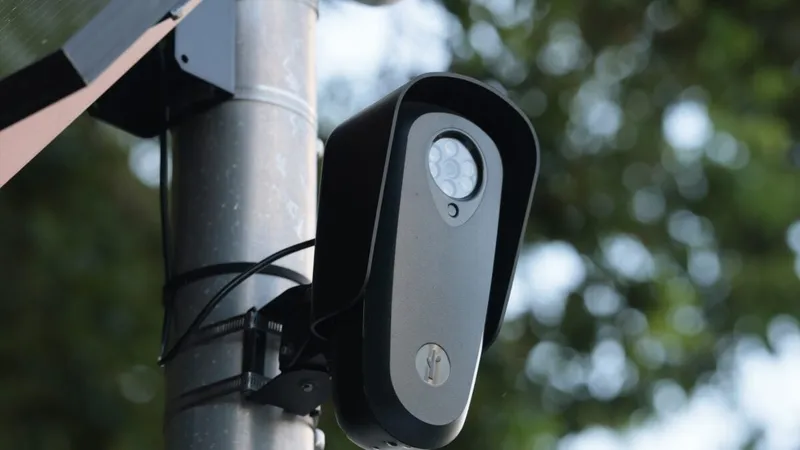
gizmodo.com
Source published October 27, 2026
Summary: 2 min read
65/100
Summary
The American Civil Liberties Union says U.S. law-enforcement agencies are increasingly using automated license plate readers and AI-powered tools to flag drivers for “suspicious” travel patterns and initiate traffic stops without suspicion of a specific crime. ALPR systems record license plates, vehicle sightings, times, and locations, creating searchable movement histories for police investigations. In September 2025, Grace Knowles, a Northern Virginia woman in her 20s, was stopped while traveling to Florida after an officer said she had driven too long in the left lane. The officer, who identified himself as an FBI special agent working on human and drug trafficking, said her plate had been flagged for suspicious travel patterns. Knowles told the ACLU that he showed her a map displaying locations where her license plate had been photographed. Privacy advocates warn that ALPR networks collect location data on people not suspected of crimes, often without warrants, probable cause, or reasonable suspicion. A federal jury in Texas recently sided with a man challenging a traffic-stop scheme that his attorneys said used AI-powered license-plate readers to flag an overnight trip from Houston to Carrizo Springs. An August YouGov survey found 46% opposed police use of the technology in their communities, while 38% supported it. Some agencies, including the Los Angeles Police Department, have suspended or ended Flock Safety contracts amid backlash.
Key Takeaways
- The ACLU says police are using automated license plate readers and AI tools to identify drivers based on travel patterns rather than a suspected specific crime.
- ALPR systems collect license-plate sightings with associated times and locations, allowing law enforcement to search vehicle movement histories.
- An FBI agent told Grace Knowles that her license plate had been flagged for suspicious travel patterns during a 2025 road trip.
- A federal jury in Texas sided with a driver who challenged a traffic stop allegedly triggered by AI-powered license-plate-reader analysis of his travel route.
- An August YouGov survey found 46% of respondents opposed law-enforcement use of the technology in their communities, compared with 38% who supported it.
What the discussion said
The discussion treated AI-guided traffic stops less as a clever public-safety tool than as a machine for laundering vague suspicion into something that looks objective. Commenters worried that models trained on police data will inherit the accumulated bias of earlier stops, arrests, and enforcement choices, then make that bias harder to expose because neither the public nor officers can meaningfully explain why a system raised an alert. Several readers saw the technology as especially dangerous when it is coupled to pervasive camera networks: ordinary driving can be recast as a signal, and a stop can follow even when someone has done nothing visibly wrong. There was limited recognition that removing dangerous drivers is a legitimate goal, and a few participants noted that humans already exercise subjective judgment in policing. But that did not produce much confidence in the AI alternative. The more constructive thread focused on testing: model builders can examine bias through counterfactual inputs, such as changing apparent demographic features while holding behavior constant, and some healthcare teams reportedly have bias-review practices. Skeptics replied that technical audits do not solve the institutional problem if opaque scores still supply cover for unjustified detentions. The dominant mood was that automated suspicion expands surveillance and weakens practical accountability long before courts catch up.
Where opinion split
The central dispute was whether AI can make traffic enforcement safer without worsening discriminatory policing. Defenders of the premise pointed to the need to identify reckless drivers and to the possibility of bias testing and human discretion; critics argued that historical enforcement data and opaque model outputs turn existing prejudice into scalable, difficult-to-challenge police authority.
Coverage & discussions
Hacker News · gizmodo.com
Community discussions
Community Sentiment
Positives
- Counterfactual testing can expose whether a model changes its suspicion score when demographic appearance changes, giving auditors a concrete way to probe discriminatory behavior.
- Some teams already build bias checks into clinical AI development, suggesting that careful model review is possible when organizations treat harmful correlations as a real engineering problem.
- Identifying genuinely dangerous driving remains a legitimate public-safety use case, which is why some readers resist dismissing automated detection outright.
Concerns
- A model trained on past police decisions can reproduce biased enforcement patterns while wrapping them in an inscrutable score that is far harder for drivers to contest.
- AI-generated suspicion risks converting ubiquitous camera surveillance into scalable pretext for stops, including against people whose behavior is entirely ordinary.
- Opaque alerts make racial or demographic profiling easier to deny: officials can point to the system even when nobody can articulate the actual basis for its judgment.
- Automating subjective suspicion does not make it neutral; it can amplify the same discretion and unequal enforcement that civil-rights safeguards were meant to constrain.
Related Articles

Flock cameras track more than your license plate, and they're spreading fast
Jun 28, 2026

Flock Safety had a car journalist stalked, wrongly accused, and detained
Jul 17, 2026

Police used AI facial recognition to wrongly arrest TN woman for crimes in ND
Mar 29, 2026
Israeli spyware vans infiltrate American streets and your phones
Jul 21, 2026
Ousted Savannah police officer gave ICE agent husband access to Flock system
Oct 19, 2026