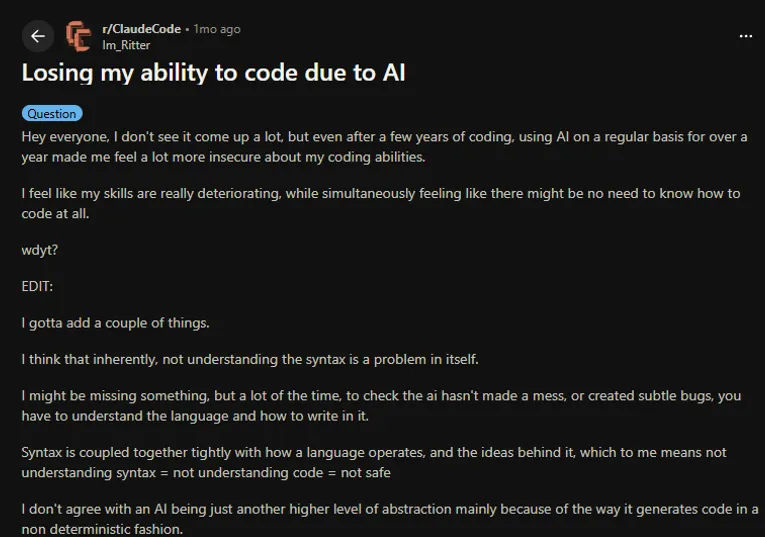
Prevent cognitive debt by manually retyping LLM-generated code

ankursethi.com
August 3, 2026
4 min read
🔥🔥🔥🔥🔥
68/100
Summary
Manually retyping LLM-generated code can prevent cognitive debt by reinforcing understanding and retention of concepts. Using coding assistants for repetitive tasks can speed up development but may lead to disorientation and a lack of satisfaction with the final product.
Key Takeaways
- Manually retyping LLM-generated code helps developers maintain a deeper understanding of their code and reduces cognitive debt.
- This approach allows for better detection of errors and design flaws in the generated code while adapting it to personal coding styles.
- The practice of typing out code fosters a spatial awareness of the codebase, making future modifications and interactions with LLMs more efficient.
- The author prioritizes comprehension over productivity, believing that the software industry risks accumulating cognitive debt by overly relying on AI-generated code.
Coverage & discussions
Hacker News · ankursethi.com
Community discussions
Community Sentiment
Positives
- LLMs are great for optimizing hot loops; writing your own code first and asking for improvements is a smart approach that promotes learning.
- Breaking down tasks into smaller changes while using LLMs keeps you in charge and enhances the learning process.
Concerns
- Retyping LLM-generated code is inefficient and doesn't foster true understanding; it's just memorization without intuition.
- Copying code from others or retyping examples can lead to cognitive debt, hindering real learning and comprehension.