The 100 hour gap between a vibecoded prototype and a working product
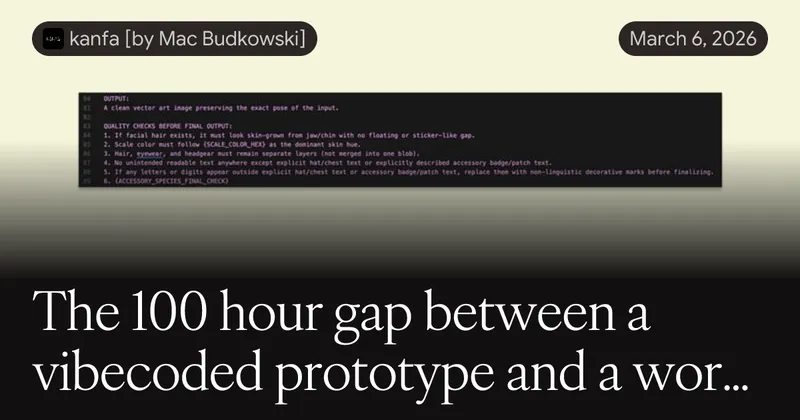
kanfa.macbudkowski.com
March 15, 2026
29 min read
60/100
Summary
Vibecoding can require significant time investment, often exceeding 100 hours, to produce a functional product rather than a simple copy. Early adoption of AI for coding in a startup context faced challenges due to the limitations of LLMs and the focus on open-source development.
Key Takeaways
- The author spent 100 hours vibecoding an app called Cryptosaurus, highlighting the complexity of the process compared to claims of quick app development.
- Initial prototyping with AI tools like ChatGPT and Opus led to a working prototype within an hour, but subsequent design and UI iterations significantly extended the development time.
- The author experienced limitations with AI-generated designs, finding that traditional design tools like Figma would have allowed for faster and more precise UI development.
- Testing edge cases for the app's output revealed inconsistencies, indicating challenges in ensuring quality across diverse user inputs.
Coverage & discussions
Hacker News · kanfa.macbudkowski.com
Community discussions
Community Sentiment
Positives
- Vibe coding can accelerate the development of prototypes and MVPs significantly, making it a valuable tool for rapid innovation in AI applications.
- Advanced vibe coding allows individuals to create tailored solutions quickly, showcasing the democratizing potential of AI tools for personal projects.
Concerns
- The gap between prototype and production quality code exists primarily due to the limitations in how users interact with AI, which can hinder effective code generation.
- LLMs struggle with the complexities of software architecture, indicating that while they can generate code, they may not adequately support sustainable development practices.
Related Articles

Eight years of wanting, three months of building with AI
Apr 5, 2026
My old job feels distant now
Oct 16, 2026

Building for an audience of one: starting and finishing side projects with AI
Feb 17, 2026
Why Software Factories Fail (or: harness engineering is not enough)
Jul 23, 2026

Building from zero after addiction, prison, and a felony
Jun 7, 2026