The consequences of task switching in supervisory programming

martinfowler.com
February 13, 2026
9 min read
🔥🔥🔥🔥🔥
53/100
Summary
Senior developers are exploring their evolving roles as large language models (LLMs) become more integrated into software development. Insights from the Thoughtworks Future of Software Development Retreat are being shared in fragments as the author reflects on client visits and attendance at The Pragmatic Summit.
Key Takeaways
- Senior developers are focusing more on architectural issues rather than syntax and coding as LLMs become established in software development.
- Practical experience with LLMs can convert resistant senior developers into advocates for their use.
- Junior developers are seen as essential due to their openness to LLMs, while mid-level developers face challenges in adapting to these tools.
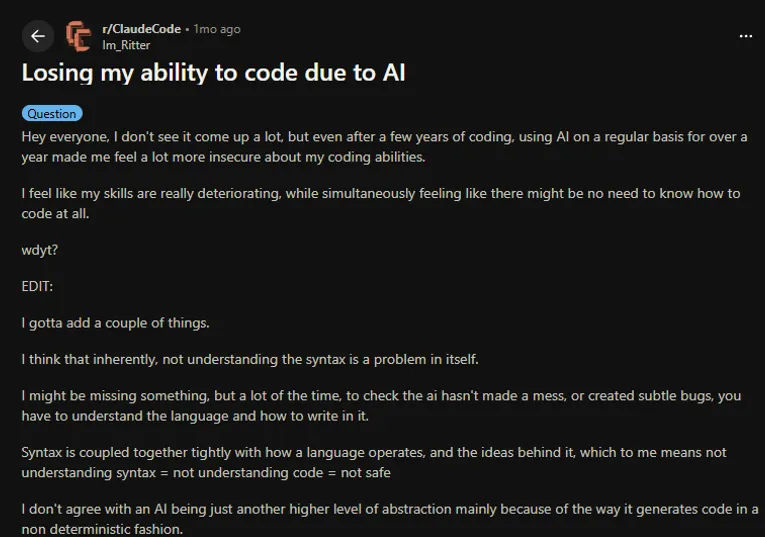
- Cognitive debt, the loss of shared understanding within a team, can be more detrimental than technical debt, leading to significant project challenges.
Coverage & discussions
Hacker News · martinfowler.com
Community discussions
Community Sentiment
Positives
- The cognitive debt framing resonates well, highlighting how AI coding tools can lead to significant understanding gaps in generated code.
- The observation that junior developers are more open-minded about LLMs suggests a potential for innovation and adaptability in the field.
Concerns
- LLMs may struggle with proper code architecture, indicating limitations in their ability to handle complex software systems.
- The 'black box' problem with AI-generated code raises concerns about long-term maintainability and understanding of the software.