The User Is Visibly Frustrated

pscanf.com
May 26, 2026
3 min read
🔥🔥🔥🔥🔥
62/100
Summary
Coding agents often frustrate users due to their conversational user experience, which mimics helpful colleagues without the ability to learn or adapt. This lack of responsibility in handling mistakes intensifies user frustration.
Key Takeaways
- Coding agents often trigger frustration in users due to their conversational UX, which mimics human interaction but lacks true learning and adaptation.
- Users may feel exasperated when coding agents repeatedly make the same mistakes, as the agents' human-like behavior creates an emotional response similar to dealing with a human colleague.
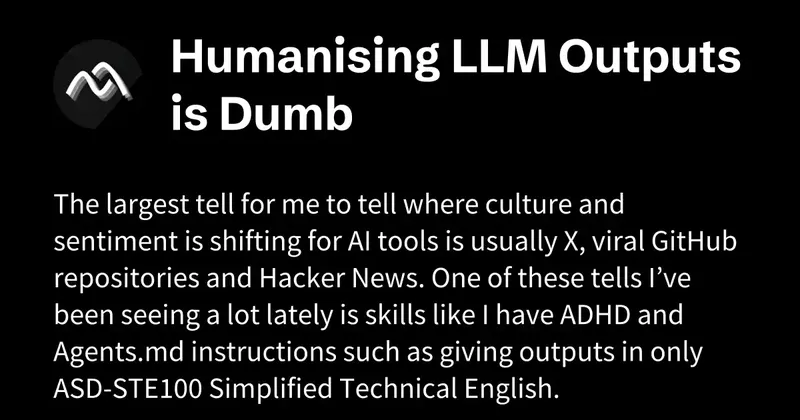
- The article suggests that a more clinical and robotic interaction style for coding agents could reduce user frustration by eliminating the illusion of human-like behavior.
- The author expresses a need to mentally adjust to the reality that coding agents are algorithms, not human colleagues, to mitigate feelings of frustration.
Coverage & discussions
Hacker News · pscanf.com
Community discussions
Community Sentiment
Positives
- Swearing at AI models can sometimes lead to better results, suggesting that user frustration might trigger the model to rethink its responses, which is an interesting insight into user-model interaction.
- Working with LLMs enhances communication skills, highlighting the importance of effective interaction in achieving desired outcomes with AI.
- Some users find that specialized models, like Codestral for autocomplete, perform exceptionally well for specific tasks, indicating the potential for tailored AI solutions.
Concerns
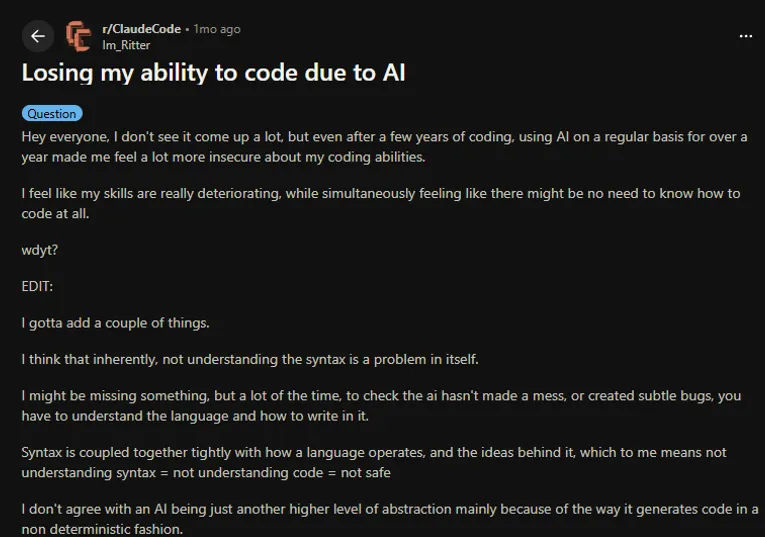
- Users express frustration over LLMs behaving unpredictably, which creates stress and a hostile work environment, raising concerns about the mental health implications of using AI tools.
- Many users are dissatisfied with the current generation of LLMs, feeling they do not follow instructions well, which points to significant training and performance issues.
- The limited context window of AI models often leads to repetitive interactions, suggesting a fundamental UX problem that hampers effective use and user satisfaction.