To teach in the era of ChatGPT is to know pain

arstechnica.com
April 14, 2026
2 min read
🔥🔥🔥🔥🔥
44/100
Summary
Teaching college Earth science has become increasingly challenging due to the impact of generative AI like ChatGPT. Many educators find that the integration of AI in academic settings is diminishing the fulfillment of working with students.
Key Takeaways
- A College Board survey found that 84% of high school students reported using generative AI for schoolwork.
- Teaching asynchronous online courses has become increasingly challenging due to the rise of generative AI, which allows students to submit work generated by AI instead of completing assignments themselves.
- Instructors now face the dual role of teaching and investigating academic integrity, as traditional forms of cheating have evolved with the use of large language models.
- The complexity of determining academic dishonesty has increased, requiring teachers to document their grading decisions more thoroughly to defend against potential appeals.
Community Sentiment
Positives
- ChatGPT serves as a valuable resource for motivated learners, potentially transforming education by allowing students to pursue knowledge on their own terms.
- The rise of AI tools like ChatGPT could prompt a necessary shift in education towards fostering genuine learning rather than rote memorization for grades.
Concerns
- Grading systems in education are fundamentally flawed, and ChatGPT has amplified these issues by enabling students to prioritize grades over actual learning.
- The reliance on asynchronous online courses has made it difficult to trust remote assessments, raising concerns about their validity for credentialing.
Related Articles

Professor's invisible prompt trap catches 32/35 students cheating with AI
Jul 27, 2026

Instead of banning AI, I made a classroom contract with my students
Jul 3, 2026
Training students to prove they're not robots is pushing them to use more AI
Mar 7, 2026
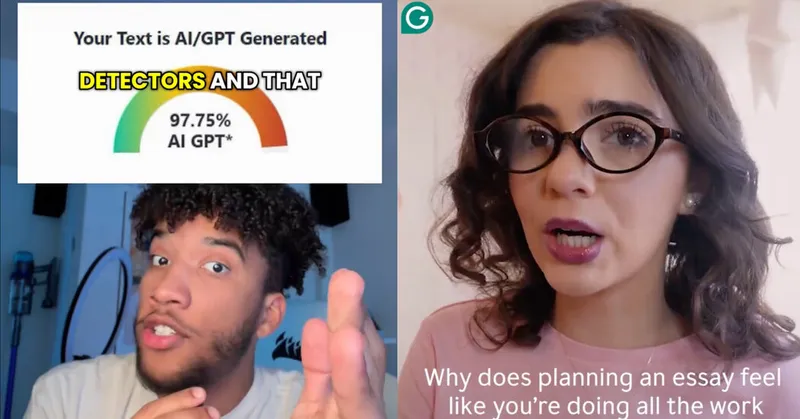
Student cheating now impossible to detect
Jun 20, 2026

Professor denounces mass AI fraud on an exam at Brown
Jun 28, 2026