
What I Self-Host
A self-hosted home server built around a Beelink S12 Pro mini PC runs 28 services on an Intel N100 processor, 16 GB of RAM, a 512 GB SSD and a 6 TB media drive. The machine, bought for €180 last year, uses about 7.5 GB of memory and 30% to 40% CPU according to htop. It does not run local AI inference. Services are accessible only on the local network or through VPN; VPN endpoints run on the router and are publicly routable only over IPv6. Jellyfin replaced commercial streaming subscriptions and supplies locally controlled movies, television and home videos without autoplay or recommendation feeds. The setup also includes Immich for photo storage, Home Assistant for automation, Frigate with eight IP cameras, Vaultwarden for passwords, Actual Budget, Forgejo, FreshRSS, Audiobookshelf, Syncthing, Samba and Uptime Kuma. Frigate uses lower-resolution camera streams to limit Wi-Fi, processing and storage demands, while Jellyfin generally uses 720p media to reduce resource use. Seventeen services run natively and 11 run in Podman containers, all managed through systemd. Native deployments are preferred when dependencies are limited, while Podman is used for more complex applications. The server avoids Docker, the *arr media-management stack, self-hosted email, Collabora Online and several database-heavy alternatives because of operational complexity or resource demands.
viceconsole.fyi
16 min
1d ago
New Withings Users Must Pay $99/Year for Apple Health Syncing
A Withings community member says new Withings accounts created after October 13, 2026 must subscribe to Withings+ at $99.99 per year to export data to Apple Health. The member says Withings customer support described Apple Health synchronization as a standard feature that does not require a subscription, while also stating that accounts created after that date would be asked to subscribe to Withings+ to export data. According to the customer, support cited new privacy measures and an AI connector as reasons for the subscription requirement. The customer argues that writing data to Apple Health through Apple’s HealthKit occurs locally on a phone and does not require cloud-computing resources or an AI connector. They note that users can still manually export CSV files, but contend that manual exports are not an adequate substitute for automatic synchronization. The customer characterizes the change as an anti-consumer paywall on access to users’ health data and calls on Withings to reverse it.
support.withings.com
1 min
1d ago

Why We're Banning AI
Current Affairs has adopted a union-contract policy barring AI-generated text and AI-generated illustrations from publication. The nonprofit, unionized magazine says readers will receive human-written work and human-created art, while continuing to pay writers and artists for research, editing, illustration, layout, and other production work. Its policy does not prohibit every software tool described as AI: writers may use tools for research, and artists may use tools for limited tasks such as changing a color, adding texture, or creating a small element. The magazine says it adopted the ban to oppose publishers’ use of generative AI to reduce labor costs and replace creative workers. It cites Business Insider CEO Barbara Peng’s statement that the publication is “all in on AI,” Sports Illustrated’s publication of AI-written material under nonexistent bylines, and a Wall Street Journal op-ed attributed to Stan Druckenmiller that was later found to have been AI-generated. Current Affairs also cites Futurism’s reporting that more than 200,000 creative-industry jobs were lost over four years amid what it called one of the worst periods for U.S. media employment. The magazine argues that generative-AI systems trained on artists’ work are being used to displace artists, and urges readers not to support publications that use AI-generated media.
currentaffairs.org
8 min
1d ago

More on Anthropic's Scion ripping off Mononoke
A Sunshowers post alleges that Anthropic’s Scion source-control system intentionally copied Mononoke, Meta’s source-control service, including Mononoke’s Bonsai changeset data model and related derived-data indexes. The author says private confirmation indicated personnel overlap between the teams and argues that Scion’s similarity could not have been accidental. The author also notes that “Scion” resembles “Bonsai” by reversing its syllables and removing the initial letter, while acknowledging that the name similarity could be coincidental. Mononoke’s Bonsai model uses a write-ahead-log-style Merkle DAG rather than the Git-like models the author describes as prevailing in source control. The author says Mononoke’s team designed and implemented the model in 2018 and spent roughly a decade productionizing and extending it, including work such as server-side rebases. The post says rebuilding an existing production system with an LLM in five months would still be notable, but less significant than independently designing and productionizing it. The author argues that copying technical ideas is acceptable when clearly attributed, but says crediting the broader Sapling ecosystem for “hard-won lessons” did not adequately identify Mononoke or Bonsai changesets. An update says Anthropic’s Nick G. responded on Hacker News and Anthropic added sufficient attribution to its blog post.
sunshowers.io
6 min
1d ago

Why are we even doing all this?
Theoretical particle physicist Rikab Gambhir uses satire to criticize AI-driven scientific research that produces large volumes of difficult-to-verify results while shifting validation and interpretation to human researchers. He cites OpenAI’s early-October release of 722 mathematical write-ups and contrasts it with a recent set of 2,500 physics write-ups, arguing that quantity alone does not constitute scientific understanding. Gambhir compares such output to Jorge Luis Borges’s 1941 “Library of Babel,” an imagined library containing every possible book, including correct and incorrect proofs and theories. He argues that a repository of potentially true claims is of limited value if researchers cannot establish their correctness, understand their reasoning, or communicate them clearly. He portrays corporate AI development as prioritizing hype, productivity, and commercial value over curiosity, creativity, and human comprehension, while alleging environmental costs and uncompensated use of creators’ work. Gambhir concludes that mathematics and science should retain their roles as human practices of learning, discovery, beauty, and explanation rather than becoming systems for accumulating unread, uncertain factoids.
terrytao.wordpress.com
6 min
1d ago

You could have invented transformers from memory
Transformer components can be modeled as associative memory stores that retrieve value vectors from similar key vectors, with recall quality limited by interference from other stored memories. For random unit-length keys, a simple outer-product linear store has capacity near the key dimension: 64-dimensional keys can hold about 64 memories before interference matches the desired signal. An optimal linear regression-based store whitens key correlations, recalls up to 64 linearly independent memories exactly, and reaches capacity near 128 memories. Nonlinear MLP activations suppress low-similarity keys and increase estimated capacity. A ReLU MLP reaches about 128 memories with 64-dimensional keys, while squared ReLU and similarly configured SwiGLU MLPs reach roughly 2,700 to 2,900; cubed ReLU reaches about 35,000. Feedforward layers in trained transformers have been found to act like key-value memories, with learned keys responding to recognizable input patterns. Softmax self-attention applies exponential weighting to similarities and uses context tokens rather than trained parameters as its keys and values. Under the stated random-vector model, 64-dimensional self-attention with sharpness β = 8 has estimated capacity of about 1.2 million memories. Increasing attention-logit scaling with context length, including logarithmic schemes used by Qwen and YaRN, can maintain low interference beyond 2 million distinct key-value pairs in the described experiments. These estimates measure random-vector recall in a single layer rather than total information learned from training data.
alexwang.ai
21 min
6h ago

Artificial intelligence is capitalism's final destination
Arundhati Roy’s 15 October 2026 essay argues that artificial intelligence is concentrating economic and political power while damaging human creativity, work, language and social trust. She says generative AI has unsettled education and publishing by making authorship harder to verify, and she describes Anthropic’s use of her books without permission to train large language models; she received a proposed class-action settlement offering several thousand dollars per title. Roy contrasts AI-industry warnings of existential risk with whistleblowers’ concerns about military uses, environmental costs, labour exploitation and algorithmic bias. She cites Meredith Whittaker’s 2019 resignation from Google over machine-vision work for US drones and Timnit Gebru’s 2020 firing after research on large language models’ environmental and social harms. Roy argues that major AI companies’ calls for regulation could entrench dominant firms by tying them more closely to state security systems and limiting smaller competitors. Roy also warns that data centres require large amounts of land, water and energy, citing planned facilities in Visakhapatnam, India, including a $15 billion Google hub. She says low-paid workers provide data and perform work that can train systems intended to automate their jobs. Her essay calls AI-driven extraction of cultural works, human data and natural resources a new form of colonisation and urges resistance rather than relying only on regulation.
equator.org
25 min
13h ago

We are entering a period of overlapping crises
Hamish Campbell argues that climate breakdown, inequality, technological disruption, war, political instability and weakening democratic institutions are reinforcing one another. He warns that responses centered on “exit culture” — including private security and bunkers for wealthy people, ethnonationalist politics, religious escape narratives, and technological promises involving AI, automation, space or digital transcendence — cannot resolve systemic ecological and social crises. Campbell also rejects the idea that institutional collapse is inherently progressive, saying it can produce mutual aid and democratic organization but is more likely to lead to authoritarianism, scapegoating, violence and stronger hierarchies when communities are unprepared. Campbell calls for grassroots democratic resilience built before crises intensify: local relationships, communication systems, knowledge of resources, practical skills, shared decision-making and methods for handling disagreement. He advocates shifting from individual survivalism toward mutual aid and collective care. He presents the Open Media Network (OMN), the Fediverse and ActivityPub as examples of federated technology that can let independent communities communicate, share knowledge and exchange resources without giving up autonomy. Campbell says technology should support social processes rather than replace them with centralized control, and argues that cooperation and solidarity can provide an alternative to fear-driven scapegoating and authoritarian politics.
hamishcampbell.com
6 min
1d ago
How to Formalize All of Mathematics
A group of mathematicians and formalization researchers argues that AI can help formalize most of mathematics within three years, but only if the resulting Lean libraries are reusable, reviewed, documented, and governed by mathematical communities. They warn that rapidly generated code has limited value when nobody can understand, extend, or trust it. The authors cite an AI-generated formalization of Maryna Viazovska’s sphere-packing work that its original team discarded because cleanup was harder than rebuilding it, and say Anthropic’s 13-million-line, 11-day formal verification of Fermat’s Last Theorem is unlikely to replace a more modern formalization. They support coordinated efforts built around Mathlib, an open-source Lean library with 65 reviewers and 950 contributors that received the 2026 Jean-Pierre Demailly Prize for Open Science in Mathematics. Tau Ceti uses AI-written contributions and AI adversarial review under expert-curated roadmaps; it has grown beyond Mathlib’s 3 million lines of code and includes results such as Riemann–Roch and Chebotarev density. Formal Frontier uses AI-agent systems to turn source texts into interconnected libraries, with 41 released libraries totaling about 200,000 lines. The authors call for open-source interoperability, public review, avoidance of duplicated results, links to literature, sustained compatibility with Lean and Mathlib, and mathematician control over infrastructure and resources.
xenaproject.wordpress.com
12 min
11h ago
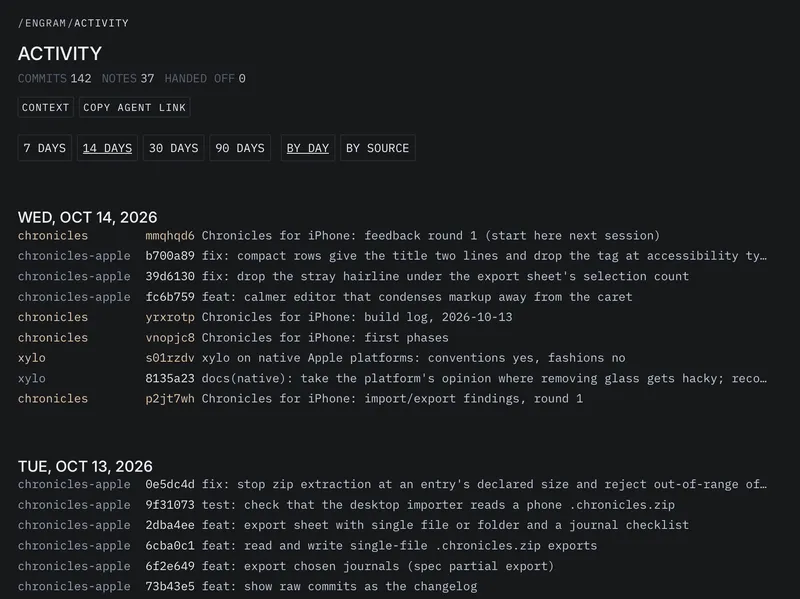
My old job feels distant now
A software developer describes moving from using ChatGPT as a search and code-generation aid to making AI agents central to daily programming work. Early uses included generating Ruby tests, finding APIs for a computer-vision project, and iterating on Python code in Jupyter notebooks. The developer says hallucinations were usually detectable at the edges of the model’s knowledge and required human investigation. Cursor-style tab completion initially provided limited pattern matching, while Claude-based agents later handled explicitly scoped tasks. The developer continued to hold the codebase context, review generated changes, and take over difficult work. They estimate that Anthropic’s Opus 4.5/6 increased their productivity to about three times its prior level over several months of merged pull requests, while also raising the importance of reviewing business logic, customer-data handling, database changes, encryption, and other irreversible operations. With Opus 5.5, the developer shifted from directing individual code changes toward defining QA goals, performance constraints, plans, dashboards, and tools for agents. They report using subagents and supervisory agents, generating multiple UI alternatives, batching vulnerability fixes, and monitoring performance. In one experiment, an AI agent produced a basic native Swift iPhone version of an Electron notes app and installed it for QA within hours, consuming 40% of a five-hour allowance on a $20 subscription.
pinecoder.dev
10 min
12h ago
What I Self-Host
A self-hosted home server built around a Beelink S12 Pro mini PC runs 28 services on an Intel N100 processor, 16 GB of RAM, a 512 GB SSD and a 6 TB media drive. The machine, bought for €180 last year, uses about 7.5 GB of memory and 30% to 40% CPU according to htop. It does not run local AI inference. Services are accessible only on the local network or through VPN; VPN endpoints run on the router and are publicly routable only over IPv6. Jellyfin replaced commercial streaming subscriptions and supplies locally controlled movies, television and home videos without autoplay or recommendation feeds. The setup also includes Immich for photo storage, Home Assistant for automation, Frigate with eight IP cameras, Vaultwarden for passwords, Actual Budget, Forgejo, FreshRSS, Audiobookshelf, Syncthing, Samba and Uptime Kuma. Frigate uses lower-resolution camera streams to limit Wi-Fi, processing and storage demands, while Jellyfin generally uses 720p media to reduce resource use. Seventeen services run natively and 11 run in Podman containers, all managed through systemd. Native deployments are preferred when dependencies are limited, while Podman is used for more complex applications. The server avoids Docker, the *arr media-management stack, self-hosted email, Collabora Online and several database-heavy alternatives because of operational complexity or resource demands.
viceconsole.fyi
16 min
1d ago
Why We're Banning AI
Current Affairs has adopted a union-contract policy barring AI-generated text and AI-generated illustrations from publication. The nonprofit, unionized magazine says readers will receive human-written work and human-created art, while continuing to pay writers and artists for research, editing, illustration, layout, and other production work. Its policy does not prohibit every software tool described as AI: writers may use tools for research, and artists may use tools for limited tasks such as changing a color, adding texture, or creating a small element. The magazine says it adopted the ban to oppose publishers’ use of generative AI to reduce labor costs and replace creative workers. It cites Business Insider CEO Barbara Peng’s statement that the publication is “all in on AI,” Sports Illustrated’s publication of AI-written material under nonexistent bylines, and a Wall Street Journal op-ed attributed to Stan Druckenmiller that was later found to have been AI-generated. Current Affairs also cites Futurism’s reporting that more than 200,000 creative-industry jobs were lost over four years amid what it called one of the worst periods for U.S. media employment. The magazine argues that generative-AI systems trained on artists’ work are being used to displace artists, and urges readers not to support publications that use AI-generated media.
currentaffairs.org
8 min
1d ago
Why are we even doing all this?
Theoretical particle physicist Rikab Gambhir uses satire to criticize AI-driven scientific research that produces large volumes of difficult-to-verify results while shifting validation and interpretation to human researchers. He cites OpenAI’s early-October release of 722 mathematical write-ups and contrasts it with a recent set of 2,500 physics write-ups, arguing that quantity alone does not constitute scientific understanding. Gambhir compares such output to Jorge Luis Borges’s 1941 “Library of Babel,” an imagined library containing every possible book, including correct and incorrect proofs and theories. He argues that a repository of potentially true claims is of limited value if researchers cannot establish their correctness, understand their reasoning, or communicate them clearly. He portrays corporate AI development as prioritizing hype, productivity, and commercial value over curiosity, creativity, and human comprehension, while alleging environmental costs and uncompensated use of creators’ work. Gambhir concludes that mathematics and science should retain their roles as human practices of learning, discovery, beauty, and explanation rather than becoming systems for accumulating unread, uncertain factoids.
terrytao.wordpress.com
6 min
1d ago
Artificial intelligence is capitalism's final destination
Arundhati Roy’s 15 October 2026 essay argues that artificial intelligence is concentrating economic and political power while damaging human creativity, work, language and social trust. She says generative AI has unsettled education and publishing by making authorship harder to verify, and she describes Anthropic’s use of her books without permission to train large language models; she received a proposed class-action settlement offering several thousand dollars per title. Roy contrasts AI-industry warnings of existential risk with whistleblowers’ concerns about military uses, environmental costs, labour exploitation and algorithmic bias. She cites Meredith Whittaker’s 2019 resignation from Google over machine-vision work for US drones and Timnit Gebru’s 2020 firing after research on large language models’ environmental and social harms. Roy argues that major AI companies’ calls for regulation could entrench dominant firms by tying them more closely to state security systems and limiting smaller competitors. Roy also warns that data centres require large amounts of land, water and energy, citing planned facilities in Visakhapatnam, India, including a $15 billion Google hub. She says low-paid workers provide data and perform work that can train systems intended to automate their jobs. Her essay calls AI-driven extraction of cultural works, human data and natural resources a new form of colonisation and urges resistance rather than relying only on regulation.
equator.org
25 min
13h ago
How to Formalize All of Mathematics
A group of mathematicians and formalization researchers argues that AI can help formalize most of mathematics within three years, but only if the resulting Lean libraries are reusable, reviewed, documented, and governed by mathematical communities. They warn that rapidly generated code has limited value when nobody can understand, extend, or trust it. The authors cite an AI-generated formalization of Maryna Viazovska’s sphere-packing work that its original team discarded because cleanup was harder than rebuilding it, and say Anthropic’s 13-million-line, 11-day formal verification of Fermat’s Last Theorem is unlikely to replace a more modern formalization. They support coordinated efforts built around Mathlib, an open-source Lean library with 65 reviewers and 950 contributors that received the 2026 Jean-Pierre Demailly Prize for Open Science in Mathematics. Tau Ceti uses AI-written contributions and AI adversarial review under expert-curated roadmaps; it has grown beyond Mathlib’s 3 million lines of code and includes results such as Riemann–Roch and Chebotarev density. Formal Frontier uses AI-agent systems to turn source texts into interconnected libraries, with 41 released libraries totaling about 200,000 lines. The authors call for open-source interoperability, public review, avoidance of duplicated results, links to literature, sustained compatibility with Lean and Mathlib, and mathematician control over infrastructure and resources.
xenaproject.wordpress.com
12 min
11h ago
New Withings Users Must Pay $99/Year for Apple Health Syncing
A Withings community member says new Withings accounts created after October 13, 2026 must subscribe to Withings+ at $99.99 per year to export data to Apple Health. The member says Withings customer support described Apple Health synchronization as a standard feature that does not require a subscription, while also stating that accounts created after that date would be asked to subscribe to Withings+ to export data. According to the customer, support cited new privacy measures and an AI connector as reasons for the subscription requirement. The customer argues that writing data to Apple Health through Apple’s HealthKit occurs locally on a phone and does not require cloud-computing resources or an AI connector. They note that users can still manually export CSV files, but contend that manual exports are not an adequate substitute for automatic synchronization. The customer characterizes the change as an anti-consumer paywall on access to users’ health data and calls on Withings to reverse it.
support.withings.com
1 min
1d ago
More on Anthropic's Scion ripping off Mononoke
A Sunshowers post alleges that Anthropic’s Scion source-control system intentionally copied Mononoke, Meta’s source-control service, including Mononoke’s Bonsai changeset data model and related derived-data indexes. The author says private confirmation indicated personnel overlap between the teams and argues that Scion’s similarity could not have been accidental. The author also notes that “Scion” resembles “Bonsai” by reversing its syllables and removing the initial letter, while acknowledging that the name similarity could be coincidental. Mononoke’s Bonsai model uses a write-ahead-log-style Merkle DAG rather than the Git-like models the author describes as prevailing in source control. The author says Mononoke’s team designed and implemented the model in 2018 and spent roughly a decade productionizing and extending it, including work such as server-side rebases. The post says rebuilding an existing production system with an LLM in five months would still be notable, but less significant than independently designing and productionizing it. The author argues that copying technical ideas is acceptable when clearly attributed, but says crediting the broader Sapling ecosystem for “hard-won lessons” did not adequately identify Mononoke or Bonsai changesets. An update says Anthropic’s Nick G. responded on Hacker News and Anthropic added sufficient attribution to its blog post.
sunshowers.io
6 min
1d ago
You could have invented transformers from memory
Transformer components can be modeled as associative memory stores that retrieve value vectors from similar key vectors, with recall quality limited by interference from other stored memories. For random unit-length keys, a simple outer-product linear store has capacity near the key dimension: 64-dimensional keys can hold about 64 memories before interference matches the desired signal. An optimal linear regression-based store whitens key correlations, recalls up to 64 linearly independent memories exactly, and reaches capacity near 128 memories. Nonlinear MLP activations suppress low-similarity keys and increase estimated capacity. A ReLU MLP reaches about 128 memories with 64-dimensional keys, while squared ReLU and similarly configured SwiGLU MLPs reach roughly 2,700 to 2,900; cubed ReLU reaches about 35,000. Feedforward layers in trained transformers have been found to act like key-value memories, with learned keys responding to recognizable input patterns. Softmax self-attention applies exponential weighting to similarities and uses context tokens rather than trained parameters as its keys and values. Under the stated random-vector model, 64-dimensional self-attention with sharpness β = 8 has estimated capacity of about 1.2 million memories. Increasing attention-logit scaling with context length, including logarithmic schemes used by Qwen and YaRN, can maintain low interference beyond 2 million distinct key-value pairs in the described experiments. These estimates measure random-vector recall in a single layer rather than total information learned from training data.
alexwang.ai
21 min
6h ago
We are entering a period of overlapping crises
Hamish Campbell argues that climate breakdown, inequality, technological disruption, war, political instability and weakening democratic institutions are reinforcing one another. He warns that responses centered on “exit culture” — including private security and bunkers for wealthy people, ethnonationalist politics, religious escape narratives, and technological promises involving AI, automation, space or digital transcendence — cannot resolve systemic ecological and social crises. Campbell also rejects the idea that institutional collapse is inherently progressive, saying it can produce mutual aid and democratic organization but is more likely to lead to authoritarianism, scapegoating, violence and stronger hierarchies when communities are unprepared. Campbell calls for grassroots democratic resilience built before crises intensify: local relationships, communication systems, knowledge of resources, practical skills, shared decision-making and methods for handling disagreement. He advocates shifting from individual survivalism toward mutual aid and collective care. He presents the Open Media Network (OMN), the Fediverse and ActivityPub as examples of federated technology that can let independent communities communicate, share knowledge and exchange resources without giving up autonomy. Campbell says technology should support social processes rather than replace them with centralized control, and argues that cooperation and solidarity can provide an alternative to fear-driven scapegoating and authoritarian politics.
hamishcampbell.com
6 min
1d ago
My old job feels distant now
A software developer describes moving from using ChatGPT as a search and code-generation aid to making AI agents central to daily programming work. Early uses included generating Ruby tests, finding APIs for a computer-vision project, and iterating on Python code in Jupyter notebooks. The developer says hallucinations were usually detectable at the edges of the model’s knowledge and required human investigation. Cursor-style tab completion initially provided limited pattern matching, while Claude-based agents later handled explicitly scoped tasks. The developer continued to hold the codebase context, review generated changes, and take over difficult work. They estimate that Anthropic’s Opus 4.5/6 increased their productivity to about three times its prior level over several months of merged pull requests, while also raising the importance of reviewing business logic, customer-data handling, database changes, encryption, and other irreversible operations. With Opus 5.5, the developer shifted from directing individual code changes toward defining QA goals, performance constraints, plans, dashboards, and tools for agents. They report using subagents and supervisory agents, generating multiple UI alternatives, batching vulnerability fixes, and monitoring performance. In one experiment, an AI agent produced a basic native Swift iPhone version of an Electron notes app and installed it for QA within hours, consuming 40% of a five-hour allowance on a $20 subscription.
pinecoder.dev
10 min
12h ago
What I Self-Host
A self-hosted home server built around a Beelink S12 Pro mini PC runs 28 services on an Intel N100 processor, 16 GB of RAM, a 512 GB SSD and a 6 TB media drive. The machine, bought for €180 last year, uses about 7.5 GB of memory and 30% to 40% CPU according to htop. It does not run local AI inference. Services are accessible only on the local network or through VPN; VPN endpoints run on the router and are publicly routable only over IPv6. Jellyfin replaced commercial streaming subscriptions and supplies locally controlled movies, television and home videos without autoplay or recommendation feeds. The setup also includes Immich for photo storage, Home Assistant for automation, Frigate with eight IP cameras, Vaultwarden for passwords, Actual Budget, Forgejo, FreshRSS, Audiobookshelf, Syncthing, Samba and Uptime Kuma. Frigate uses lower-resolution camera streams to limit Wi-Fi, processing and storage demands, while Jellyfin generally uses 720p media to reduce resource use. Seventeen services run natively and 11 run in Podman containers, all managed through systemd. Native deployments are preferred when dependencies are limited, while Podman is used for more complex applications. The server avoids Docker, the *arr media-management stack, self-hosted email, Collabora Online and several database-heavy alternatives because of operational complexity or resource demands.
viceconsole.fyi
16 min
1d ago
More on Anthropic's Scion ripping off Mononoke
A Sunshowers post alleges that Anthropic’s Scion source-control system intentionally copied Mononoke, Meta’s source-control service, including Mononoke’s Bonsai changeset data model and related derived-data indexes. The author says private confirmation indicated personnel overlap between the teams and argues that Scion’s similarity could not have been accidental. The author also notes that “Scion” resembles “Bonsai” by reversing its syllables and removing the initial letter, while acknowledging that the name similarity could be coincidental. Mononoke’s Bonsai model uses a write-ahead-log-style Merkle DAG rather than the Git-like models the author describes as prevailing in source control. The author says Mononoke’s team designed and implemented the model in 2018 and spent roughly a decade productionizing and extending it, including work such as server-side rebases. The post says rebuilding an existing production system with an LLM in five months would still be notable, but less significant than independently designing and productionizing it. The author argues that copying technical ideas is acceptable when clearly attributed, but says crediting the broader Sapling ecosystem for “hard-won lessons” did not adequately identify Mononoke or Bonsai changesets. An update says Anthropic’s Nick G. responded on Hacker News and Anthropic added sufficient attribution to its blog post.
sunshowers.io
6 min
1d ago
Artificial intelligence is capitalism's final destination
Arundhati Roy’s 15 October 2026 essay argues that artificial intelligence is concentrating economic and political power while damaging human creativity, work, language and social trust. She says generative AI has unsettled education and publishing by making authorship harder to verify, and she describes Anthropic’s use of her books without permission to train large language models; she received a proposed class-action settlement offering several thousand dollars per title. Roy contrasts AI-industry warnings of existential risk with whistleblowers’ concerns about military uses, environmental costs, labour exploitation and algorithmic bias. She cites Meredith Whittaker’s 2019 resignation from Google over machine-vision work for US drones and Timnit Gebru’s 2020 firing after research on large language models’ environmental and social harms. Roy argues that major AI companies’ calls for regulation could entrench dominant firms by tying them more closely to state security systems and limiting smaller competitors. Roy also warns that data centres require large amounts of land, water and energy, citing planned facilities in Visakhapatnam, India, including a $15 billion Google hub. She says low-paid workers provide data and perform work that can train systems intended to automate their jobs. Her essay calls AI-driven extraction of cultural works, human data and natural resources a new form of colonisation and urges resistance rather than relying only on regulation.
equator.org
25 min
13h ago
My old job feels distant now
A software developer describes moving from using ChatGPT as a search and code-generation aid to making AI agents central to daily programming work. Early uses included generating Ruby tests, finding APIs for a computer-vision project, and iterating on Python code in Jupyter notebooks. The developer says hallucinations were usually detectable at the edges of the model’s knowledge and required human investigation. Cursor-style tab completion initially provided limited pattern matching, while Claude-based agents later handled explicitly scoped tasks. The developer continued to hold the codebase context, review generated changes, and take over difficult work. They estimate that Anthropic’s Opus 4.5/6 increased their productivity to about three times its prior level over several months of merged pull requests, while also raising the importance of reviewing business logic, customer-data handling, database changes, encryption, and other irreversible operations. With Opus 5.5, the developer shifted from directing individual code changes toward defining QA goals, performance constraints, plans, dashboards, and tools for agents. They report using subagents and supervisory agents, generating multiple UI alternatives, batching vulnerability fixes, and monitoring performance. In one experiment, an AI agent produced a basic native Swift iPhone version of an Electron notes app and installed it for QA within hours, consuming 40% of a five-hour allowance on a $20 subscription.
pinecoder.dev
10 min
12h ago
New Withings Users Must Pay $99/Year for Apple Health Syncing
A Withings community member says new Withings accounts created after October 13, 2026 must subscribe to Withings+ at $99.99 per year to export data to Apple Health. The member says Withings customer support described Apple Health synchronization as a standard feature that does not require a subscription, while also stating that accounts created after that date would be asked to subscribe to Withings+ to export data. According to the customer, support cited new privacy measures and an AI connector as reasons for the subscription requirement. The customer argues that writing data to Apple Health through Apple’s HealthKit occurs locally on a phone and does not require cloud-computing resources or an AI connector. They note that users can still manually export CSV files, but contend that manual exports are not an adequate substitute for automatic synchronization. The customer characterizes the change as an anti-consumer paywall on access to users’ health data and calls on Withings to reverse it.
support.withings.com
1 min
1d ago
Why are we even doing all this?
Theoretical particle physicist Rikab Gambhir uses satire to criticize AI-driven scientific research that produces large volumes of difficult-to-verify results while shifting validation and interpretation to human researchers. He cites OpenAI’s early-October release of 722 mathematical write-ups and contrasts it with a recent set of 2,500 physics write-ups, arguing that quantity alone does not constitute scientific understanding. Gambhir compares such output to Jorge Luis Borges’s 1941 “Library of Babel,” an imagined library containing every possible book, including correct and incorrect proofs and theories. He argues that a repository of potentially true claims is of limited value if researchers cannot establish their correctness, understand their reasoning, or communicate them clearly. He portrays corporate AI development as prioritizing hype, productivity, and commercial value over curiosity, creativity, and human comprehension, while alleging environmental costs and uncompensated use of creators’ work. Gambhir concludes that mathematics and science should retain their roles as human practices of learning, discovery, beauty, and explanation rather than becoming systems for accumulating unread, uncertain factoids.
terrytao.wordpress.com
6 min
1d ago
We are entering a period of overlapping crises
Hamish Campbell argues that climate breakdown, inequality, technological disruption, war, political instability and weakening democratic institutions are reinforcing one another. He warns that responses centered on “exit culture” — including private security and bunkers for wealthy people, ethnonationalist politics, religious escape narratives, and technological promises involving AI, automation, space or digital transcendence — cannot resolve systemic ecological and social crises. Campbell also rejects the idea that institutional collapse is inherently progressive, saying it can produce mutual aid and democratic organization but is more likely to lead to authoritarianism, scapegoating, violence and stronger hierarchies when communities are unprepared. Campbell calls for grassroots democratic resilience built before crises intensify: local relationships, communication systems, knowledge of resources, practical skills, shared decision-making and methods for handling disagreement. He advocates shifting from individual survivalism toward mutual aid and collective care. He presents the Open Media Network (OMN), the Fediverse and ActivityPub as examples of federated technology that can let independent communities communicate, share knowledge and exchange resources without giving up autonomy. Campbell says technology should support social processes rather than replace them with centralized control, and argues that cooperation and solidarity can provide an alternative to fear-driven scapegoating and authoritarian politics.
hamishcampbell.com
6 min
1d ago
Why We're Banning AI
Current Affairs has adopted a union-contract policy barring AI-generated text and AI-generated illustrations from publication. The nonprofit, unionized magazine says readers will receive human-written work and human-created art, while continuing to pay writers and artists for research, editing, illustration, layout, and other production work. Its policy does not prohibit every software tool described as AI: writers may use tools for research, and artists may use tools for limited tasks such as changing a color, adding texture, or creating a small element. The magazine says it adopted the ban to oppose publishers’ use of generative AI to reduce labor costs and replace creative workers. It cites Business Insider CEO Barbara Peng’s statement that the publication is “all in on AI,” Sports Illustrated’s publication of AI-written material under nonexistent bylines, and a Wall Street Journal op-ed attributed to Stan Druckenmiller that was later found to have been AI-generated. Current Affairs also cites Futurism’s reporting that more than 200,000 creative-industry jobs were lost over four years amid what it called one of the worst periods for U.S. media employment. The magazine argues that generative-AI systems trained on artists’ work are being used to displace artists, and urges readers not to support publications that use AI-generated media.
currentaffairs.org
8 min
1d ago
You could have invented transformers from memory
Transformer components can be modeled as associative memory stores that retrieve value vectors from similar key vectors, with recall quality limited by interference from other stored memories. For random unit-length keys, a simple outer-product linear store has capacity near the key dimension: 64-dimensional keys can hold about 64 memories before interference matches the desired signal. An optimal linear regression-based store whitens key correlations, recalls up to 64 linearly independent memories exactly, and reaches capacity near 128 memories. Nonlinear MLP activations suppress low-similarity keys and increase estimated capacity. A ReLU MLP reaches about 128 memories with 64-dimensional keys, while squared ReLU and similarly configured SwiGLU MLPs reach roughly 2,700 to 2,900; cubed ReLU reaches about 35,000. Feedforward layers in trained transformers have been found to act like key-value memories, with learned keys responding to recognizable input patterns. Softmax self-attention applies exponential weighting to similarities and uses context tokens rather than trained parameters as its keys and values. Under the stated random-vector model, 64-dimensional self-attention with sharpness β = 8 has estimated capacity of about 1.2 million memories. Increasing attention-logit scaling with context length, including logarithmic schemes used by Qwen and YaRN, can maintain low interference beyond 2 million distinct key-value pairs in the described experiments. These estimates measure random-vector recall in a single layer rather than total information learned from training data.
alexwang.ai
21 min
6h ago
How to Formalize All of Mathematics
A group of mathematicians and formalization researchers argues that AI can help formalize most of mathematics within three years, but only if the resulting Lean libraries are reusable, reviewed, documented, and governed by mathematical communities. They warn that rapidly generated code has limited value when nobody can understand, extend, or trust it. The authors cite an AI-generated formalization of Maryna Viazovska’s sphere-packing work that its original team discarded because cleanup was harder than rebuilding it, and say Anthropic’s 13-million-line, 11-day formal verification of Fermat’s Last Theorem is unlikely to replace a more modern formalization. They support coordinated efforts built around Mathlib, an open-source Lean library with 65 reviewers and 950 contributors that received the 2026 Jean-Pierre Demailly Prize for Open Science in Mathematics. Tau Ceti uses AI-written contributions and AI adversarial review under expert-curated roadmaps; it has grown beyond Mathlib’s 3 million lines of code and includes results such as Riemann–Roch and Chebotarev density. Formal Frontier uses AI-agent systems to turn source texts into interconnected libraries, with 41 released libraries totaling about 200,000 lines. The authors call for open-source interoperability, public review, avoidance of duplicated results, links to literature, sustained compatibility with Lean and Mathlib, and mathematician control over infrastructure and resources.
xenaproject.wordpress.com
12 min
11h ago