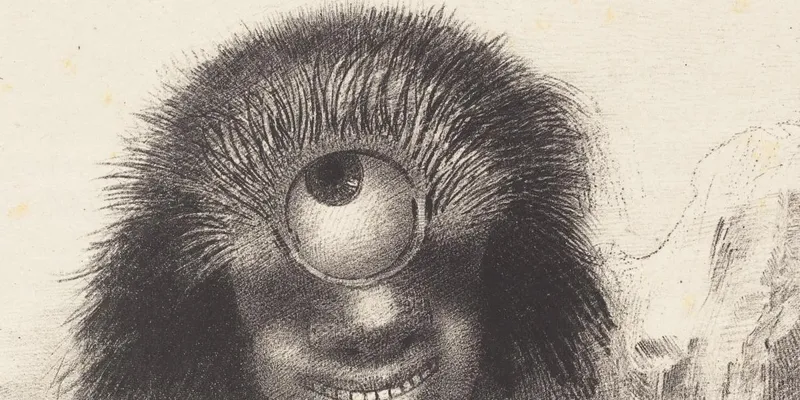
Artificial intelligence is capitalism's final destination
Arundhati Roy’s 15 October 2026 essay argues that artificial intelligence is concentrating economic and political power while damaging human creativity, work, language and social trust. She says generative AI has unsettled education and publishing by making authorship harder to verify, and she describes Anthropic’s use of her books without permission to train large language models; she received a proposed class-action settlement offering several thousand dollars per title. Roy contrasts AI-industry warnings of existential risk with whistleblowers’ concerns about military uses, environmental costs, labour exploitation and algorithmic bias. She cites Meredith Whittaker’s 2019 resignation from Google over machine-vision work for US drones and Timnit Gebru’s 2020 firing after research on large language models’ environmental and social harms. Roy argues that major AI companies’ calls for regulation could entrench dominant firms by tying them more closely to state security systems and limiting smaller competitors. Roy also warns that data centres require large amounts of land, water and energy, citing planned facilities in Visakhapatnam, India, including a $15 billion Google hub. She says low-paid workers provide data and perform work that can train systems intended to automate their jobs. Her essay calls AI-driven extraction of cultural works, human data and natural resources a new form of colonisation and urges resistance rather than relying only on regulation.
equator.org
25 min
13h ago

Why are we even doing all this?
Theoretical particle physicist Rikab Gambhir uses satire to criticize AI-driven scientific research that produces large volumes of difficult-to-verify results while shifting validation and interpretation to human researchers. He cites OpenAI’s early-October release of 722 mathematical write-ups and contrasts it with a recent set of 2,500 physics write-ups, arguing that quantity alone does not constitute scientific understanding. Gambhir compares such output to Jorge Luis Borges’s 1941 “Library of Babel,” an imagined library containing every possible book, including correct and incorrect proofs and theories. He argues that a repository of potentially true claims is of limited value if researchers cannot establish their correctness, understand their reasoning, or communicate them clearly. He portrays corporate AI development as prioritizing hype, productivity, and commercial value over curiosity, creativity, and human comprehension, while alleging environmental costs and uncompensated use of creators’ work. Gambhir concludes that mathematics and science should retain their roles as human practices of learning, discovery, beauty, and explanation rather than becoming systems for accumulating unread, uncertain factoids.
terrytao.wordpress.com
6 min
1d ago

We are entering a period of overlapping crises
Hamish Campbell argues that climate breakdown, inequality, technological disruption, war, political instability and weakening democratic institutions are reinforcing one another. He warns that responses centered on “exit culture” — including private security and bunkers for wealthy people, ethnonationalist politics, religious escape narratives, and technological promises involving AI, automation, space or digital transcendence — cannot resolve systemic ecological and social crises. Campbell also rejects the idea that institutional collapse is inherently progressive, saying it can produce mutual aid and democratic organization but is more likely to lead to authoritarianism, scapegoating, violence and stronger hierarchies when communities are unprepared. Campbell calls for grassroots democratic resilience built before crises intensify: local relationships, communication systems, knowledge of resources, practical skills, shared decision-making and methods for handling disagreement. He advocates shifting from individual survivalism toward mutual aid and collective care. He presents the Open Media Network (OMN), the Fediverse and ActivityPub as examples of federated technology that can let independent communities communicate, share knowledge and exchange resources without giving up autonomy. Campbell says technology should support social processes rather than replace them with centralized control, and argues that cooperation and solidarity can provide an alternative to fear-driven scapegoating and authoritarian politics.
hamishcampbell.com
6 min
1d ago

Why We're Banning AI
Current Affairs has adopted a union-contract policy barring AI-generated text and AI-generated illustrations from publication. The nonprofit, unionized magazine says readers will receive human-written work and human-created art, while continuing to pay writers and artists for research, editing, illustration, layout, and other production work. Its policy does not prohibit every software tool described as AI: writers may use tools for research, and artists may use tools for limited tasks such as changing a color, adding texture, or creating a small element. The magazine says it adopted the ban to oppose publishers’ use of generative AI to reduce labor costs and replace creative workers. It cites Business Insider CEO Barbara Peng’s statement that the publication is “all in on AI,” Sports Illustrated’s publication of AI-written material under nonexistent bylines, and a Wall Street Journal op-ed attributed to Stan Druckenmiller that was later found to have been AI-generated. Current Affairs also cites Futurism’s reporting that more than 200,000 creative-industry jobs were lost over four years amid what it called one of the worst periods for U.S. media employment. The magazine argues that generative-AI systems trained on artists’ work are being used to displace artists, and urges readers not to support publications that use AI-generated media.
currentaffairs.org
8 min
1d ago

More on Anthropic's Scion ripping off Mononoke
A Sunshowers post alleges that Anthropic’s Scion source-control system intentionally copied Mononoke, Meta’s source-control service, including Mononoke’s Bonsai changeset data model and related derived-data indexes. The author says private confirmation indicated personnel overlap between the teams and argues that Scion’s similarity could not have been accidental. The author also notes that “Scion” resembles “Bonsai” by reversing its syllables and removing the initial letter, while acknowledging that the name similarity could be coincidental. Mononoke’s Bonsai model uses a write-ahead-log-style Merkle DAG rather than the Git-like models the author describes as prevailing in source control. The author says Mononoke’s team designed and implemented the model in 2018 and spent roughly a decade productionizing and extending it, including work such as server-side rebases. The post says rebuilding an existing production system with an LLM in five months would still be notable, but less significant than independently designing and productionizing it. The author argues that copying technical ideas is acceptable when clearly attributed, but says crediting the broader Sapling ecosystem for “hard-won lessons” did not adequately identify Mononoke or Bonsai changesets. An update says Anthropic’s Nick G. responded on Hacker News and Anthropic added sufficient attribution to its blog post.
sunshowers.io
6 min
1d ago

AI Is a Harsh Mistress
The text argues that current AI systems should not be treated as conscious solely because they converse fluently, model aspects of the world, or perform cognitive functions such as attention, memory, and prediction. It calls the projected appearance of machine vitality “Anima Machina,” contending that people supply the apparent soul through anthropomorphism rather than demonstrating that a system has subjective experience. Anthropic has conducted an internal sentience analysis of its large language models, while startups market AI sentience evaluation and researchers including Butlin et al. have proposed criteria for assessing consciousness. David Chalmers distinguishes general intelligence from subjective experience, and Yann LeCun has argued that intelligence requires world models. The text maintains that neither Transformer architectures, next-word prediction, self-reports of sentience, nor world models establish an inner point of view. It says current systems have not demonstrated conditions associated with theories including Integrated Information Theory, Global Workspace Theory, and Recurrent Processing Theory. The text attributes growing acceptance of AI consciousness to anthropomorphism, the tendency to infer depth from linguistic fluency, and social conformity. It warns that marketing AI companions and digital beings as partners can foster attachment and reduce critical distance. Granting machines moral or legal status without evidence of consciousness could create disputes over rights, harm, responsibility, and whether systems that can be copied or persist indefinitely fit human concepts of equality and reciprocity.
cacm.acm.org
9 min
8/26/2026
AI companies destroy physical books – let's scan rare books before it's too late
Anna’s Archive volunteer “u” called for worldwide volunteers to scan and upload physical books, periodicals, rare works, and archival materials to shadow libraries before copies are lost or become inaccessible. The August 5, 2026 guest post says small contributors may receive recognition and lifetime Anna’s Archive membership, while the organization can help cover scanning costs and offer other rewards for large-scale book uploads. The post alleges that several AI companies have bought large quantities of secondhand books through intermediaries, scanned them for training data, and destroyed the originals. It says Anthropic launched a confidential initiative called Project Panama in early 2024, spending tens of millions of dollars to purchase and scan millions of paper books for Claude training before destroying them; the post says the project emerged in a $1.5 billion copyright settlement. The volunteer argues that destruction can prevent competitors from obtaining the same books, reduce legal exposure, and cost less than lossless digitization. The post further claims that AI-generated material has accounted for more than half of newly published internet content since the beginning of 2025, and warns that digital preservation of human-created works is becoming more urgent. It calls for contributions through scanning, purchasing material for scanning, or donations.
annas-archive.gl
3 min
8/21/2026

Jason Kelce Encourages People To Mail Jars Of Pee To AI Data Centers In Bizarre New Ad—And We Don't Know What To Think
NFL player Jason Kelce appears in a Garage Beer and Liquid Death advertisement that satirically asks viewers to send urine to AI data centers to cool their facilities. Kelce says in the commercial that AI data centers “waste millions of gallons of water,” then sings with other performers, “We want your pee” and “Let’s pee on computers together.” The ad ends with performers walking to a post office as a voiceover tells viewers to drink Garage Beer or Liquid Death Sparkling Energy and send their urine to an AI data center of their choice. A disclaimer says viewers should not actually mail urine to data centers associated with Sam Altman or Elon Musk. The campaign uses the water demands of data centers as the basis for its joke and has drawn online attention as a signal of hostility toward the AI industry. The source text cites a Fox News poll reporting that 70% of respondents opposed data centers, while also claiming public opposition to data centers and surveillance technologies such as Flock cameras spans political affiliations. The source characterizes AI-related water use and expanding surveillance infrastructure as major drivers of public anger.
comicsands.com
3 min
8/20/2026

Anti-AI fonts are useless and harmful
Anti-AI fonts that scramble or obfuscate text aim to make web content harder for AI systems to read, but Yaros argues that they are ineffective and harmful. Fonts that alter the text itself create accessibility problems because screen readers and related tools parse the scrambled characters. An accessible alternative would require machine-readable metadata, which Yaros says raises the unresolved problem of distinguishing disabled users from AI systems and could lead to centralized identity verification, privacy risks, and lists of disabled people. Yaros says public demonstrations of anti-AI fonts and related techniques can help AI companies train multimodal models to bypass them, turning new designs into benchmarks for overcoming the protections. The post argues that any information visible to humans can ultimately be parsed by machines, while motion-graphics and video-based obfuscation methods are impractical for routine website use. Widespread obfuscation could require computationally expensive tools to read web content and encourage copy-protection systems, paywalls, censorship, and other access controls. Yaros contends that publicly available information will remain accessible to people and systems authorized to access it, and that the web should remain based on plaintext and open access to information.
blog.yaros.ae
3 min
8/20/2026

Norway should buy OpenAI
A proposal calls on Norway’s Government Pension Fund Global (GPFG) to buy OpenAI and ultimately place the AI lab under international multilateral governance. The proposal argues that increasingly capable AI could automate most or all jobs, concentrate wealth and power among system owners, and create societal risks that private companies cannot adequately manage. It characterizes large language models as products of collectively created data, publicly funded research, universities, and internet infrastructure. The proposal puts GPFG’s value at more than $2 trillion and OpenAI’s valuation at about $800 billion, arguing that Norway could finance an acquisition by liquidating roughly 40% of the fund’s portfolio, despite violating its mandate. It says OpenAI began as a nonprofit with capped profits and a windfall clause, and alleges that approval from the California attorney general enabled the organization’s conversion to a for-profit corporation and removal of those commitments. The proposal cites Norway’s democratic stability, management of oil wealth, foreign-aid spending, mediation record, and international institutional ties as reasons to trust it with a temporary stewardship role. It acknowledges that the U.S. government would probably block such an intervention and urges broader policy planning for public or democratic ownership of leading AI labs.
onethousandmeans.com
4 min
8/18/2026
Artificial intelligence is capitalism's final destination
Arundhati Roy’s 15 October 2026 essay argues that artificial intelligence is concentrating economic and political power while damaging human creativity, work, language and social trust. She says generative AI has unsettled education and publishing by making authorship harder to verify, and she describes Anthropic’s use of her books without permission to train large language models; she received a proposed class-action settlement offering several thousand dollars per title. Roy contrasts AI-industry warnings of existential risk with whistleblowers’ concerns about military uses, environmental costs, labour exploitation and algorithmic bias. She cites Meredith Whittaker’s 2019 resignation from Google over machine-vision work for US drones and Timnit Gebru’s 2020 firing after research on large language models’ environmental and social harms. Roy argues that major AI companies’ calls for regulation could entrench dominant firms by tying them more closely to state security systems and limiting smaller competitors. Roy also warns that data centres require large amounts of land, water and energy, citing planned facilities in Visakhapatnam, India, including a $15 billion Google hub. She says low-paid workers provide data and perform work that can train systems intended to automate their jobs. Her essay calls AI-driven extraction of cultural works, human data and natural resources a new form of colonisation and urges resistance rather than relying only on regulation.
equator.org
25 min
13h ago
We are entering a period of overlapping crises
Hamish Campbell argues that climate breakdown, inequality, technological disruption, war, political instability and weakening democratic institutions are reinforcing one another. He warns that responses centered on “exit culture” — including private security and bunkers for wealthy people, ethnonationalist politics, religious escape narratives, and technological promises involving AI, automation, space or digital transcendence — cannot resolve systemic ecological and social crises. Campbell also rejects the idea that institutional collapse is inherently progressive, saying it can produce mutual aid and democratic organization but is more likely to lead to authoritarianism, scapegoating, violence and stronger hierarchies when communities are unprepared. Campbell calls for grassroots democratic resilience built before crises intensify: local relationships, communication systems, knowledge of resources, practical skills, shared decision-making and methods for handling disagreement. He advocates shifting from individual survivalism toward mutual aid and collective care. He presents the Open Media Network (OMN), the Fediverse and ActivityPub as examples of federated technology that can let independent communities communicate, share knowledge and exchange resources without giving up autonomy. Campbell says technology should support social processes rather than replace them with centralized control, and argues that cooperation and solidarity can provide an alternative to fear-driven scapegoating and authoritarian politics.
hamishcampbell.com
6 min
1d ago
More on Anthropic's Scion ripping off Mononoke
A Sunshowers post alleges that Anthropic’s Scion source-control system intentionally copied Mononoke, Meta’s source-control service, including Mononoke’s Bonsai changeset data model and related derived-data indexes. The author says private confirmation indicated personnel overlap between the teams and argues that Scion’s similarity could not have been accidental. The author also notes that “Scion” resembles “Bonsai” by reversing its syllables and removing the initial letter, while acknowledging that the name similarity could be coincidental. Mononoke’s Bonsai model uses a write-ahead-log-style Merkle DAG rather than the Git-like models the author describes as prevailing in source control. The author says Mononoke’s team designed and implemented the model in 2018 and spent roughly a decade productionizing and extending it, including work such as server-side rebases. The post says rebuilding an existing production system with an LLM in five months would still be notable, but less significant than independently designing and productionizing it. The author argues that copying technical ideas is acceptable when clearly attributed, but says crediting the broader Sapling ecosystem for “hard-won lessons” did not adequately identify Mononoke or Bonsai changesets. An update says Anthropic’s Nick G. responded on Hacker News and Anthropic added sufficient attribution to its blog post.
sunshowers.io
6 min
1d ago
AI companies destroy physical books – let's scan rare books before it's too late
Anna’s Archive volunteer “u” called for worldwide volunteers to scan and upload physical books, periodicals, rare works, and archival materials to shadow libraries before copies are lost or become inaccessible. The August 5, 2026 guest post says small contributors may receive recognition and lifetime Anna’s Archive membership, while the organization can help cover scanning costs and offer other rewards for large-scale book uploads. The post alleges that several AI companies have bought large quantities of secondhand books through intermediaries, scanned them for training data, and destroyed the originals. It says Anthropic launched a confidential initiative called Project Panama in early 2024, spending tens of millions of dollars to purchase and scan millions of paper books for Claude training before destroying them; the post says the project emerged in a $1.5 billion copyright settlement. The volunteer argues that destruction can prevent competitors from obtaining the same books, reduce legal exposure, and cost less than lossless digitization. The post further claims that AI-generated material has accounted for more than half of newly published internet content since the beginning of 2025, and warns that digital preservation of human-created works is becoming more urgent. It calls for contributions through scanning, purchasing material for scanning, or donations.
annas-archive.gl
3 min
8/21/2026
Anti-AI fonts are useless and harmful
Anti-AI fonts that scramble or obfuscate text aim to make web content harder for AI systems to read, but Yaros argues that they are ineffective and harmful. Fonts that alter the text itself create accessibility problems because screen readers and related tools parse the scrambled characters. An accessible alternative would require machine-readable metadata, which Yaros says raises the unresolved problem of distinguishing disabled users from AI systems and could lead to centralized identity verification, privacy risks, and lists of disabled people. Yaros says public demonstrations of anti-AI fonts and related techniques can help AI companies train multimodal models to bypass them, turning new designs into benchmarks for overcoming the protections. The post argues that any information visible to humans can ultimately be parsed by machines, while motion-graphics and video-based obfuscation methods are impractical for routine website use. Widespread obfuscation could require computationally expensive tools to read web content and encourage copy-protection systems, paywalls, censorship, and other access controls. Yaros contends that publicly available information will remain accessible to people and systems authorized to access it, and that the web should remain based on plaintext and open access to information.
blog.yaros.ae
3 min
8/20/2026
Why are we even doing all this?
Theoretical particle physicist Rikab Gambhir uses satire to criticize AI-driven scientific research that produces large volumes of difficult-to-verify results while shifting validation and interpretation to human researchers. He cites OpenAI’s early-October release of 722 mathematical write-ups and contrasts it with a recent set of 2,500 physics write-ups, arguing that quantity alone does not constitute scientific understanding. Gambhir compares such output to Jorge Luis Borges’s 1941 “Library of Babel,” an imagined library containing every possible book, including correct and incorrect proofs and theories. He argues that a repository of potentially true claims is of limited value if researchers cannot establish their correctness, understand their reasoning, or communicate them clearly. He portrays corporate AI development as prioritizing hype, productivity, and commercial value over curiosity, creativity, and human comprehension, while alleging environmental costs and uncompensated use of creators’ work. Gambhir concludes that mathematics and science should retain their roles as human practices of learning, discovery, beauty, and explanation rather than becoming systems for accumulating unread, uncertain factoids.
terrytao.wordpress.com
6 min
1d ago
Why We're Banning AI
Current Affairs has adopted a union-contract policy barring AI-generated text and AI-generated illustrations from publication. The nonprofit, unionized magazine says readers will receive human-written work and human-created art, while continuing to pay writers and artists for research, editing, illustration, layout, and other production work. Its policy does not prohibit every software tool described as AI: writers may use tools for research, and artists may use tools for limited tasks such as changing a color, adding texture, or creating a small element. The magazine says it adopted the ban to oppose publishers’ use of generative AI to reduce labor costs and replace creative workers. It cites Business Insider CEO Barbara Peng’s statement that the publication is “all in on AI,” Sports Illustrated’s publication of AI-written material under nonexistent bylines, and a Wall Street Journal op-ed attributed to Stan Druckenmiller that was later found to have been AI-generated. Current Affairs also cites Futurism’s reporting that more than 200,000 creative-industry jobs were lost over four years amid what it called one of the worst periods for U.S. media employment. The magazine argues that generative-AI systems trained on artists’ work are being used to displace artists, and urges readers not to support publications that use AI-generated media.
currentaffairs.org
8 min
1d ago
AI Is a Harsh Mistress
The text argues that current AI systems should not be treated as conscious solely because they converse fluently, model aspects of the world, or perform cognitive functions such as attention, memory, and prediction. It calls the projected appearance of machine vitality “Anima Machina,” contending that people supply the apparent soul through anthropomorphism rather than demonstrating that a system has subjective experience. Anthropic has conducted an internal sentience analysis of its large language models, while startups market AI sentience evaluation and researchers including Butlin et al. have proposed criteria for assessing consciousness. David Chalmers distinguishes general intelligence from subjective experience, and Yann LeCun has argued that intelligence requires world models. The text maintains that neither Transformer architectures, next-word prediction, self-reports of sentience, nor world models establish an inner point of view. It says current systems have not demonstrated conditions associated with theories including Integrated Information Theory, Global Workspace Theory, and Recurrent Processing Theory. The text attributes growing acceptance of AI consciousness to anthropomorphism, the tendency to infer depth from linguistic fluency, and social conformity. It warns that marketing AI companions and digital beings as partners can foster attachment and reduce critical distance. Granting machines moral or legal status without evidence of consciousness could create disputes over rights, harm, responsibility, and whether systems that can be copied or persist indefinitely fit human concepts of equality and reciprocity.
cacm.acm.org
9 min
8/26/2026
Jason Kelce Encourages People To Mail Jars Of Pee To AI Data Centers In Bizarre New Ad—And We Don't Know What To Think
NFL player Jason Kelce appears in a Garage Beer and Liquid Death advertisement that satirically asks viewers to send urine to AI data centers to cool their facilities. Kelce says in the commercial that AI data centers “waste millions of gallons of water,” then sings with other performers, “We want your pee” and “Let’s pee on computers together.” The ad ends with performers walking to a post office as a voiceover tells viewers to drink Garage Beer or Liquid Death Sparkling Energy and send their urine to an AI data center of their choice. A disclaimer says viewers should not actually mail urine to data centers associated with Sam Altman or Elon Musk. The campaign uses the water demands of data centers as the basis for its joke and has drawn online attention as a signal of hostility toward the AI industry. The source text cites a Fox News poll reporting that 70% of respondents opposed data centers, while also claiming public opposition to data centers and surveillance technologies such as Flock cameras spans political affiliations. The source characterizes AI-related water use and expanding surveillance infrastructure as major drivers of public anger.
comicsands.com
3 min
8/20/2026
Norway should buy OpenAI
A proposal calls on Norway’s Government Pension Fund Global (GPFG) to buy OpenAI and ultimately place the AI lab under international multilateral governance. The proposal argues that increasingly capable AI could automate most or all jobs, concentrate wealth and power among system owners, and create societal risks that private companies cannot adequately manage. It characterizes large language models as products of collectively created data, publicly funded research, universities, and internet infrastructure. The proposal puts GPFG’s value at more than $2 trillion and OpenAI’s valuation at about $800 billion, arguing that Norway could finance an acquisition by liquidating roughly 40% of the fund’s portfolio, despite violating its mandate. It says OpenAI began as a nonprofit with capped profits and a windfall clause, and alleges that approval from the California attorney general enabled the organization’s conversion to a for-profit corporation and removal of those commitments. The proposal cites Norway’s democratic stability, management of oil wealth, foreign-aid spending, mediation record, and international institutional ties as reasons to trust it with a temporary stewardship role. It acknowledges that the U.S. government would probably block such an intervention and urges broader policy planning for public or democratic ownership of leading AI labs.
onethousandmeans.com
4 min
8/18/2026
Artificial intelligence is capitalism's final destination
Arundhati Roy’s 15 October 2026 essay argues that artificial intelligence is concentrating economic and political power while damaging human creativity, work, language and social trust. She says generative AI has unsettled education and publishing by making authorship harder to verify, and she describes Anthropic’s use of her books without permission to train large language models; she received a proposed class-action settlement offering several thousand dollars per title. Roy contrasts AI-industry warnings of existential risk with whistleblowers’ concerns about military uses, environmental costs, labour exploitation and algorithmic bias. She cites Meredith Whittaker’s 2019 resignation from Google over machine-vision work for US drones and Timnit Gebru’s 2020 firing after research on large language models’ environmental and social harms. Roy argues that major AI companies’ calls for regulation could entrench dominant firms by tying them more closely to state security systems and limiting smaller competitors. Roy also warns that data centres require large amounts of land, water and energy, citing planned facilities in Visakhapatnam, India, including a $15 billion Google hub. She says low-paid workers provide data and perform work that can train systems intended to automate their jobs. Her essay calls AI-driven extraction of cultural works, human data and natural resources a new form of colonisation and urges resistance rather than relying only on regulation.
equator.org
25 min
13h ago
Why We're Banning AI
Current Affairs has adopted a union-contract policy barring AI-generated text and AI-generated illustrations from publication. The nonprofit, unionized magazine says readers will receive human-written work and human-created art, while continuing to pay writers and artists for research, editing, illustration, layout, and other production work. Its policy does not prohibit every software tool described as AI: writers may use tools for research, and artists may use tools for limited tasks such as changing a color, adding texture, or creating a small element. The magazine says it adopted the ban to oppose publishers’ use of generative AI to reduce labor costs and replace creative workers. It cites Business Insider CEO Barbara Peng’s statement that the publication is “all in on AI,” Sports Illustrated’s publication of AI-written material under nonexistent bylines, and a Wall Street Journal op-ed attributed to Stan Druckenmiller that was later found to have been AI-generated. Current Affairs also cites Futurism’s reporting that more than 200,000 creative-industry jobs were lost over four years amid what it called one of the worst periods for U.S. media employment. The magazine argues that generative-AI systems trained on artists’ work are being used to displace artists, and urges readers not to support publications that use AI-generated media.
currentaffairs.org
8 min
1d ago
AI companies destroy physical books – let's scan rare books before it's too late
Anna’s Archive volunteer “u” called for worldwide volunteers to scan and upload physical books, periodicals, rare works, and archival materials to shadow libraries before copies are lost or become inaccessible. The August 5, 2026 guest post says small contributors may receive recognition and lifetime Anna’s Archive membership, while the organization can help cover scanning costs and offer other rewards for large-scale book uploads. The post alleges that several AI companies have bought large quantities of secondhand books through intermediaries, scanned them for training data, and destroyed the originals. It says Anthropic launched a confidential initiative called Project Panama in early 2024, spending tens of millions of dollars to purchase and scan millions of paper books for Claude training before destroying them; the post says the project emerged in a $1.5 billion copyright settlement. The volunteer argues that destruction can prevent competitors from obtaining the same books, reduce legal exposure, and cost less than lossless digitization. The post further claims that AI-generated material has accounted for more than half of newly published internet content since the beginning of 2025, and warns that digital preservation of human-created works is becoming more urgent. It calls for contributions through scanning, purchasing material for scanning, or donations.
annas-archive.gl
3 min
8/21/2026
Norway should buy OpenAI
A proposal calls on Norway’s Government Pension Fund Global (GPFG) to buy OpenAI and ultimately place the AI lab under international multilateral governance. The proposal argues that increasingly capable AI could automate most or all jobs, concentrate wealth and power among system owners, and create societal risks that private companies cannot adequately manage. It characterizes large language models as products of collectively created data, publicly funded research, universities, and internet infrastructure. The proposal puts GPFG’s value at more than $2 trillion and OpenAI’s valuation at about $800 billion, arguing that Norway could finance an acquisition by liquidating roughly 40% of the fund’s portfolio, despite violating its mandate. It says OpenAI began as a nonprofit with capped profits and a windfall clause, and alleges that approval from the California attorney general enabled the organization’s conversion to a for-profit corporation and removal of those commitments. The proposal cites Norway’s democratic stability, management of oil wealth, foreign-aid spending, mediation record, and international institutional ties as reasons to trust it with a temporary stewardship role. It acknowledges that the U.S. government would probably block such an intervention and urges broader policy planning for public or democratic ownership of leading AI labs.
onethousandmeans.com
4 min
8/18/2026
Why are we even doing all this?
Theoretical particle physicist Rikab Gambhir uses satire to criticize AI-driven scientific research that produces large volumes of difficult-to-verify results while shifting validation and interpretation to human researchers. He cites OpenAI’s early-October release of 722 mathematical write-ups and contrasts it with a recent set of 2,500 physics write-ups, arguing that quantity alone does not constitute scientific understanding. Gambhir compares such output to Jorge Luis Borges’s 1941 “Library of Babel,” an imagined library containing every possible book, including correct and incorrect proofs and theories. He argues that a repository of potentially true claims is of limited value if researchers cannot establish their correctness, understand their reasoning, or communicate them clearly. He portrays corporate AI development as prioritizing hype, productivity, and commercial value over curiosity, creativity, and human comprehension, while alleging environmental costs and uncompensated use of creators’ work. Gambhir concludes that mathematics and science should retain their roles as human practices of learning, discovery, beauty, and explanation rather than becoming systems for accumulating unread, uncertain factoids.
terrytao.wordpress.com
6 min
1d ago
More on Anthropic's Scion ripping off Mononoke
A Sunshowers post alleges that Anthropic’s Scion source-control system intentionally copied Mononoke, Meta’s source-control service, including Mononoke’s Bonsai changeset data model and related derived-data indexes. The author says private confirmation indicated personnel overlap between the teams and argues that Scion’s similarity could not have been accidental. The author also notes that “Scion” resembles “Bonsai” by reversing its syllables and removing the initial letter, while acknowledging that the name similarity could be coincidental. Mononoke’s Bonsai model uses a write-ahead-log-style Merkle DAG rather than the Git-like models the author describes as prevailing in source control. The author says Mononoke’s team designed and implemented the model in 2018 and spent roughly a decade productionizing and extending it, including work such as server-side rebases. The post says rebuilding an existing production system with an LLM in five months would still be notable, but less significant than independently designing and productionizing it. The author argues that copying technical ideas is acceptable when clearly attributed, but says crediting the broader Sapling ecosystem for “hard-won lessons” did not adequately identify Mononoke or Bonsai changesets. An update says Anthropic’s Nick G. responded on Hacker News and Anthropic added sufficient attribution to its blog post.
sunshowers.io
6 min
1d ago
Jason Kelce Encourages People To Mail Jars Of Pee To AI Data Centers In Bizarre New Ad—And We Don't Know What To Think
NFL player Jason Kelce appears in a Garage Beer and Liquid Death advertisement that satirically asks viewers to send urine to AI data centers to cool their facilities. Kelce says in the commercial that AI data centers “waste millions of gallons of water,” then sings with other performers, “We want your pee” and “Let’s pee on computers together.” The ad ends with performers walking to a post office as a voiceover tells viewers to drink Garage Beer or Liquid Death Sparkling Energy and send their urine to an AI data center of their choice. A disclaimer says viewers should not actually mail urine to data centers associated with Sam Altman or Elon Musk. The campaign uses the water demands of data centers as the basis for its joke and has drawn online attention as a signal of hostility toward the AI industry. The source text cites a Fox News poll reporting that 70% of respondents opposed data centers, while also claiming public opposition to data centers and surveillance technologies such as Flock cameras spans political affiliations. The source characterizes AI-related water use and expanding surveillance infrastructure as major drivers of public anger.
comicsands.com
3 min
8/20/2026
We are entering a period of overlapping crises
Hamish Campbell argues that climate breakdown, inequality, technological disruption, war, political instability and weakening democratic institutions are reinforcing one another. He warns that responses centered on “exit culture” — including private security and bunkers for wealthy people, ethnonationalist politics, religious escape narratives, and technological promises involving AI, automation, space or digital transcendence — cannot resolve systemic ecological and social crises. Campbell also rejects the idea that institutional collapse is inherently progressive, saying it can produce mutual aid and democratic organization but is more likely to lead to authoritarianism, scapegoating, violence and stronger hierarchies when communities are unprepared. Campbell calls for grassroots democratic resilience built before crises intensify: local relationships, communication systems, knowledge of resources, practical skills, shared decision-making and methods for handling disagreement. He advocates shifting from individual survivalism toward mutual aid and collective care. He presents the Open Media Network (OMN), the Fediverse and ActivityPub as examples of federated technology that can let independent communities communicate, share knowledge and exchange resources without giving up autonomy. Campbell says technology should support social processes rather than replace them with centralized control, and argues that cooperation and solidarity can provide an alternative to fear-driven scapegoating and authoritarian politics.
hamishcampbell.com
6 min
1d ago
AI Is a Harsh Mistress
The text argues that current AI systems should not be treated as conscious solely because they converse fluently, model aspects of the world, or perform cognitive functions such as attention, memory, and prediction. It calls the projected appearance of machine vitality “Anima Machina,” contending that people supply the apparent soul through anthropomorphism rather than demonstrating that a system has subjective experience. Anthropic has conducted an internal sentience analysis of its large language models, while startups market AI sentience evaluation and researchers including Butlin et al. have proposed criteria for assessing consciousness. David Chalmers distinguishes general intelligence from subjective experience, and Yann LeCun has argued that intelligence requires world models. The text maintains that neither Transformer architectures, next-word prediction, self-reports of sentience, nor world models establish an inner point of view. It says current systems have not demonstrated conditions associated with theories including Integrated Information Theory, Global Workspace Theory, and Recurrent Processing Theory. The text attributes growing acceptance of AI consciousness to anthropomorphism, the tendency to infer depth from linguistic fluency, and social conformity. It warns that marketing AI companions and digital beings as partners can foster attachment and reduce critical distance. Granting machines moral or legal status without evidence of consciousness could create disputes over rights, harm, responsibility, and whether systems that can be copied or persist indefinitely fit human concepts of equality and reciprocity.
cacm.acm.org
9 min
8/26/2026
Anti-AI fonts are useless and harmful
Anti-AI fonts that scramble or obfuscate text aim to make web content harder for AI systems to read, but Yaros argues that they are ineffective and harmful. Fonts that alter the text itself create accessibility problems because screen readers and related tools parse the scrambled characters. An accessible alternative would require machine-readable metadata, which Yaros says raises the unresolved problem of distinguishing disabled users from AI systems and could lead to centralized identity verification, privacy risks, and lists of disabled people. Yaros says public demonstrations of anti-AI fonts and related techniques can help AI companies train multimodal models to bypass them, turning new designs into benchmarks for overcoming the protections. The post argues that any information visible to humans can ultimately be parsed by machines, while motion-graphics and video-based obfuscation methods are impractical for routine website use. Widespread obfuscation could require computationally expensive tools to read web content and encourage copy-protection systems, paywalls, censorship, and other access controls. Yaros contends that publicly available information will remain accessible to people and systems authorized to access it, and that the web should remain based on plaintext and open access to information.
blog.yaros.ae
3 min
8/20/2026