
What's new in Emacs 31.1
Emacs 31.1 has been released with incremental usability, completion, window-management and terminal improvements rather than a single flagship feature. The release permanently removes the legacy unexec dumper, deprecated since Emacs 27, leaving the portable dumper as the supported mechanism for preloading Emacs Lisp state. It also stops building and installing Emacs’s old ctags program, directing users to Universal Ctags or to `etags --ctags` for compatible behavior. A planned new garbage collector was postponed to Emacs 32. A new User Lisp Directory feature automatically processes Lisp files under `user-lisp/` in an Emacs configuration directory, including recursive byte compilation, autoload generation and load-path setup. Tree-sitter modes can now offer to install their required language grammars. Completion gains configurable eager display and live updating of the *Completions* buffer, while the rewritten flex completion style is intended to be faster and rank matches more accurately. New commands rotate, flip and transpose window layouts, and a setting controls preferred split direction. Compatible terminals now enable `xterm-mouse-mode` by default, and TTY frames gain child-frame support. Emacs 31.1 also adds built-in controls for collapsing minor-mode indicators, hiding a buffer’s mode line, extending selections with Shift-click, and preventing asynchronous native compilation on battery power. It includes Org 9.8 and supports Unicode Standard 17.0.
masteringemacs.org
181 min
8/24/2026

Thinking in Python
Thinking in Python is a Bruce Eckel book covering Python insights, idioms, and patterns. The site provides the book for online reading and links to example code and exercise solutions hosted on GitHub. The material is copyrighted © 2026 by Bruce Eckel and licensed under CC BY-NC-ND 4.0. The site states that the book is freely readable online and that reproduction requires permission.
thinkinginpython.com
1 min
8/22/2026
A Friendly Introduction to Racket
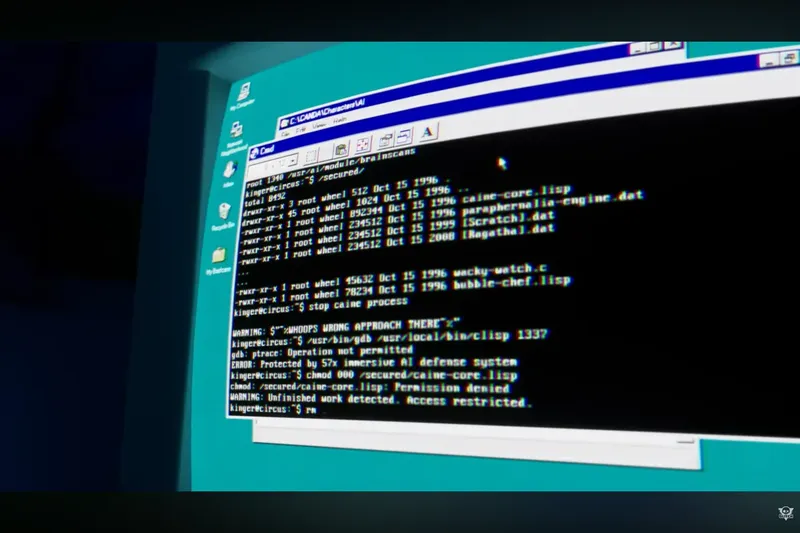
Racket is a descendant of Scheme designed for education and programming-language research that can also be used to create domain-specific languages. PLT Scheme, created by Matthias Felleisen’s group in 1995, was renamed Racket in 2010. DrRacket includes an editor and a read-eval-print loop, while the racket command opens a terminal REPL and raco provides package-management and tooling commands. Racket programs use parenthesized expressions in operator-first form, such as (+ 1 2), and define values and functions with define. Lists are central data structures: quoting with ' prevents evaluation, while first, rest, and cons access or construct lists. Functions are first-class values, enabling operations such as map, filter, and foldl; recursive functions can express repeated computation through base cases and self-calls. Racket also ships with libraries including 2htdp/image for graphics. Because Lisp-family code can be represented as lists, quoted expressions can be manipulated as data and evaluated as code. Racket macros can transform syntax before runtime; define-syntax-rule can define constructs such as a while loop. Lisp originated at MIT in 1958 under John McCarthy, Scheme was created by Gerald Sussman and Guy Steele in 1975, and Lisp introduced or popularized concepts including garbage collection, first-class functions, REPLs, and code-as-data representation.
geometridae.bearblog.dev
7 min
8/22/2026

Rust Glancer: Rust LSP using 100x less RAM
Rust Glancer is an alternative Rust language server built over four months to reduce memory use and preserve workspace indexes across editor restarts. It targets less than 100 MB of RAM for reasonable projects by storing analysis results on the filesystem and loading data only when a query needs it. Its VS Code extension is available now, although the server remains incomplete and has known bugs. Rust Glancer performs full workspace indexing with type inference and the Chalk trait solver, and supports common Rust syntax and LSP functions including go-to-definition, hover information, inlay hints, and completions. On a MacBook Pro M4 Max with 36 GB RAM, its reported base and full indexing times were five and eight seconds, versus six and 13 seconds for rust-analyzer. On a 2020 M1 MacBook Pro with 8 GB RAM, the reported times were six and nine seconds, versus seven and 14 seconds for rust-analyzer. Unlike rust-analyzer’s incremental in-memory model, Rust Glancer invalidates frozen analysis on save. It uses shallow analysis while typing and reuses the previous complete index, so new imports, structs, and traits are not fully indexed until a document is saved. The developer expects rust-analyzer to remain preferable for feature completeness and per-keystroke accuracy, while Rust Glancer targets lower-memory machines and workflows with many external code changes.
rust-glancer.github.io
6 min
8/21/2026

Go 1.27
The Go team released Go 1.27, adding language features, toolchain updates, runtime profiling, performance work, and new standard-library packages. The release supports generic methods, allowing methods such as math/rand/v2.Rand.N to work across integer types. Struct literals can now initialize nested or embedded fields through valid field selectors, and generalized function type inference now covers all assignment contexts, including composite literals, type conversions, and channel sends. Go 1.27 adds go fix modernizers for atomic types, embedded literals, backward slices, and unsafe functions. The go doc command supports package@version queries, while go mod tidy consolidates multiple require blocks into direct and indirect blocks. Size-specialized allocation reduces costs for objects smaller than 80 bytes by up to 30%, with roughly 1% overall improvement claimed for allocation-heavy programs. The runtime/pprof goroutineleak profile is generally available for detecting permanently blocked goroutines. Standard-library additions include encoding/json/v2, post-quantum ML-DSA signatures through crypto/mldsa, UUID support, experimental SIMD packages, and an in-memory HTTP test server for testing/synctest.
go.dev
3 min
8/19/2026

Mojo is now open source!
Modular has released the full source code for the Mojo programming language under the Apache 2.0 license with LLVM exceptions. The Modular GitHub repository now includes the Mojo compiler, tooling and components needed to build the language. Mojo is a general-purpose language designed to apply modern compiler and programming-language research to GPUs, AI accelerators and other advanced computing hardware. Mojo 1.0 recently reached source stability, following four years of development in which the language had an open community but a closed compiler. Modular had previously open-sourced Mojo’s standard library, kernel code, tools and support components. The Apache 2.0 license permits broad use, while the LLVM license exceptions expand permissions for building and distributing binaries compiled from Mojo. Developers can clone the Modular repository and use Bazel to build the compiler and standard library locally. The `--config=build-mojo` setting compiles the toolchain from local source, and developers can run standard-library tests through Bazel. The `--config=prebuilt-mojo` setting downloads a nightly compiler binary instead, although Modular says a prebuilt compiler remains necessary for customizing MAX kernels or models. Mojo’s standard library has accepted outside contributions since 2024, but Modular is not yet accepting contributions to the compiler or tooling and aims to do so by the end of the year.
modular.com
3 min
8/18/2026
Rhombus 1.1 is now available
Rhombus version 1.1 is now available for download at https://rhombus-lang.org/. This release introduces new features, including the ability to define annotations without writing meta-time code and a new binding form for improved readability.
blog.racket-lang.org
1 min
8/17/2026

Mojo 1.0
Mojo language has officially reached version 1.0, marking its evolution into a stable, general-purpose programming language since its initial release in 2023. The 1.0 version supports a vibrant developer community in creating libraries, tools, and applications, providing a production-ready foundation for long-term development.
modular.com
4 min
8/11/2026
Go 1.27 Interactive Tour
Go 1.27 introduces new features with an interactive tour that includes runnable examples to demonstrate changes and updated behaviors. The initiative continues from previous interactive tours created by Anton Zhiyanov for Go versions 1.22 through 1.26.
victoriametrics.com
15 min
8/2/2026

EYG: A Programming Language for Humans
Eat Your Greens (EYG) is a statically typed functional programming language designed to improve programming experiences. The language incorporates selected features aimed at enhancing usability and addressing common user frustrations in programming.
crowdhailer.me
6 min
7/28/2026
What's new in Emacs 31.1
Emacs 31.1 has been released with incremental usability, completion, window-management and terminal improvements rather than a single flagship feature. The release permanently removes the legacy unexec dumper, deprecated since Emacs 27, leaving the portable dumper as the supported mechanism for preloading Emacs Lisp state. It also stops building and installing Emacs’s old ctags program, directing users to Universal Ctags or to `etags --ctags` for compatible behavior. A planned new garbage collector was postponed to Emacs 32. A new User Lisp Directory feature automatically processes Lisp files under `user-lisp/` in an Emacs configuration directory, including recursive byte compilation, autoload generation and load-path setup. Tree-sitter modes can now offer to install their required language grammars. Completion gains configurable eager display and live updating of the *Completions* buffer, while the rewritten flex completion style is intended to be faster and rank matches more accurately. New commands rotate, flip and transpose window layouts, and a setting controls preferred split direction. Compatible terminals now enable `xterm-mouse-mode` by default, and TTY frames gain child-frame support. Emacs 31.1 also adds built-in controls for collapsing minor-mode indicators, hiding a buffer’s mode line, extending selections with Shift-click, and preventing asynchronous native compilation on battery power. It includes Org 9.8 and supports Unicode Standard 17.0.
masteringemacs.org
181 min
8/24/2026
A Friendly Introduction to Racket
Racket is a descendant of Scheme designed for education and programming-language research that can also be used to create domain-specific languages. PLT Scheme, created by Matthias Felleisen’s group in 1995, was renamed Racket in 2010. DrRacket includes an editor and a read-eval-print loop, while the racket command opens a terminal REPL and raco provides package-management and tooling commands. Racket programs use parenthesized expressions in operator-first form, such as (+ 1 2), and define values and functions with define. Lists are central data structures: quoting with ' prevents evaluation, while first, rest, and cons access or construct lists. Functions are first-class values, enabling operations such as map, filter, and foldl; recursive functions can express repeated computation through base cases and self-calls. Racket also ships with libraries including 2htdp/image for graphics. Because Lisp-family code can be represented as lists, quoted expressions can be manipulated as data and evaluated as code. Racket macros can transform syntax before runtime; define-syntax-rule can define constructs such as a while loop. Lisp originated at MIT in 1958 under John McCarthy, Scheme was created by Gerald Sussman and Guy Steele in 1975, and Lisp introduced or popularized concepts including garbage collection, first-class functions, REPLs, and code-as-data representation.
geometridae.bearblog.dev
7 min
8/22/2026
Go 1.27
The Go team released Go 1.27, adding language features, toolchain updates, runtime profiling, performance work, and new standard-library packages. The release supports generic methods, allowing methods such as math/rand/v2.Rand.N to work across integer types. Struct literals can now initialize nested or embedded fields through valid field selectors, and generalized function type inference now covers all assignment contexts, including composite literals, type conversions, and channel sends. Go 1.27 adds go fix modernizers for atomic types, embedded literals, backward slices, and unsafe functions. The go doc command supports package@version queries, while go mod tidy consolidates multiple require blocks into direct and indirect blocks. Size-specialized allocation reduces costs for objects smaller than 80 bytes by up to 30%, with roughly 1% overall improvement claimed for allocation-heavy programs. The runtime/pprof goroutineleak profile is generally available for detecting permanently blocked goroutines. Standard-library additions include encoding/json/v2, post-quantum ML-DSA signatures through crypto/mldsa, UUID support, experimental SIMD packages, and an in-memory HTTP test server for testing/synctest.
go.dev
3 min
8/19/2026
Rhombus 1.1 is now available
Rhombus version 1.1 is now available for download at https://rhombus-lang.org/. This release introduces new features, including the ability to define annotations without writing meta-time code and a new binding form for improved readability.
blog.racket-lang.org
1 min
8/17/2026
Go 1.27 Interactive Tour
Go 1.27 introduces new features with an interactive tour that includes runnable examples to demonstrate changes and updated behaviors. The initiative continues from previous interactive tours created by Anton Zhiyanov for Go versions 1.22 through 1.26.
victoriametrics.com
15 min
8/2/2026
Thinking in Python
Thinking in Python is a Bruce Eckel book covering Python insights, idioms, and patterns. The site provides the book for online reading and links to example code and exercise solutions hosted on GitHub. The material is copyrighted © 2026 by Bruce Eckel and licensed under CC BY-NC-ND 4.0. The site states that the book is freely readable online and that reproduction requires permission.
thinkinginpython.com
1 min
8/22/2026
Rust Glancer: Rust LSP using 100x less RAM
Rust Glancer is an alternative Rust language server built over four months to reduce memory use and preserve workspace indexes across editor restarts. It targets less than 100 MB of RAM for reasonable projects by storing analysis results on the filesystem and loading data only when a query needs it. Its VS Code extension is available now, although the server remains incomplete and has known bugs. Rust Glancer performs full workspace indexing with type inference and the Chalk trait solver, and supports common Rust syntax and LSP functions including go-to-definition, hover information, inlay hints, and completions. On a MacBook Pro M4 Max with 36 GB RAM, its reported base and full indexing times were five and eight seconds, versus six and 13 seconds for rust-analyzer. On a 2020 M1 MacBook Pro with 8 GB RAM, the reported times were six and nine seconds, versus seven and 14 seconds for rust-analyzer. Unlike rust-analyzer’s incremental in-memory model, Rust Glancer invalidates frozen analysis on save. It uses shallow analysis while typing and reuses the previous complete index, so new imports, structs, and traits are not fully indexed until a document is saved. The developer expects rust-analyzer to remain preferable for feature completeness and per-keystroke accuracy, while Rust Glancer targets lower-memory machines and workflows with many external code changes.
rust-glancer.github.io
6 min
8/21/2026
Mojo is now open source!
Modular has released the full source code for the Mojo programming language under the Apache 2.0 license with LLVM exceptions. The Modular GitHub repository now includes the Mojo compiler, tooling and components needed to build the language. Mojo is a general-purpose language designed to apply modern compiler and programming-language research to GPUs, AI accelerators and other advanced computing hardware. Mojo 1.0 recently reached source stability, following four years of development in which the language had an open community but a closed compiler. Modular had previously open-sourced Mojo’s standard library, kernel code, tools and support components. The Apache 2.0 license permits broad use, while the LLVM license exceptions expand permissions for building and distributing binaries compiled from Mojo. Developers can clone the Modular repository and use Bazel to build the compiler and standard library locally. The `--config=build-mojo` setting compiles the toolchain from local source, and developers can run standard-library tests through Bazel. The `--config=prebuilt-mojo` setting downloads a nightly compiler binary instead, although Modular says a prebuilt compiler remains necessary for customizing MAX kernels or models. Mojo’s standard library has accepted outside contributions since 2024, but Modular is not yet accepting contributions to the compiler or tooling and aims to do so by the end of the year.
modular.com
3 min
8/18/2026
Mojo 1.0
Mojo language has officially reached version 1.0, marking its evolution into a stable, general-purpose programming language since its initial release in 2023. The 1.0 version supports a vibrant developer community in creating libraries, tools, and applications, providing a production-ready foundation for long-term development.
modular.com
4 min
8/11/2026
EYG: A Programming Language for Humans
Eat Your Greens (EYG) is a statically typed functional programming language designed to improve programming experiences. The language incorporates selected features aimed at enhancing usability and addressing common user frustrations in programming.
crowdhailer.me
6 min
7/28/2026
What's new in Emacs 31.1
Emacs 31.1 has been released with incremental usability, completion, window-management and terminal improvements rather than a single flagship feature. The release permanently removes the legacy unexec dumper, deprecated since Emacs 27, leaving the portable dumper as the supported mechanism for preloading Emacs Lisp state. It also stops building and installing Emacs’s old ctags program, directing users to Universal Ctags or to `etags --ctags` for compatible behavior. A planned new garbage collector was postponed to Emacs 32. A new User Lisp Directory feature automatically processes Lisp files under `user-lisp/` in an Emacs configuration directory, including recursive byte compilation, autoload generation and load-path setup. Tree-sitter modes can now offer to install their required language grammars. Completion gains configurable eager display and live updating of the *Completions* buffer, while the rewritten flex completion style is intended to be faster and rank matches more accurately. New commands rotate, flip and transpose window layouts, and a setting controls preferred split direction. Compatible terminals now enable `xterm-mouse-mode` by default, and TTY frames gain child-frame support. Emacs 31.1 also adds built-in controls for collapsing minor-mode indicators, hiding a buffer’s mode line, extending selections with Shift-click, and preventing asynchronous native compilation on battery power. It includes Org 9.8 and supports Unicode Standard 17.0.
masteringemacs.org
181 min
8/24/2026
Rust Glancer: Rust LSP using 100x less RAM
Rust Glancer is an alternative Rust language server built over four months to reduce memory use and preserve workspace indexes across editor restarts. It targets less than 100 MB of RAM for reasonable projects by storing analysis results on the filesystem and loading data only when a query needs it. Its VS Code extension is available now, although the server remains incomplete and has known bugs. Rust Glancer performs full workspace indexing with type inference and the Chalk trait solver, and supports common Rust syntax and LSP functions including go-to-definition, hover information, inlay hints, and completions. On a MacBook Pro M4 Max with 36 GB RAM, its reported base and full indexing times were five and eight seconds, versus six and 13 seconds for rust-analyzer. On a 2020 M1 MacBook Pro with 8 GB RAM, the reported times were six and nine seconds, versus seven and 14 seconds for rust-analyzer. Unlike rust-analyzer’s incremental in-memory model, Rust Glancer invalidates frozen analysis on save. It uses shallow analysis while typing and reuses the previous complete index, so new imports, structs, and traits are not fully indexed until a document is saved. The developer expects rust-analyzer to remain preferable for feature completeness and per-keystroke accuracy, while Rust Glancer targets lower-memory machines and workflows with many external code changes.
rust-glancer.github.io
6 min
8/21/2026
Rhombus 1.1 is now available
Rhombus version 1.1 is now available for download at https://rhombus-lang.org/. This release introduces new features, including the ability to define annotations without writing meta-time code and a new binding form for improved readability.
blog.racket-lang.org
1 min
8/17/2026
EYG: A Programming Language for Humans
Eat Your Greens (EYG) is a statically typed functional programming language designed to improve programming experiences. The language incorporates selected features aimed at enhancing usability and addressing common user frustrations in programming.
crowdhailer.me
6 min
7/28/2026
Thinking in Python
Thinking in Python is a Bruce Eckel book covering Python insights, idioms, and patterns. The site provides the book for online reading and links to example code and exercise solutions hosted on GitHub. The material is copyrighted © 2026 by Bruce Eckel and licensed under CC BY-NC-ND 4.0. The site states that the book is freely readable online and that reproduction requires permission.
thinkinginpython.com
1 min
8/22/2026
Go 1.27
The Go team released Go 1.27, adding language features, toolchain updates, runtime profiling, performance work, and new standard-library packages. The release supports generic methods, allowing methods such as math/rand/v2.Rand.N to work across integer types. Struct literals can now initialize nested or embedded fields through valid field selectors, and generalized function type inference now covers all assignment contexts, including composite literals, type conversions, and channel sends. Go 1.27 adds go fix modernizers for atomic types, embedded literals, backward slices, and unsafe functions. The go doc command supports package@version queries, while go mod tidy consolidates multiple require blocks into direct and indirect blocks. Size-specialized allocation reduces costs for objects smaller than 80 bytes by up to 30%, with roughly 1% overall improvement claimed for allocation-heavy programs. The runtime/pprof goroutineleak profile is generally available for detecting permanently blocked goroutines. Standard-library additions include encoding/json/v2, post-quantum ML-DSA signatures through crypto/mldsa, UUID support, experimental SIMD packages, and an in-memory HTTP test server for testing/synctest.
go.dev
3 min
8/19/2026
Mojo 1.0
Mojo language has officially reached version 1.0, marking its evolution into a stable, general-purpose programming language since its initial release in 2023. The 1.0 version supports a vibrant developer community in creating libraries, tools, and applications, providing a production-ready foundation for long-term development.
modular.com
4 min
8/11/2026
A Friendly Introduction to Racket
Racket is a descendant of Scheme designed for education and programming-language research that can also be used to create domain-specific languages. PLT Scheme, created by Matthias Felleisen’s group in 1995, was renamed Racket in 2010. DrRacket includes an editor and a read-eval-print loop, while the racket command opens a terminal REPL and raco provides package-management and tooling commands. Racket programs use parenthesized expressions in operator-first form, such as (+ 1 2), and define values and functions with define. Lists are central data structures: quoting with ' prevents evaluation, while first, rest, and cons access or construct lists. Functions are first-class values, enabling operations such as map, filter, and foldl; recursive functions can express repeated computation through base cases and self-calls. Racket also ships with libraries including 2htdp/image for graphics. Because Lisp-family code can be represented as lists, quoted expressions can be manipulated as data and evaluated as code. Racket macros can transform syntax before runtime; define-syntax-rule can define constructs such as a while loop. Lisp originated at MIT in 1958 under John McCarthy, Scheme was created by Gerald Sussman and Guy Steele in 1975, and Lisp introduced or popularized concepts including garbage collection, first-class functions, REPLs, and code-as-data representation.
geometridae.bearblog.dev
7 min
8/22/2026
Mojo is now open source!
Modular has released the full source code for the Mojo programming language under the Apache 2.0 license with LLVM exceptions. The Modular GitHub repository now includes the Mojo compiler, tooling and components needed to build the language. Mojo is a general-purpose language designed to apply modern compiler and programming-language research to GPUs, AI accelerators and other advanced computing hardware. Mojo 1.0 recently reached source stability, following four years of development in which the language had an open community but a closed compiler. Modular had previously open-sourced Mojo’s standard library, kernel code, tools and support components. The Apache 2.0 license permits broad use, while the LLVM license exceptions expand permissions for building and distributing binaries compiled from Mojo. Developers can clone the Modular repository and use Bazel to build the compiler and standard library locally. The `--config=build-mojo` setting compiles the toolchain from local source, and developers can run standard-library tests through Bazel. The `--config=prebuilt-mojo` setting downloads a nightly compiler binary instead, although Modular says a prebuilt compiler remains necessary for customizing MAX kernels or models. Mojo’s standard library has accepted outside contributions since 2024, but Modular is not yet accepting contributions to the compiler or tooling and aims to do so by the end of the year.
modular.com
3 min
8/18/2026
Go 1.27 Interactive Tour
Go 1.27 introduces new features with an interactive tour that includes runnable examples to demonstrate changes and updated behaviors. The initiative continues from previous interactive tours created by Anton Zhiyanov for Go versions 1.22 through 1.26.
victoriametrics.com
15 min
8/2/2026