GLM-5.3-Flash Intelligence, Performance and Price Analysis
Z AI released GLM-5.3-Flash on August 26, 2026, an open-weight reasoning model with 320 billion total parameters and 18 billion active parameters per inference token. The Mixture-of-Experts model accepts text and image inputs, produces text outputs, and supports a 1 million-token context window. Its weights are available on Hugging Face under the MIT license, which permits commercial use. Artificial Analysis gave GLM-5.3-Flash a score of 57 on its Intelligence Index, compared with a median score of 27 for open-weight models of a similar size. The composite benchmark covers reasoning, knowledge, mathematics and coding. The evaluation generated 150 million output tokens, above the comparable-model median of 110 million, indicating relatively verbose outputs. Z AI's API charges $0.15 per million input tokens and $0.50 per million output tokens; Artificial Analysis lists a blended cache-hit/input/output rate of $0.10 per million tokens using a 7:2:1 ratio. The Intelligence Index evaluation cost $138.02. The model produces about 50.2 tokens per second, below the comparable median of 65.8, while its 1.56-second time to first token is faster than the 2.13-second median.
artificialanalysis.ai
4 min
8/26/2026
How we made a text-to-speech model respond in sub-50 ms
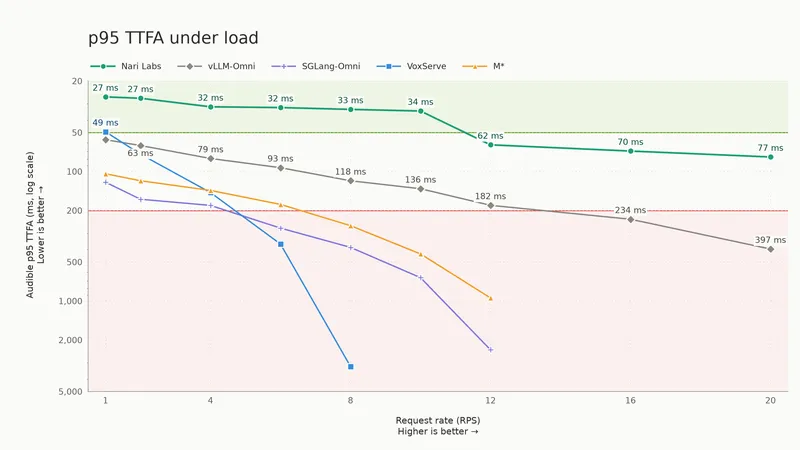
Nari Labs open-sourced a Qwen3-TTS CustomVoice 1.7B serving implementation that it says delivers 10 requests per second on one NVIDIA H100 SXM while keeping p95 time to first audible audio below 50 milliseconds and sustaining real-time playback. The system produces about 630 characters per second at 10 RPS; using a $4.29-per-hour H100 price, Nari estimates a compute cost of roughly $2 per million characters, excluding networking, idle capacity, and operational overhead. The benchmark used five-minute Poisson open-loop workloads, complete-text HTTP requests, streamed PCM audio, audible-onset detection, playback reconstruction, and Deepgram speech-to-text evaluation. Nari reports that its implementation maintains sub-50 ms p95 audible latency through 10 RPS and remains below 100 ms at 20 RPS. After tuning for silence trimming and audio-frame accumulation, VoxServe reached 49.3 ms p95 time to first audio at 1 RPS but rose to 363.2 ms at 6 RPS; vLLM-Omni measured 56.815 ms and 93.451 ms, respectively. The implementation schedules Qwen3-TTS’s Talker, Code Predictor, and Codec as separate jobs under one scheduler. It prioritizes first audio before playback begins, then schedules established streams around audio-buffer deadlines. Additional optimizations include CUDA graphs for the Code Predictor, specialized Triton attention, state-cached incremental Codec decoding, variable chunk sizes, and optional input streaming from an upstream language model.
nari-labs.com
8 min
8/21/2026
GLM-5.3 Artificial Analysis Benchmarks
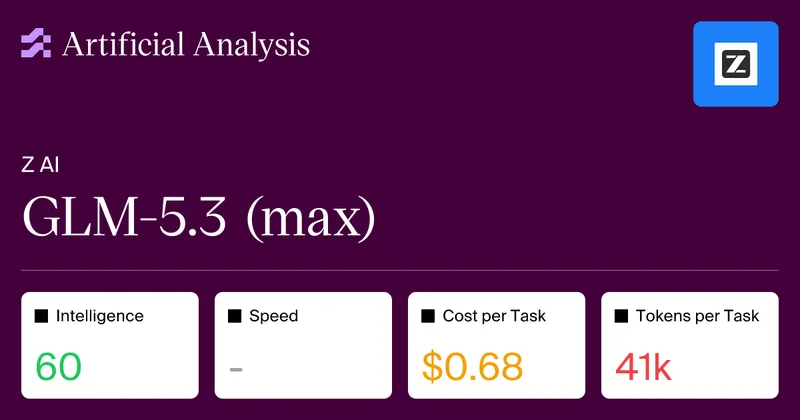
Z AI released the proprietary reasoning model GLM-5.3 (max) on August 18, 2026. The model accepts and generates text only, does not process images, and supports a 1 million-token context window, roughly equivalent to 1,500 A4 pages in 12-point Arial. It has 753 billion parameters and is available through one API provider. GLM-5.3 (max) scored 60 on the Artificial Analysis Intelligence Index, compared with a median score of 35 for reasoning models in a similar price tier. The composite index measures capabilities including reasoning, knowledge, mathematics and coding. The model produced 170 million output tokens during the evaluation, substantially above the 72 million-token median for comparable models, and the full evaluation cost $1,238.50. Z AI’s API pricing is $1.40 per million input tokens and $4.40 per million output tokens, versus medians of $1.75 and $10.00, respectively, for comparable models. Artificial Analysis calculates a blended price of $0.90 per million tokens using a 7:2:1 cache-hit, input and output token mix. The model uses extended thinking or chain-of-thought reasoning for complex problems, while its weights are not publicly available.
artificialanalysis.ai
3 min
8/18/2026
Introducing Toast 1
Toast 1 is a specialized search agent that matches or outperforms Claude Opus 5 and GPT-5.6 Sol while being up to 10× cheaper and 12× faster. It excels with Mixedbread Search but is compatible with any search backend and is capable of performing real knowledge work, including reasoning and analyzing complex document collections.
mixedbread.com
5 min
8/14/2026
Accelerating GPT-5.6 Sol Ultrafast
Cerebras and OpenAI have introduced Ultrafast Mode, a new service tier in the OpenAI API that accelerates GPT-5.6 Sol. This mode delivers up to 750 output tokens per second without compromising quality, targeting time-sensitive and mission-critical tasks.
cerebras.ai
4 min
8/13/2026
DeepSeek V4 Pro 0813
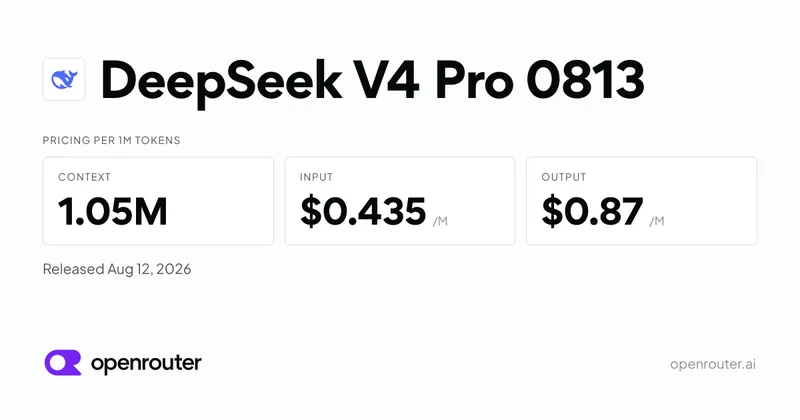
DeepSeek V4 Pro 0813 is hosted by a single provider with OpenRouter forwarding requests directly. Average customer prices are often lower than listed due to caching and discounts, while performance metrics include throughput (tokens per second), latency (total round-trip time), and TTFT (time-to-first-token).
openrouter.ai
1 min
8/12/2026

DeepSeek V4 Flash 0731
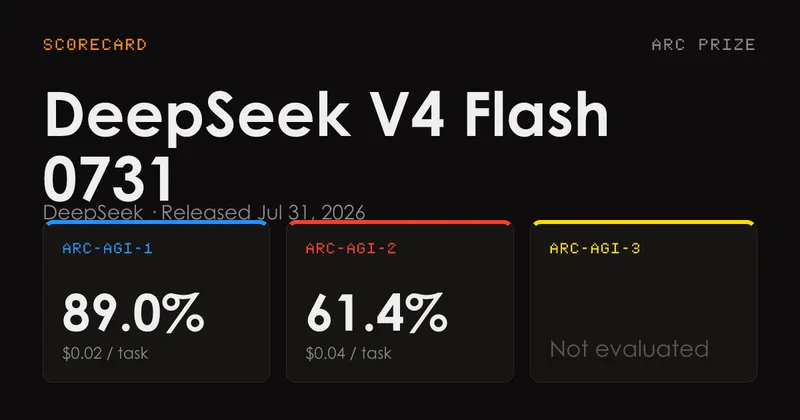
DeepSeek V4 Flash 0731 achieves scores of 89.0% on ARC-AGI-1 Semi-Private at a cost of $0.02 per task and 61.4% on ARC-AGI-2 Semi-Private at $0.04 per task. The model also records scores of 87.0% and 56.0% for the High variant, and 84.0% and 46.0% for the Low variant on the respective benchmarks.
arcprize.org
21 min
8/7/2026

GLM-5.3-Flash Intelligence, Performance and Price Analysis
Z AI released GLM-5.3-Flash on August 26, 2026, an open-weight reasoning model with 320 billion total parameters and 18 billion active parameters per inference token. The Mixture-of-Experts model accepts text and image inputs, produces text outputs, and supports a 1 million-token context window. Its weights are available on Hugging Face under the MIT license, which permits commercial use. Artificial Analysis gave GLM-5.3-Flash a score of 57 on its Intelligence Index, compared with a median score of 27 for open-weight models of a similar size. The composite benchmark covers reasoning, knowledge, mathematics and coding. The evaluation generated 150 million output tokens, above the comparable-model median of 110 million, indicating relatively verbose outputs. Z AI's API charges $0.15 per million input tokens and $0.50 per million output tokens; Artificial Analysis lists a blended cache-hit/input/output rate of $0.10 per million tokens using a 7:2:1 ratio. The Intelligence Index evaluation cost $138.02. The model produces about 50.2 tokens per second, below the comparable median of 65.8, while its 1.56-second time to first token is faster than the 2.13-second median.
artificialanalysis.ai
4 min
8/26/2026
How we made a text-to-speech model respond in sub-50 ms
Nari Labs open-sourced a Qwen3-TTS CustomVoice 1.7B serving implementation that it says delivers 10 requests per second on one NVIDIA H100 SXM while keeping p95 time to first audible audio below 50 milliseconds and sustaining real-time playback. The system produces about 630 characters per second at 10 RPS; using a $4.29-per-hour H100 price, Nari estimates a compute cost of roughly $2 per million characters, excluding networking, idle capacity, and operational overhead. The benchmark used five-minute Poisson open-loop workloads, complete-text HTTP requests, streamed PCM audio, audible-onset detection, playback reconstruction, and Deepgram speech-to-text evaluation. Nari reports that its implementation maintains sub-50 ms p95 audible latency through 10 RPS and remains below 100 ms at 20 RPS. After tuning for silence trimming and audio-frame accumulation, VoxServe reached 49.3 ms p95 time to first audio at 1 RPS but rose to 363.2 ms at 6 RPS; vLLM-Omni measured 56.815 ms and 93.451 ms, respectively. The implementation schedules Qwen3-TTS’s Talker, Code Predictor, and Codec as separate jobs under one scheduler. It prioritizes first audio before playback begins, then schedules established streams around audio-buffer deadlines. Additional optimizations include CUDA graphs for the Code Predictor, specialized Triton attention, state-cached incremental Codec decoding, variable chunk sizes, and optional input streaming from an upstream language model.
nari-labs.com
8 min
8/21/2026
Introducing Toast 1
Toast 1 is a specialized search agent that matches or outperforms Claude Opus 5 and GPT-5.6 Sol while being up to 10× cheaper and 12× faster. It excels with Mixedbread Search but is compatible with any search backend and is capable of performing real knowledge work, including reasoning and analyzing complex document collections.
mixedbread.com
5 min
8/14/2026
DeepSeek V4 Pro 0813
DeepSeek V4 Pro 0813 is hosted by a single provider with OpenRouter forwarding requests directly. Average customer prices are often lower than listed due to caching and discounts, while performance metrics include throughput (tokens per second), latency (total round-trip time), and TTFT (time-to-first-token).
openrouter.ai
1 min
8/12/2026
DeepSeek V4 Flash 0731
DeepSeek V4 Flash 0731 achieves scores of 89.0% on ARC-AGI-1 Semi-Private at a cost of $0.02 per task and 61.4% on ARC-AGI-2 Semi-Private at $0.04 per task. The model also records scores of 87.0% and 56.0% for the High variant, and 84.0% and 46.0% for the Low variant on the respective benchmarks.
arcprize.org
21 min
8/7/2026
New Mac Studio with M5 Max and M5 Ultra
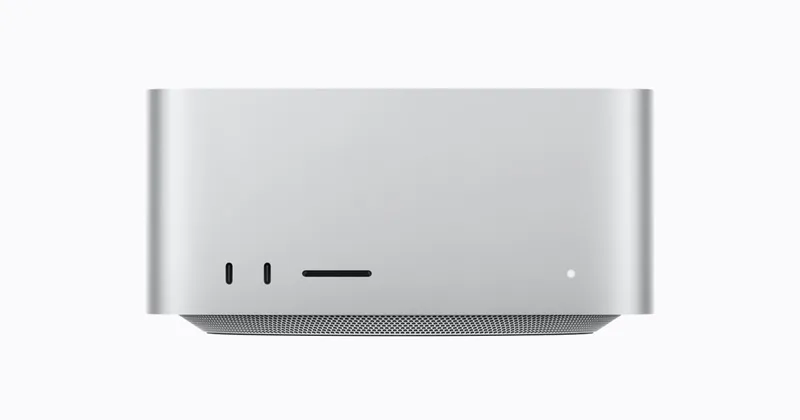
Apple announced a new Mac Studio featuring M5 Max and the new M5 Ultra chips. Apple said the desktop delivers a major increase in AI performance and faster graphics.
apple.com
1 min
8/25/2026
GLM-5.3 Artificial Analysis Benchmarks
Z AI released the proprietary reasoning model GLM-5.3 (max) on August 18, 2026. The model accepts and generates text only, does not process images, and supports a 1 million-token context window, roughly equivalent to 1,500 A4 pages in 12-point Arial. It has 753 billion parameters and is available through one API provider. GLM-5.3 (max) scored 60 on the Artificial Analysis Intelligence Index, compared with a median score of 35 for reasoning models in a similar price tier. The composite index measures capabilities including reasoning, knowledge, mathematics and coding. The model produced 170 million output tokens during the evaluation, substantially above the 72 million-token median for comparable models, and the full evaluation cost $1,238.50. Z AI’s API pricing is $1.40 per million input tokens and $4.40 per million output tokens, versus medians of $1.75 and $10.00, respectively, for comparable models. Artificial Analysis calculates a blended price of $0.90 per million tokens using a 7:2:1 cache-hit, input and output token mix. The model uses extended thinking or chain-of-thought reasoning for complex problems, while its weights are not publicly available.
artificialanalysis.ai
3 min
8/18/2026
Accelerating GPT-5.6 Sol Ultrafast
Cerebras and OpenAI have introduced Ultrafast Mode, a new service tier in the OpenAI API that accelerates GPT-5.6 Sol. This mode delivers up to 750 output tokens per second without compromising quality, targeting time-sensitive and mission-critical tasks.
cerebras.ai
4 min
8/13/2026
Automatic1111 for Apple metal, 40% speed up sd1.5
Automatic1111 runs slower on Apple hardware compared to expectations, prompting a search for performance improvements. A five-step DPM++ SDE method on an M3 Pro reduces processing time from 8-10 seconds to 3-7 seconds.
therad.ninja
13 min
8/12/2026
GLM-5.3-Flash Intelligence, Performance and Price Analysis
Z AI released GLM-5.3-Flash on August 26, 2026, an open-weight reasoning model with 320 billion total parameters and 18 billion active parameters per inference token. The Mixture-of-Experts model accepts text and image inputs, produces text outputs, and supports a 1 million-token context window. Its weights are available on Hugging Face under the MIT license, which permits commercial use. Artificial Analysis gave GLM-5.3-Flash a score of 57 on its Intelligence Index, compared with a median score of 27 for open-weight models of a similar size. The composite benchmark covers reasoning, knowledge, mathematics and coding. The evaluation generated 150 million output tokens, above the comparable-model median of 110 million, indicating relatively verbose outputs. Z AI's API charges $0.15 per million input tokens and $0.50 per million output tokens; Artificial Analysis lists a blended cache-hit/input/output rate of $0.10 per million tokens using a 7:2:1 ratio. The Intelligence Index evaluation cost $138.02. The model produces about 50.2 tokens per second, below the comparable median of 65.8, while its 1.56-second time to first token is faster than the 2.13-second median.
artificialanalysis.ai
4 min
8/26/2026
GLM-5.3 Artificial Analysis Benchmarks
Z AI released the proprietary reasoning model GLM-5.3 (max) on August 18, 2026. The model accepts and generates text only, does not process images, and supports a 1 million-token context window, roughly equivalent to 1,500 A4 pages in 12-point Arial. It has 753 billion parameters and is available through one API provider. GLM-5.3 (max) scored 60 on the Artificial Analysis Intelligence Index, compared with a median score of 35 for reasoning models in a similar price tier. The composite index measures capabilities including reasoning, knowledge, mathematics and coding. The model produced 170 million output tokens during the evaluation, substantially above the 72 million-token median for comparable models, and the full evaluation cost $1,238.50. Z AI’s API pricing is $1.40 per million input tokens and $4.40 per million output tokens, versus medians of $1.75 and $10.00, respectively, for comparable models. Artificial Analysis calculates a blended price of $0.90 per million tokens using a 7:2:1 cache-hit, input and output token mix. The model uses extended thinking or chain-of-thought reasoning for complex problems, while its weights are not publicly available.
artificialanalysis.ai
3 min
8/18/2026
DeepSeek V4 Pro 0813
DeepSeek V4 Pro 0813 is hosted by a single provider with OpenRouter forwarding requests directly. Average customer prices are often lower than listed due to caching and discounts, while performance metrics include throughput (tokens per second), latency (total round-trip time), and TTFT (time-to-first-token).
openrouter.ai
1 min
8/12/2026
New Mac Studio with M5 Max and M5 Ultra
Apple announced a new Mac Studio featuring M5 Max and the new M5 Ultra chips. Apple said the desktop delivers a major increase in AI performance and faster graphics.
apple.com
1 min
8/25/2026
Introducing Toast 1
Toast 1 is a specialized search agent that matches or outperforms Claude Opus 5 and GPT-5.6 Sol while being up to 10× cheaper and 12× faster. It excels with Mixedbread Search but is compatible with any search backend and is capable of performing real knowledge work, including reasoning and analyzing complex document collections.
mixedbread.com
5 min
8/14/2026
How we made a text-to-speech model respond in sub-50 ms
Nari Labs open-sourced a Qwen3-TTS CustomVoice 1.7B serving implementation that it says delivers 10 requests per second on one NVIDIA H100 SXM while keeping p95 time to first audible audio below 50 milliseconds and sustaining real-time playback. The system produces about 630 characters per second at 10 RPS; using a $4.29-per-hour H100 price, Nari estimates a compute cost of roughly $2 per million characters, excluding networking, idle capacity, and operational overhead. The benchmark used five-minute Poisson open-loop workloads, complete-text HTTP requests, streamed PCM audio, audible-onset detection, playback reconstruction, and Deepgram speech-to-text evaluation. Nari reports that its implementation maintains sub-50 ms p95 audible latency through 10 RPS and remains below 100 ms at 20 RPS. After tuning for silence trimming and audio-frame accumulation, VoxServe reached 49.3 ms p95 time to first audio at 1 RPS but rose to 363.2 ms at 6 RPS; vLLM-Omni measured 56.815 ms and 93.451 ms, respectively. The implementation schedules Qwen3-TTS’s Talker, Code Predictor, and Codec as separate jobs under one scheduler. It prioritizes first audio before playback begins, then schedules established streams around audio-buffer deadlines. Additional optimizations include CUDA graphs for the Code Predictor, specialized Triton attention, state-cached incremental Codec decoding, variable chunk sizes, and optional input streaming from an upstream language model.
nari-labs.com
8 min
8/21/2026
Accelerating GPT-5.6 Sol Ultrafast
Cerebras and OpenAI have introduced Ultrafast Mode, a new service tier in the OpenAI API that accelerates GPT-5.6 Sol. This mode delivers up to 750 output tokens per second without compromising quality, targeting time-sensitive and mission-critical tasks.
cerebras.ai
4 min
8/13/2026
DeepSeek V4 Flash 0731
DeepSeek V4 Flash 0731 achieves scores of 89.0% on ARC-AGI-1 Semi-Private at a cost of $0.02 per task and 61.4% on ARC-AGI-2 Semi-Private at $0.04 per task. The model also records scores of 87.0% and 56.0% for the High variant, and 84.0% and 46.0% for the Low variant on the respective benchmarks.
arcprize.org
21 min
8/7/2026