
GPT 5.6 Sol 20% price reduction
OpenAI’s GPT-5.6 Sol is a frontier model for complex professional work and the top tier of the GPT-5.6 family. The gpt-5.6 alias routes requests to GPT-5.6 Sol, which roughly corresponds to the unsuffixed model tier in earlier GPT-5 families. It accepts text and image inputs and produces text output, with a 1,050,000-token context window, a maximum output of 128,000 tokens, and a February 16, 2026 knowledge cutoff. The model supports reasoning-effort settings of none, low, medium, high, xhigh, and max; medium is the default. It supports streaming, function calling, structured outputs, and a range of Responses API tools, including web search, file search, image generation, code interpreter, hosted shell, computer use, MCP, and tool search. Fine-tuning is not supported. GPT-5.6 Sol costs $4 per million input tokens, $0.40 per million cached-input tokens, and $20 per million output tokens. OpenAI says these rates represent 20% lower input pricing and 33% lower output pricing, with promotional pricing available at least through November 21, 2026. Requests containing more than 272,000 input tokens are billed at twice the input rate and 1.5 times the output rate for the entire request.
developers.openai.com
2 min
8/22/2026
GPT-5.6 Sol Pricing Cut by 50%
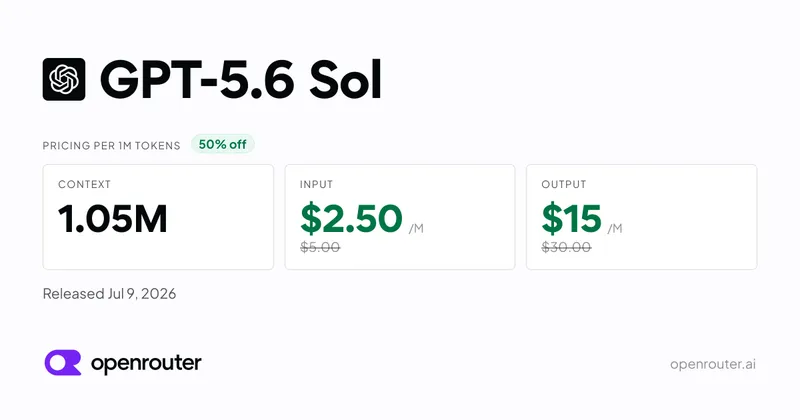
GPT-5.6 Sol is OpenAI’s flagship model in the GPT-5.6 series, released on July 9, 2026. It is positioned for complex reasoning, coding, agentic workflows, command-line work, multi-step coding tasks, and long-horizon problem solving. The model has a 1 million-token context window and a February 2026 knowledge cutoff. OpenRouter lists pricing of $2.50 per million input tokens and $15 per million output tokens, reflecting a 50% discount from listed rates of $5 and $30. Provider listings shown on the platform include input prices from $5 to $5.50 per million tokens, output prices from $30 to $33, and cache pricing from $0.50 to $0.55. OpenRouter says actual customer prices can be lower because of caching and discounts. OpenRouter can route requests for GPT-5.6 Sol among multiple hosting providers through Balanced, Nitro, or Exacto modes, which prioritize price and speed, fastest response, or tool-calling accuracy, respectively. The platform reports a best-provider median latency of 3.07 seconds and a best-across-providers median throughput of 46 tokens per second. It reports 100.00% uptime over the prior three days and 99.76% availability, and says it can reroute requests after upstream-provider errors when request filters permit it. OpenRouter’s OpenAI-compatible API allows many SDKs to use the model by changing the base URL and model slug.
openrouter.ai
2 min
8/17/2026
GPT 5.6 Sol is the best "vision" model OpenAI ever released
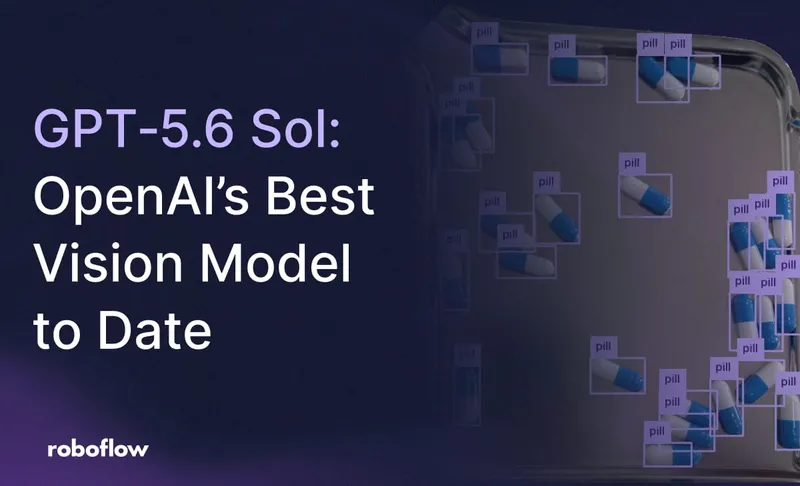
OpenAI's GPT-5.6 lineup includes the Sol, Terra, and Luna models, with a focus on enhanced computer use and the ability to navigate desktop applications. The models demonstrate improved visual understanding, which will be evaluated using an upcoming visual language model benchmark.
blog.roboflow.com
6 min
8/17/2026

Accelerating GPT-5.6 Sol Ultrafast
Cerebras and OpenAI have introduced Ultrafast Mode, a new service tier in the OpenAI API that accelerates GPT-5.6 Sol. This mode delivers up to 750 output tokens per second without compromising quality, targeting time-sensitive and mission-critical tasks.
cerebras.ai
4 min
8/13/2026

Advancing the price-performance frontier with GPT‑5.6
OpenAI's GPT-5.6 improves efficiency across all layers, resulting in enhanced performance per dollar for enterprise workloads. Customers benefit from reduced prices for GPT-5.6 Luna and Terra, along with faster performance from GPT-5.6 Sol in the API.
openai.com
5 min
7/30/2026
"Drawing" the Mona Lisa with GPT-5.6, Claude, Gemini, and Grok
Four AI models, GPT-5.6, Claude, Gemini, and Grok, were tasked with drawing the Mona Lisa on a blank canvas using colored pencils. Each model executed strokes, blended colors, erased, and evaluated its work to refine the drawing.
tryai.dev
10 min
7/21/2026

$100 AI Music Video: Claude Fable 5 vs. GPT-5.6 Sol
Claude Fable 5 and GPT-5.6 Sol autonomously directed music videos using a set budget, web search capabilities, and local ffmpeg tools. Each model researched video models, generated clips, edited footage, and assembled the final music video independently.
tryai.dev
8 min
7/16/2026
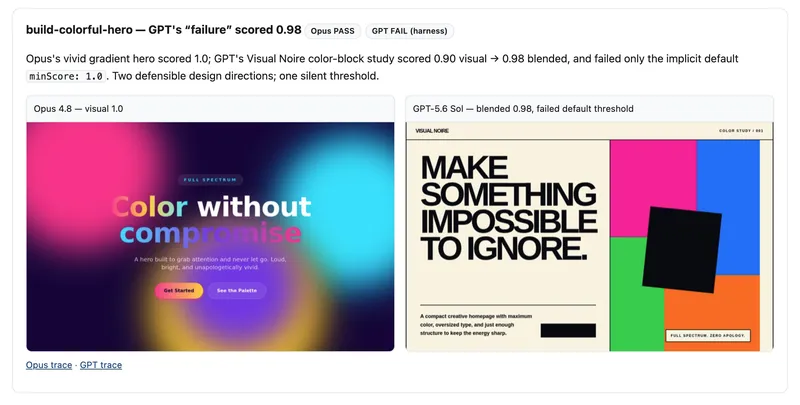
Migrating a production AI agent to GPT-5.6: 2.2x faster, 27% cheaper
Ploy's AI agent now operates on GPT-5.6 Sol, the latest model released by OpenAI. This transition follows extensive testing against Claude Opus, leading to GPT-5.6 Sol becoming the default model for all Ploy workspaces, enhancing its capabilities in building and editing marketing websites.
ploy.ai
10 min
7/12/2026
GPT-5.6
The GPT-5.6 family of models has been launched for general availability, featuring Sol as the flagship model, Terra for balanced everyday work, and Luna as the cost-efficient option. GPT-5.6 Sol achieves state-of-the-art results in coding, knowledge work, cybersecurity, and science, outperforming previous models with fewer tokens and lower estimated costs.
openai.com
19 min
7/9/2026
GPT 5.6 Sol 20% price reduction
OpenAI’s GPT-5.6 Sol is a frontier model for complex professional work and the top tier of the GPT-5.6 family. The gpt-5.6 alias routes requests to GPT-5.6 Sol, which roughly corresponds to the unsuffixed model tier in earlier GPT-5 families. It accepts text and image inputs and produces text output, with a 1,050,000-token context window, a maximum output of 128,000 tokens, and a February 16, 2026 knowledge cutoff. The model supports reasoning-effort settings of none, low, medium, high, xhigh, and max; medium is the default. It supports streaming, function calling, structured outputs, and a range of Responses API tools, including web search, file search, image generation, code interpreter, hosted shell, computer use, MCP, and tool search. Fine-tuning is not supported. GPT-5.6 Sol costs $4 per million input tokens, $0.40 per million cached-input tokens, and $20 per million output tokens. OpenAI says these rates represent 20% lower input pricing and 33% lower output pricing, with promotional pricing available at least through November 21, 2026. Requests containing more than 272,000 input tokens are billed at twice the input rate and 1.5 times the output rate for the entire request.
developers.openai.com
2 min
8/22/2026
GPT 5.6 Sol is the best "vision" model OpenAI ever released
OpenAI's GPT-5.6 lineup includes the Sol, Terra, and Luna models, with a focus on enhanced computer use and the ability to navigate desktop applications. The models demonstrate improved visual understanding, which will be evaluated using an upcoming visual language model benchmark.
blog.roboflow.com
6 min
8/17/2026
Advancing the price-performance frontier with GPT‑5.6
OpenAI's GPT-5.6 improves efficiency across all layers, resulting in enhanced performance per dollar for enterprise workloads. Customers benefit from reduced prices for GPT-5.6 Luna and Terra, along with faster performance from GPT-5.6 Sol in the API.
openai.com
5 min
7/30/2026
Fable 5 vs. GPT-5.6 Sol on an NP-Hard Problem: Does /goal help?
Fable 5 outperformed GPT-5.6 Sol on an NP-hard optimization problem. The use of the /goal mode did not significantly enhance performance for either model.
charlesazam.com
7 min
7/18/2026
Migrating a production AI agent to GPT-5.6: 2.2x faster, 27% cheaper
Ploy's AI agent now operates on GPT-5.6 Sol, the latest model released by OpenAI. This transition follows extensive testing against Claude Opus, leading to GPT-5.6 Sol becoming the default model for all Ploy workspaces, enhancing its capabilities in building and editing marketing websites.
ploy.ai
10 min
7/12/2026
GPT-5.6 Sol Pricing Cut by 50%
GPT-5.6 Sol is OpenAI’s flagship model in the GPT-5.6 series, released on July 9, 2026. It is positioned for complex reasoning, coding, agentic workflows, command-line work, multi-step coding tasks, and long-horizon problem solving. The model has a 1 million-token context window and a February 2026 knowledge cutoff. OpenRouter lists pricing of $2.50 per million input tokens and $15 per million output tokens, reflecting a 50% discount from listed rates of $5 and $30. Provider listings shown on the platform include input prices from $5 to $5.50 per million tokens, output prices from $30 to $33, and cache pricing from $0.50 to $0.55. OpenRouter says actual customer prices can be lower because of caching and discounts. OpenRouter can route requests for GPT-5.6 Sol among multiple hosting providers through Balanced, Nitro, or Exacto modes, which prioritize price and speed, fastest response, or tool-calling accuracy, respectively. The platform reports a best-provider median latency of 3.07 seconds and a best-across-providers median throughput of 46 tokens per second. It reports 100.00% uptime over the prior three days and 99.76% availability, and says it can reroute requests after upstream-provider errors when request filters permit it. OpenRouter’s OpenAI-compatible API allows many SDKs to use the model by changing the base URL and model slug.
openrouter.ai
2 min
8/17/2026
Accelerating GPT-5.6 Sol Ultrafast
Cerebras and OpenAI have introduced Ultrafast Mode, a new service tier in the OpenAI API that accelerates GPT-5.6 Sol. This mode delivers up to 750 output tokens per second without compromising quality, targeting time-sensitive and mission-critical tasks.
cerebras.ai
4 min
8/13/2026
"Drawing" the Mona Lisa with GPT-5.6, Claude, Gemini, and Grok
Four AI models, GPT-5.6, Claude, Gemini, and Grok, were tasked with drawing the Mona Lisa on a blank canvas using colored pencils. Each model executed strokes, blended colors, erased, and evaluated its work to refine the drawing.
tryai.dev
10 min
7/21/2026
$100 AI Music Video: Claude Fable 5 vs. GPT-5.6 Sol
Claude Fable 5 and GPT-5.6 Sol autonomously directed music videos using a set budget, web search capabilities, and local ffmpeg tools. Each model researched video models, generated clips, edited footage, and assembled the final music video independently.
tryai.dev
8 min
7/16/2026
GPT-5.6
The GPT-5.6 family of models has been launched for general availability, featuring Sol as the flagship model, Terra for balanced everyday work, and Luna as the cost-efficient option. GPT-5.6 Sol achieves state-of-the-art results in coding, knowledge work, cybersecurity, and science, outperforming previous models with fewer tokens and lower estimated costs.
openai.com
19 min
7/9/2026
GPT 5.6 Sol 20% price reduction
OpenAI’s GPT-5.6 Sol is a frontier model for complex professional work and the top tier of the GPT-5.6 family. The gpt-5.6 alias routes requests to GPT-5.6 Sol, which roughly corresponds to the unsuffixed model tier in earlier GPT-5 families. It accepts text and image inputs and produces text output, with a 1,050,000-token context window, a maximum output of 128,000 tokens, and a February 16, 2026 knowledge cutoff. The model supports reasoning-effort settings of none, low, medium, high, xhigh, and max; medium is the default. It supports streaming, function calling, structured outputs, and a range of Responses API tools, including web search, file search, image generation, code interpreter, hosted shell, computer use, MCP, and tool search. Fine-tuning is not supported. GPT-5.6 Sol costs $4 per million input tokens, $0.40 per million cached-input tokens, and $20 per million output tokens. OpenAI says these rates represent 20% lower input pricing and 33% lower output pricing, with promotional pricing available at least through November 21, 2026. Requests containing more than 272,000 input tokens are billed at twice the input rate and 1.5 times the output rate for the entire request.
developers.openai.com
2 min
8/22/2026
Accelerating GPT-5.6 Sol Ultrafast
Cerebras and OpenAI have introduced Ultrafast Mode, a new service tier in the OpenAI API that accelerates GPT-5.6 Sol. This mode delivers up to 750 output tokens per second without compromising quality, targeting time-sensitive and mission-critical tasks.
cerebras.ai
4 min
8/13/2026
Fable 5 vs. GPT-5.6 Sol on an NP-Hard Problem: Does /goal help?
Fable 5 outperformed GPT-5.6 Sol on an NP-hard optimization problem. The use of the /goal mode did not significantly enhance performance for either model.
charlesazam.com
7 min
7/18/2026
GPT-5.6
The GPT-5.6 family of models has been launched for general availability, featuring Sol as the flagship model, Terra for balanced everyday work, and Luna as the cost-efficient option. GPT-5.6 Sol achieves state-of-the-art results in coding, knowledge work, cybersecurity, and science, outperforming previous models with fewer tokens and lower estimated costs.
openai.com
19 min
7/9/2026
GPT-5.6 Sol Pricing Cut by 50%
GPT-5.6 Sol is OpenAI’s flagship model in the GPT-5.6 series, released on July 9, 2026. It is positioned for complex reasoning, coding, agentic workflows, command-line work, multi-step coding tasks, and long-horizon problem solving. The model has a 1 million-token context window and a February 2026 knowledge cutoff. OpenRouter lists pricing of $2.50 per million input tokens and $15 per million output tokens, reflecting a 50% discount from listed rates of $5 and $30. Provider listings shown on the platform include input prices from $5 to $5.50 per million tokens, output prices from $30 to $33, and cache pricing from $0.50 to $0.55. OpenRouter says actual customer prices can be lower because of caching and discounts. OpenRouter can route requests for GPT-5.6 Sol among multiple hosting providers through Balanced, Nitro, or Exacto modes, which prioritize price and speed, fastest response, or tool-calling accuracy, respectively. The platform reports a best-provider median latency of 3.07 seconds and a best-across-providers median throughput of 46 tokens per second. It reports 100.00% uptime over the prior three days and 99.76% availability, and says it can reroute requests after upstream-provider errors when request filters permit it. OpenRouter’s OpenAI-compatible API allows many SDKs to use the model by changing the base URL and model slug.
openrouter.ai
2 min
8/17/2026
Advancing the price-performance frontier with GPT‑5.6
OpenAI's GPT-5.6 improves efficiency across all layers, resulting in enhanced performance per dollar for enterprise workloads. Customers benefit from reduced prices for GPT-5.6 Luna and Terra, along with faster performance from GPT-5.6 Sol in the API.
openai.com
5 min
7/30/2026
$100 AI Music Video: Claude Fable 5 vs. GPT-5.6 Sol
Claude Fable 5 and GPT-5.6 Sol autonomously directed music videos using a set budget, web search capabilities, and local ffmpeg tools. Each model researched video models, generated clips, edited footage, and assembled the final music video independently.
tryai.dev
8 min
7/16/2026
GPT 5.6 Sol is the best "vision" model OpenAI ever released
OpenAI's GPT-5.6 lineup includes the Sol, Terra, and Luna models, with a focus on enhanced computer use and the ability to navigate desktop applications. The models demonstrate improved visual understanding, which will be evaluated using an upcoming visual language model benchmark.
blog.roboflow.com
6 min
8/17/2026
"Drawing" the Mona Lisa with GPT-5.6, Claude, Gemini, and Grok
Four AI models, GPT-5.6, Claude, Gemini, and Grok, were tasked with drawing the Mona Lisa on a blank canvas using colored pencils. Each model executed strokes, blended colors, erased, and evaluated its work to refine the drawing.
tryai.dev
10 min
7/21/2026
Migrating a production AI agent to GPT-5.6: 2.2x faster, 27% cheaper
Ploy's AI agent now operates on GPT-5.6 Sol, the latest model released by OpenAI. This transition follows extensive testing against Claude Opus, leading to GPT-5.6 Sol becoming the default model for all Ploy workspaces, enhancing its capabilities in building and editing marketing websites.
ploy.ai
10 min
7/12/2026