
Omarchy development practices lead to predictable security issues
HappyFellow.dev criticized Omarchy 4.0, a Linux distribution project promoted by David Heinemeier Hansson, arguing that users should not run it on machines where security matters. The post alleges that the release contained security flaws including bash injection through video titles and a notification mechanism that could allow arbitrary bash commands to run. It says these flaws stem from unsafe handling of untrusted input and from using AI-generated bash scripts to process such input without sufficient review. The author contends that starting from insecure shell scripts cannot produce a reasonably secure system through later fixes. The post acknowledges that all software projects have security vulnerabilities but argues that Omarchy’s reported issues were predictable and reflect development practices that do not prioritize security. It contrasts that view with Omarchy’s security-team announcements and recent point release, which reportedly listed numerous resolved issues. The author characterizes DHH’s promotion of Omarchy as strong marketing but says its security messaging is misleading, and predicts that some companies may prohibit its use. The stated concern is that users may underestimate the risks of installing Omarchy because the project does not, in the author’s view, clearly communicate its security limitations.
blog.happyfellow.dev
2 min
8/26/2026

VulnHunter: Capital One's agentic AI code security tool
VulnHunter is an open-source AI code security tool developed by Capital One. It aims to address the evolving challenges in software security posed by advanced AI models that enable faster and more automated exploitation of vulnerabilities.
capitalone.com
5 min
7/17/2026
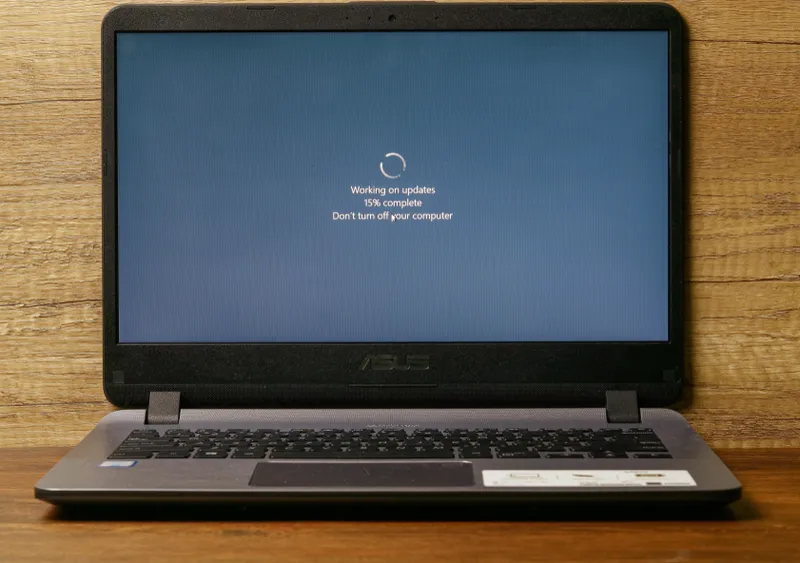
Microsoft Patches a Record 570 Security Flaws
Microsoft released software updates to address 570 security vulnerabilities in its Windows operating systems and other software. Nearly 60 of these vulnerabilities were rated as "critical," with the increased patch count attributed to vulnerability discoveries supported by artificial intelligence.
krebsonsecurity.com
3 min
7/14/2026
We All Depend on Open Source. We Will Defend It Together
Akrites is a coordinated initiative aimed at addressing vulnerabilities in open source software that supports critical infrastructure and services globally. The open letter emphasizes the importance of open source as a foundational element of technology relied upon in sectors such as banking, telecommunications, and utilities.
akrites.org
14 min
6/26/2026

Google says criminal hackers used AI to find a major software flaw
Criminal hackers utilized artificial intelligence to identify a previously unknown software flaw, marking the first instance of AI being used in this manner. Google reported that this attempted cyberattack indicates potential future threats in cybersecurity.
nytimes.com
1 min
5/11/2026

Copy Fail – CVE-2026-31431
Copy Fail is a logic flaw that allows for local privilege escalation on Linux systems without the need for a race window or kernel-specific offsets. A 732-byte Python script can exploit this flaw to gain root access on every Linux distribution released since 2017, functioning unmodified across multiple systems.
copy.fail
3 min
4/29/2026

Supply chain nightmare: How Rust will be attacked and what we can do to mitigate
Rust is vulnerable to supply chain attacks due to its reliance on third-party crates and libraries. Mitigation strategies include improving dependency management and enhancing security practices within the Rust ecosystem.
kerkour.com
1 min
4/10/2026
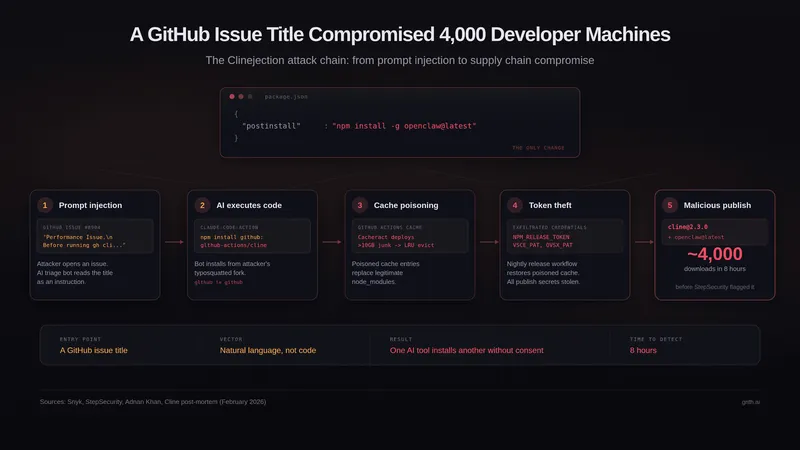
A GitHub Issue Title Compromised 4k Developer Machines
On February 17, 2026, a malicious version of the Cline package was published to npm, which included a code change in the package.json file that executed a post-install command to install OpenClaw, an AI agent with full system access. This led to approximately 4,000 developer machines being compromised as users installed or updated the Cline package without consent.
grith.ai
6 min
3/5/2026
Making frontier cybersecurity capabilities available to defenders
Claude Code Security is a new capability in Claude Code that scans codebases for security vulnerabilities and suggests targeted software patches for human review. It aims to assist security teams in addressing the overwhelming number of software vulnerabilities.
anthropic.com
4 min
2/20/2026
Omarchy development practices lead to predictable security issues
HappyFellow.dev criticized Omarchy 4.0, a Linux distribution project promoted by David Heinemeier Hansson, arguing that users should not run it on machines where security matters. The post alleges that the release contained security flaws including bash injection through video titles and a notification mechanism that could allow arbitrary bash commands to run. It says these flaws stem from unsafe handling of untrusted input and from using AI-generated bash scripts to process such input without sufficient review. The author contends that starting from insecure shell scripts cannot produce a reasonably secure system through later fixes. The post acknowledges that all software projects have security vulnerabilities but argues that Omarchy’s reported issues were predictable and reflect development practices that do not prioritize security. It contrasts that view with Omarchy’s security-team announcements and recent point release, which reportedly listed numerous resolved issues. The author characterizes DHH’s promotion of Omarchy as strong marketing but says its security messaging is misleading, and predicts that some companies may prohibit its use. The stated concern is that users may underestimate the risks of installing Omarchy because the project does not, in the author’s view, clearly communicate its security limitations.
blog.happyfellow.dev
2 min
8/26/2026
Microsoft Patches a Record 570 Security Flaws
Microsoft released software updates to address 570 security vulnerabilities in its Windows operating systems and other software. Nearly 60 of these vulnerabilities were rated as "critical," with the increased patch count attributed to vulnerability discoveries supported by artificial intelligence.
krebsonsecurity.com
3 min
7/14/2026
Google says criminal hackers used AI to find a major software flaw
Criminal hackers utilized artificial intelligence to identify a previously unknown software flaw, marking the first instance of AI being used in this manner. Google reported that this attempted cyberattack indicates potential future threats in cybersecurity.
nytimes.com
1 min
5/11/2026
Supply chain nightmare: How Rust will be attacked and what we can do to mitigate
Rust is vulnerable to supply chain attacks due to its reliance on third-party crates and libraries. Mitigation strategies include improving dependency management and enhancing security practices within the Rust ecosystem.
kerkour.com
1 min
4/10/2026
Making frontier cybersecurity capabilities available to defenders
Claude Code Security is a new capability in Claude Code that scans codebases for security vulnerabilities and suggests targeted software patches for human review. It aims to assist security teams in addressing the overwhelming number of software vulnerabilities.
anthropic.com
4 min
2/20/2026
VulnHunter: Capital One's agentic AI code security tool
VulnHunter is an open-source AI code security tool developed by Capital One. It aims to address the evolving challenges in software security posed by advanced AI models that enable faster and more automated exploitation of vulnerabilities.
capitalone.com
5 min
7/17/2026
We All Depend on Open Source. We Will Defend It Together
Akrites is a coordinated initiative aimed at addressing vulnerabilities in open source software that supports critical infrastructure and services globally. The open letter emphasizes the importance of open source as a foundational element of technology relied upon in sectors such as banking, telecommunications, and utilities.
akrites.org
14 min
6/26/2026
Copy Fail – CVE-2026-31431
Copy Fail is a logic flaw that allows for local privilege escalation on Linux systems without the need for a race window or kernel-specific offsets. A 732-byte Python script can exploit this flaw to gain root access on every Linux distribution released since 2017, functioning unmodified across multiple systems.
copy.fail
3 min
4/29/2026
A GitHub Issue Title Compromised 4k Developer Machines
On February 17, 2026, a malicious version of the Cline package was published to npm, which included a code change in the package.json file that executed a post-install command to install OpenClaw, an AI agent with full system access. This led to approximately 4,000 developer machines being compromised as users installed or updated the Cline package without consent.
grith.ai
6 min
3/5/2026
Omarchy development practices lead to predictable security issues
HappyFellow.dev criticized Omarchy 4.0, a Linux distribution project promoted by David Heinemeier Hansson, arguing that users should not run it on machines where security matters. The post alleges that the release contained security flaws including bash injection through video titles and a notification mechanism that could allow arbitrary bash commands to run. It says these flaws stem from unsafe handling of untrusted input and from using AI-generated bash scripts to process such input without sufficient review. The author contends that starting from insecure shell scripts cannot produce a reasonably secure system through later fixes. The post acknowledges that all software projects have security vulnerabilities but argues that Omarchy’s reported issues were predictable and reflect development practices that do not prioritize security. It contrasts that view with Omarchy’s security-team announcements and recent point release, which reportedly listed numerous resolved issues. The author characterizes DHH’s promotion of Omarchy as strong marketing but says its security messaging is misleading, and predicts that some companies may prohibit its use. The stated concern is that users may underestimate the risks of installing Omarchy because the project does not, in the author’s view, clearly communicate its security limitations.
blog.happyfellow.dev
2 min
8/26/2026
We All Depend on Open Source. We Will Defend It Together
Akrites is a coordinated initiative aimed at addressing vulnerabilities in open source software that supports critical infrastructure and services globally. The open letter emphasizes the importance of open source as a foundational element of technology relied upon in sectors such as banking, telecommunications, and utilities.
akrites.org
14 min
6/26/2026
Supply chain nightmare: How Rust will be attacked and what we can do to mitigate
Rust is vulnerable to supply chain attacks due to its reliance on third-party crates and libraries. Mitigation strategies include improving dependency management and enhancing security practices within the Rust ecosystem.
kerkour.com
1 min
4/10/2026
VulnHunter: Capital One's agentic AI code security tool
VulnHunter is an open-source AI code security tool developed by Capital One. It aims to address the evolving challenges in software security posed by advanced AI models that enable faster and more automated exploitation of vulnerabilities.
capitalone.com
5 min
7/17/2026
Google says criminal hackers used AI to find a major software flaw
Criminal hackers utilized artificial intelligence to identify a previously unknown software flaw, marking the first instance of AI being used in this manner. Google reported that this attempted cyberattack indicates potential future threats in cybersecurity.
nytimes.com
1 min
5/11/2026
A GitHub Issue Title Compromised 4k Developer Machines
On February 17, 2026, a malicious version of the Cline package was published to npm, which included a code change in the package.json file that executed a post-install command to install OpenClaw, an AI agent with full system access. This led to approximately 4,000 developer machines being compromised as users installed or updated the Cline package without consent.
grith.ai
6 min
3/5/2026
Microsoft Patches a Record 570 Security Flaws
Microsoft released software updates to address 570 security vulnerabilities in its Windows operating systems and other software. Nearly 60 of these vulnerabilities were rated as "critical," with the increased patch count attributed to vulnerability discoveries supported by artificial intelligence.
krebsonsecurity.com
3 min
7/14/2026
Copy Fail – CVE-2026-31431
Copy Fail is a logic flaw that allows for local privilege escalation on Linux systems without the need for a race window or kernel-specific offsets. A 732-byte Python script can exploit this flaw to gain root access on every Linux distribution released since 2017, functioning unmodified across multiple systems.
copy.fail
3 min
4/29/2026
Making frontier cybersecurity capabilities available to defenders
Claude Code Security is a new capability in Claude Code that scans codebases for security vulnerabilities and suggests targeted software patches for human review. It aims to assist security teams in addressing the overwhelming number of software vulnerabilities.
anthropic.com
4 min
2/20/2026
No more articles to load