Agent Is Not the Model
code.joejag.com
August 24, 2026
5 min read
47/100
Summary
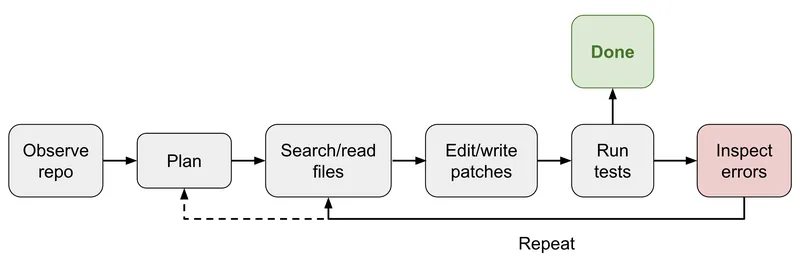
An AI agent system combines a model, an inference service and a harness rather than consisting of the model alone. Models such as Anthropic’s Sonnet and Opus, Google’s Gemini, and OpenAI’s GPT transform input tokens into output tokens. They generally run through hosted inference services, including Anthropic’s API, AWS Bedrock and OpenAI’s infrastructure, because frontier models require substantial compute and memory. These services process API calls and track usage and pricing. The harness supplies the user-facing interface and operational logic around a model. It assembles context, defines and routes tool calls, interprets model outputs, and can interact with files or external systems. MCP servers and Skills are primarily harness-layer features: the harness determines which tools and context the model receives. Claude Desktop, Claude CLI, Cursor, ChatGPT and custom LangChain applications each pair a harness with one or more inference providers and models. The same model can produce different behavior in different agent systems because each harness shapes its prompts, available context and tools. Diagnosing problems therefore depends on identifying the relevant layer: missing context and unavailable tools usually involve the harness, slow responses involve inference infrastructure, and high cost can depend on the selected model or inference service. The source also argues that more capable models could reduce the usefulness of some current harness mechanisms, including Skills and MCP.
Key Takeaways
- An agent system consists of a harness, an inference service and a model, with each layer serving a distinct function.
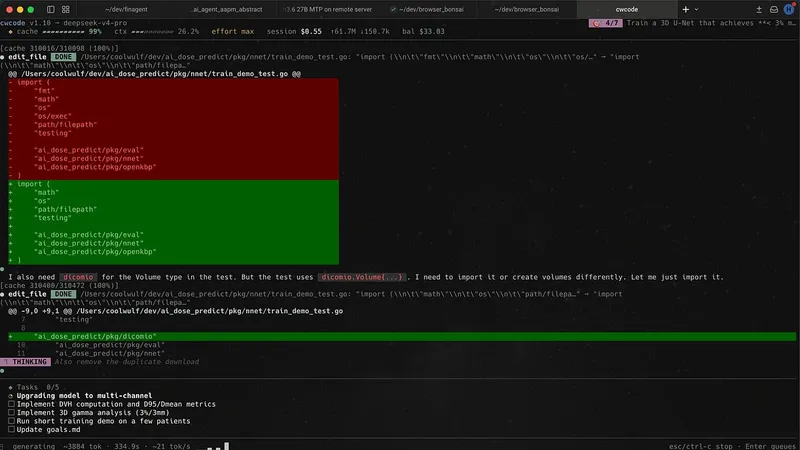
- Harnesses such as Claude CLI, Claude Desktop and Cursor assemble context, expose tools and process model outputs.
- MCP servers and Skills are primarily controlled by the harness rather than being capabilities inherently known by the model.
- The same model can behave differently across products because their harnesses provide different context, prompts and tool integrations.
- Slow inference is associated with infrastructure, while missing context or unavailable tools generally points to the harness.
What the discussion said
The thread mostly debated whether separating a model from an agent is a necessary engineering discipline or a fussy distinction aimed at a problem few technical people actually have. Skeptics treated the article as obvious: a model produces outputs, while an agent or runtime loop supplies tools, state, and actions. They questioned whether correcting ordinary shorthand improves anything outside terminology arguments. Others argued that the confusion is common precisely among people making consequential product and safety judgments without deep AI experience. Calling a runtime-enabled system a model can hide the source of its capabilities and failures: tool access, permissions, orchestration, checkpoints, and application behavior belong to the harness, not the weights. That matters when sensational reporting frames an agentic incident as a model acting independently. There was broad sympathy for clearer language, but little agreement on the proposed vocabulary. Commenters noted that commercial AI products already use agent, mode, CLI, application, and model inconsistently, while even the article's examples flatten distinct products and execution environments. Several preferred model and harness as the least ambiguous pair, with application and orchestrator added where needed. The practical conclusion was not that one taxonomy will win, but that teams need explicit terms during debugging, safety discussions, and product claims.
Where opinion split
The central dispute is whether distinguishing models from agents materially improves AI discussions. Critics say competent practitioners already infer the difference and that policing shorthand is needless pedantry; supporters say vague language misattributes tool-enabled behavior to model weights, confusing non-specialists and obscuring accountability for real failures.
Community Sentiment
Positives
- Separating weights from the runtime harness makes AI failures legible: permissions, tools, and orchestration can be blamed or fixed without pretending the model independently acted.
- A shared vocabulary can sharpen debugging and safety reviews, especially when an application, agent instance, service API, and underlying model each fail differently.
- The model-and-harness framing usefully punctures reports of a rogue model when the actionable component was a tool-equipped execution system.
- Clearer naming is seen as especially important from AI vendors, whose product labels otherwise blur chat interfaces, coding modes, command-line harnesses, and actual models.
Concerns
- Several commenters regard the distinction as painfully obvious to technical readers and doubt that correcting casual language earns enough practical benefit to justify the fuss.
- The proposed taxonomy risks becoming another source of confusion because agent already has broad established meanings, from task delegate to multi-agent-system constituent.
- Vendor branding makes precision harder rather than easier: overlapping labels for modes, agents, interfaces, and CLIs leave users unable to tell what component they are buying or invoking.
- The article's own real-world examples were criticized for collapsing materially different Claude and Cursor products, undercutting its case for exact terminology.