Harness Engineering for Self-Improvement
lilianweng.github.io
August 4, 2026
32 min read
🔥🔥🔥🔥🔥
63/100
Summary
Recursive self-improvement (RSI) allows an AI to enhance its own cognitive capabilities, potentially surpassing human intelligence. This concept, first defined by I. J. Good in 1965, involves a feedback loop where an AI uses its intelligence to improve the mechanisms that generate its intelligence.
Key Takeaways
- Recursive self-improvement (RSI) allows AI systems to enhance their own intelligence and capabilities by using their current intelligence to improve their design and training processes.
- Harnesses are critical components in AI deployment, orchestrating execution, managing context, and evaluating results to facilitate better performance of AI models.
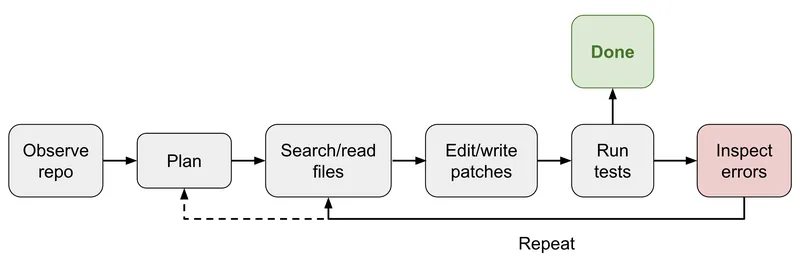
- Effective harness design includes workflow automation, enabling models to operate in a goal-oriented loop of planning, executing, observing, and improving.
- Persistent memory management in harnesses involves maintaining durable states in files rather than relying solely on the model's context window, allowing for better handling of long-term artifacts and data.
Community Sentiment
Positives
- Optimizing AGENTS.md and harnessing tools could significantly boost performance and cost efficiency — commenters see this as a game changer for agent development.
- Building a reliable fitness function for codebases could revolutionize how agents improve, making PRs more manageable and effective.
- The idea of using hillclimbing experiments to refine AI harnesses is gaining traction, with users reporting tangible improvements in their applications.
- Many believe the harness is where frontier model companies can create a competitive edge, hinting at exciting future applications.
Concerns
- There's skepticism around the claim that training weights have peaked; some argue we might actually be on the brink of another acceleration in model capabilities.
- Concerns arise that without responsible development, the race to create powerful models could lead to reckless outcomes, particularly with the Torment Nexus concept.
Related Articles
Prime Agent: A self-improving RLM agent
Aug 5, 2026
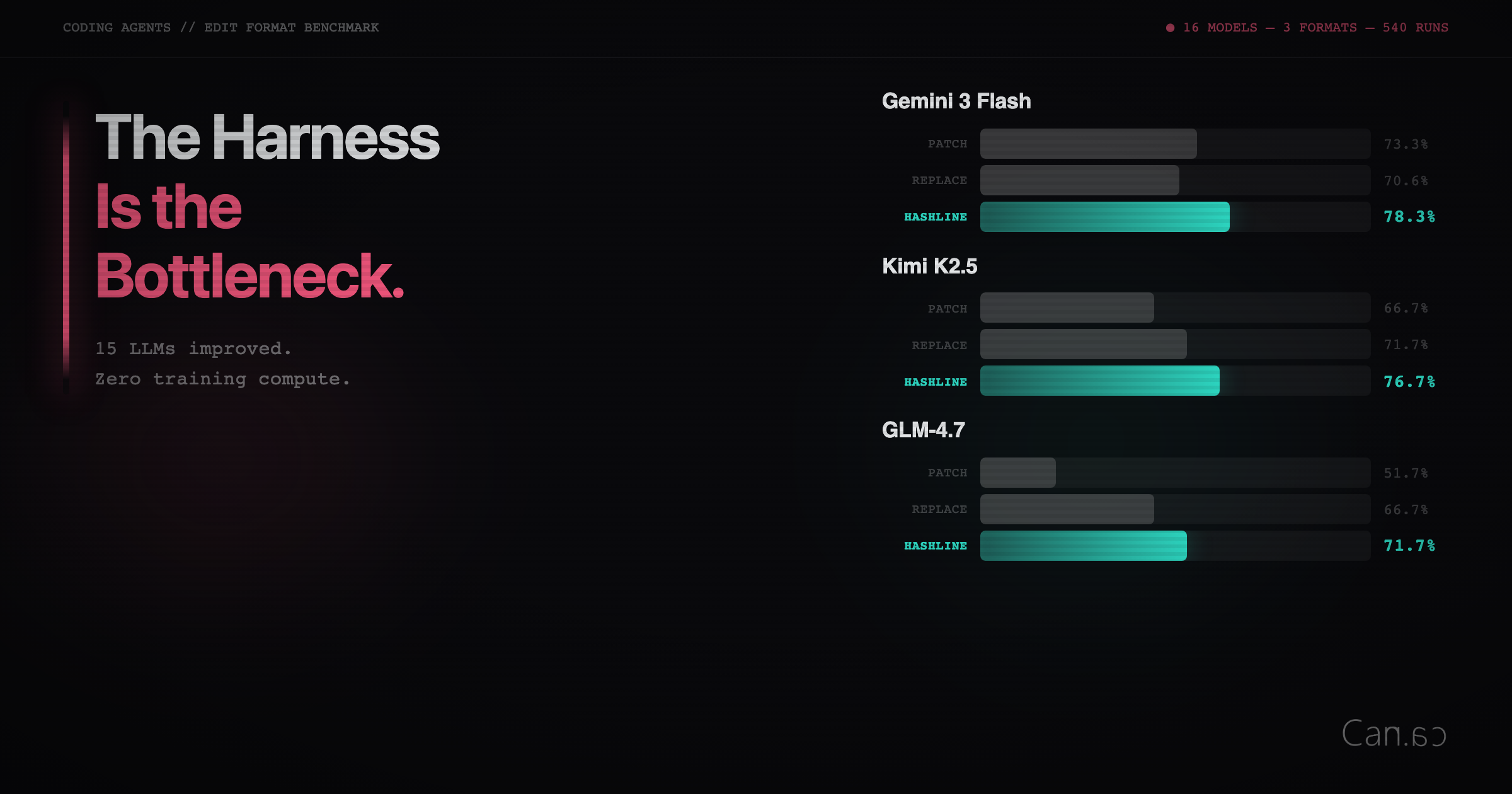
Improving 15 LLMs at Coding in One Afternoon. Only the Harness Changed
Feb 12, 2026

The Harness Is the Thing
Aug 26, 2026

Towards a Harness That Can Do Anything
Jul 15, 2026
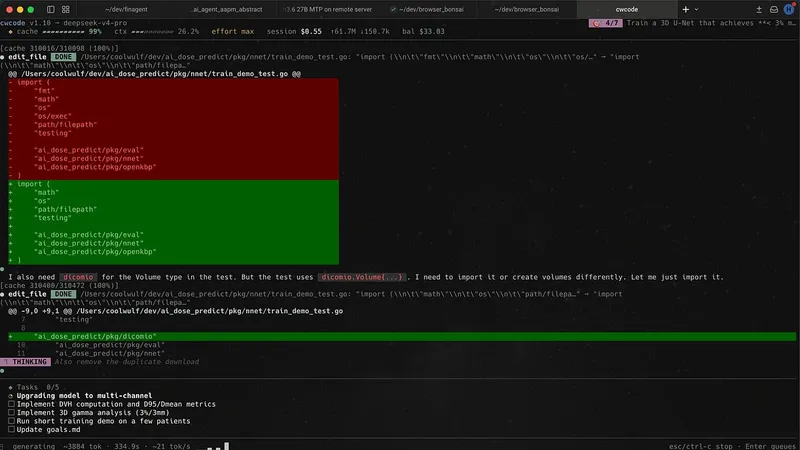
DeepSeek V4 Pro at 5% the cost of Claude – what it takes to close the gap
Jun 16, 2026