Report · techspot.com
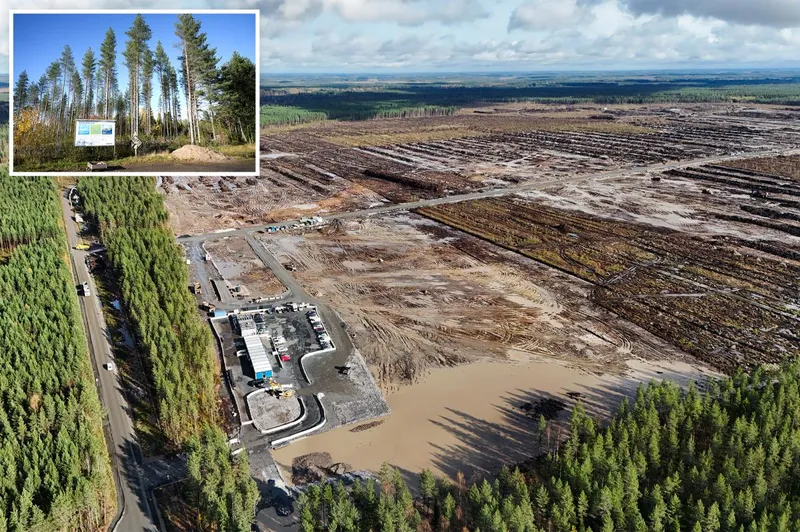
Google cleared 300 hectares of Finnish forest

techspot.com
Source published October 22, 2026
Summary: 1 min read
63/100
Summary
Finland’s Permit and Supervision Agency, LVV, has asked Google’s local project company, Tuike Finland Oy, to explain forest clearing connected to a planned data center expansion. Google is investing €13 billion in AI-focused infrastructure in Finland, but public reports cited by LVV indicate that roughly 300 hectares of forest—about 420 football fields—were cleared before the full project’s environmental impact was assessed. Google said the clearing complied with Finnish laws and regulations and that the site was surveyed before work began to avoid damage to environmentally valuable areas. Hanna Halmeenpää, chair of the Finnish Association for Nature Conservation, disputed that account, saying satellite imagery indicates that areas requiring protection had already been leveled. She has asked LVV to halt construction while authorities determine whether formal approval was required before the clearing. The investigation could suspend work on the project. The proposed development is subject to environmental commitments covering energy sustainability, job creation, and support for the local environment. Large data center projects require substantial land and power resources, intensifying scrutiny of AI infrastructure expansion in Finland and elsewhere.
Key Takeaways
- Finland’s LVV is seeking an explanation from Google’s local company over the clearing of about 300 hectares of forest for a data center project.
- Google plans to invest €13 billion in new AI-focused data center infrastructure in Finland through Tuike Finland Oy.
- Google says the clearing complied with Finnish law and followed site surveys, while the Finnish Association for Nature Conservation says protected areas may have been leveled.
- Hanna Halmeenpää has asked regulators to halt construction while they determine whether the forest clearing required formal approval.
What the discussion said
The thread treated this less as a question of whether 300 hectares changes Finland’s national forest total and more as a test of whether an AI data-center buildout is allowed to outrun environmental law. Several commenters rejected percentage-of-national-forest arguments as beside the point: a small aggregate number does not excuse clearing protected land or splitting adjacent projects into permit-sized pieces to dodge a full impact review. The reported construction halt sharpened the concern that Google may have treated eventual penalties as cheaper than waiting. Others pushed hard for scale and context. Finland is overwhelmingly forested, much of it commercially managed and routinely harvested, while a data center is far less locally polluting than heavy industry. They saw sensational coverage of a roughly three-square-kilometer site as part of a broader anti-data-center backlash, especially if the site is remote and connected to nearby hydro and wind generation. But even these more sympathetic readers generally wanted authorities to establish whether the required review was bypassed. The broader AI-specific anxiety was that facilities serving AI demand consume scarce power, create few jobs, and lock a local landscape into concrete rather than regrowing forest. Proposed remedies ranged from meaningful deterrent fines to conservation offsets, though commenters noted that preserving forest elsewhere cannot recreate a destroyed local ecosystem.
Where opinion split
The sharpest fight was over whether the small size of the clearing makes the outrage overblown. Defenders argued that 300 hectares is negligible against Finland’s vast, managed forests and that data centers are comparatively clean industrial infrastructure. Critics argued that the relevant unit is the damaged habitat and the permitting process: a tiny national percentage is no defense if an AI facility cleared protected land before mandated environmental scrutiny.
Coverage & discussions
Hacker News · techspot.com
Community discussions
Community Sentiment
Positives
- Finland’s immense and actively managed forest base makes a three-square-kilometer data-center site far less climatically consequential than headlines imply.
- Data centers lack the smokestacks, chemical discharge, and extraction footprint of refineries or mineral plants, so AI infrastructure should be judged against real industrial alternatives.
- Remote Finnish sites can sit near hydro and wind capacity, undercutting the assumption that every AI data center necessarily demands new fossil generation.
Concerns
- If adjacent clearings were deliberately sliced into review-exempt applications, AI construction is exploiting process loopholes rather than earning a social license to expand.
- Bulldozing land marked for protection before environmental review turns AI capacity growth into a direct wildlife and habitat-loss problem, not mere paperwork.
- A modest fine would invite a wealthy operator to price illegality into its schedule, rewarding faster AI deployment over lawful environmental review.
- AI data centers draw major electricity while producing relatively few local jobs, leaving host communities to absorb landscape loss and power-price pressure.
Related Articles
Google illegally cut down 250K trees in Finland for data center
Oct 24, 2026

US data centers tripled annual water consumption to 17B gallons
Aug 25, 2026

Jason Kelce Encourages People To Mail Jars Of Pee To AI Data Centers In Bizarre New Ad—And We Don't Know What To Think
Aug 20, 2026

Field measurements of neighborhood-scale air temperature impacts of data centers
Aug 18, 2026

Americans hate AI so much that politicians are losing their jobs over it
Jul 20, 2026