Report · invenglobal.com
Valve Responds to Developers Fearing AI Slop and Clones
invenglobal.com
Source published October 28, 2026
Summary: 2 min read
46/100
Summary
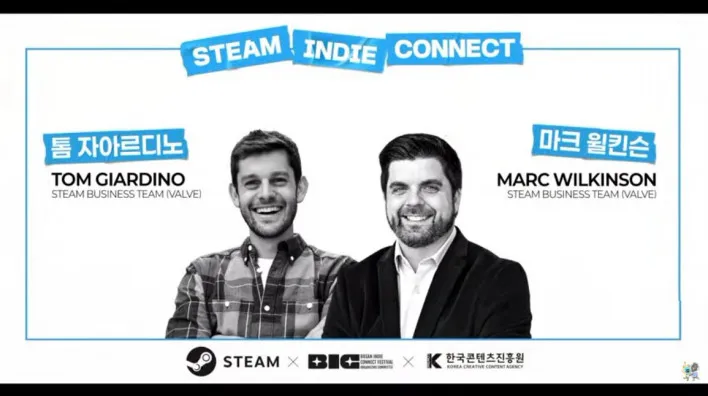
Valve told developers worried about AI-generated clones to build player trust through community engagement and to keep improving games with new features, personality, and creativity. At the October 27 Steam Indie Connect event in South Korea, Steam Business Team members Tom Giardino and Marc Wilkinson said clone games predate generative AI, although AI can accelerate their production. Giardino said Valve would review reported extortion emails threatening to clone and release games first, while describing such threats as primarily a matter for law enforcement. Valve said Next Fest gives games virtually random exposure during its first two days before personalized recommendations take over. Wilkinson acknowledged that this can expose low-quality games and said Valve is considering solutions, but it does not plan to broadly restrict developer access. Steam recently reached 43.5 million concurrent users, according to Valve’s presentation, while South Korean Steam revenue rose 126% over five years. Wilkinson said wishlists do not affect Steam visibility; purchases and play activity drive it. Valve positions wishlists as a way to measure marketing performance. Steam’s Personal Calendar recommends upcoming wishlisted games to players with similar preferences, requires an official release date, and generally stops featuring titles one to two weeks after launch. Valve also released a Wishlist Data API that can filter wishlist data by period, country, and language.
Key Takeaways
- Valve says community trust and continuous updates are the strongest defenses against AI-assisted game clones, because an evolving game identity is harder to copy than a single mechanic.
- Next Fest uses virtually random game exposure for its first two days, then shifts to personalized recommendations; Valve acknowledges that the initial system can surface low-quality games.
- Steam wishlists do not directly affect store visibility, according to Valve. Valve says buying and playing activity drives visibility instead.
- Steam’s Personal Calendar recommends upcoming wishlisted games based on player preferences, but requires an official release date and generally provides exposure only around launch.
- Valve said it still supports virtual reality and described Steam Frame as one part of a broader VR ecosystem that includes Steam Link for Meta Quest and OpenXR support.
What the discussion said
Commenters treated Valve’s reply less as an answer to AI-made clones than as a familiar platform philosophy: creators must build loyal communities because release-day visibility is no longer enough. Critics argued that this misses the immediate damage. AI can let copycats flood storefronts and imitate a game’s pitch, art, or mechanics before the original even launches, so asking tiny studios to out-market that flood feels evasive rather than protective. Several readers shifted the focus from literal copying to discovery. Clones are not new, they said, but AI-scale volume breaks the signals players once used to separate a trusted game from junk. In a marketplace receiving enormous numbers of releases, curation, search quality, and credible quality indicators become the real scarce resources; otherwise Steam risks the unusable abundance associated with mobile app stores. Some went further, saying the storefront already feels exhausting to browse and that recent releases often fail to beat older games. There was a narrower optimistic thread: better services and strong player communities may blunt the problem, and generative AI could deepen modding rather than merely manufacture knockoffs. One example described using an AI assistant to create a substantial custom strategy-game mod successfully. But that optimism was outweighed by frustration that Valve offered no visible moderation, delisting, or legal strategy against low-effort AI clones.
Where opinion split
The sharpest dispute is whether AI clone spam is primarily a developer marketing problem or a platform-governance problem. Defenders of Valve’s posture argue that players will reward compelling games and active communities, while AI tools can even expand fan-made content. Critics say this assumes discovery still works: when automated slop can overwhelm search and mimic a project before launch, Valve must curate, remove abuse, or otherwise protect legitimate creators.
Coverage & discussions
Hacker News · invenglobal.com
Community discussions
Community Sentiment
Positives
- Generative AI can turn modding from a specialist craft into something a player can commission for a single trip, including new factions, mechanics, assets, and content that actually runs.
- Games with durable social communities, mod support, and custom modes may become more valuable as generic AI-made releases multiply, because players have reasons to stay beyond a storefront pitch.
Concerns
- Valve’s advice to cultivate a community dodges the AI-clone threat when imitators can exploit demos and marketing long before an indie game reaches launch.
- AI-scale release volume threatens to destroy the signals players use to identify quality, making a convincing-looking clone far harder to distinguish from the original.
- Without serious curation, Steam could become an endless mobile-store-style catalogue where abundance buries worthwhile games rather than giving players more choice.
- Readers see Valve’s response as empty on enforcement: it offers no concrete filtering, removal, or legal posture for low-effort automated knockoffs.