
AI;DR (AI; Didn't Read)
AI;DR, short for “AI; didn’t read,” is being proposed as a label for declining to read unedited AI-generated text. Rick Manelius credits X user seclilc with coining or publicizing the acronym two days earlier and says it responds to growing frustration with “walls” of AI-written content. Manelius supports AI use for tasks such as sourcing ideas, drafting outlines, and refining prose, and says widespread AI use should be expected by the third quarter of 2026. He draws a distinction between AI-assisted work that people review and edit and raw model output forwarded without human intervention. Under his stated policy, he will not read material whose sender has not taken the time to review and edit it. He identifies customer support as a setting where fully AI-generated responses can be appropriate, because users primarily need functional answers rather than carefully crafted dialogue. He argues that unedited AI output in colleague discussions, newsletters, or social-media posts signals a lack of care, particularly when readers could ask an AI system such as Claude directly. AI;DR is framed as an equivalent to TL;DR for rejecting low-effort AI-generated prose.
rickmanelius.com
2 min
8/17/2026

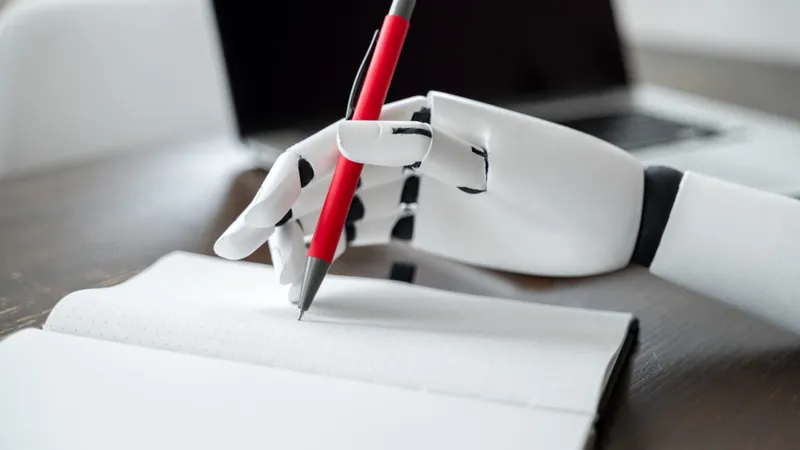
ChatGPT starts blocking direct requests to copy an author's style
OpenAI’s ChatGPT now blocks requests to directly mimic the writing style of famous authors. Instead, it generates responses that reflect the general qualities of those authors while maintaining its own distinct voice.
arstechnica.com
2 min
8/9/2026

The Pentagon is running an AI propaganda mill targeting Latin America
The Pentagon is utilizing an AI-driven content mill called La Tilde to disseminate propaganda to internet users in Latin America. La Tilde, which publishes articles in both Spanish and English, aims to present itself as a modern media brand for Latin American audiences.
theintercept.com
10 min
6/5/2026


I am definitely missing the pre-AI writing era
A technical draft was created with 80% original content but was rejected for failing the "probably written by AI" metric due to grammar and vocabulary checks performed by an LLM engine. The author expressed that striving for perfection compromised their unique voice in the writing.
lesswrong.com
3 min
3/30/2026

Pinterest is drowning in a sea of AI slop and auto-moderation
Pinterest's increased reliance on artificial intelligence has led to user complaints about the degradation of content quality. AI moderation is removing posts and banning accounts, while AI-generated art is dominating feeds, causing confusion with hand-drawn art being misclassified as AI-modified.
404media.co
6 min
2/23/2026
AI;DR (AI; Didn't Read)
AI;DR, short for “AI; didn’t read,” is being proposed as a label for declining to read unedited AI-generated text. Rick Manelius credits X user seclilc with coining or publicizing the acronym two days earlier and says it responds to growing frustration with “walls” of AI-written content. Manelius supports AI use for tasks such as sourcing ideas, drafting outlines, and refining prose, and says widespread AI use should be expected by the third quarter of 2026. He draws a distinction between AI-assisted work that people review and edit and raw model output forwarded without human intervention. Under his stated policy, he will not read material whose sender has not taken the time to review and edit it. He identifies customer support as a setting where fully AI-generated responses can be appropriate, because users primarily need functional answers rather than carefully crafted dialogue. He argues that unedited AI output in colleague discussions, newsletters, or social-media posts signals a lack of care, particularly when readers could ask an AI system such as Claude directly. AI;DR is framed as an equivalent to TL;DR for rejecting low-effort AI-generated prose.
rickmanelius.com
2 min
8/17/2026
ChatGPT starts blocking direct requests to copy an author's style
OpenAI’s ChatGPT now blocks requests to directly mimic the writing style of famous authors. Instead, it generates responses that reflect the general qualities of those authors while maintaining its own distinct voice.
arstechnica.com
2 min
8/9/2026
The Pentagon is running an AI propaganda mill targeting Latin America
The Pentagon is utilizing an AI-driven content mill called La Tilde to disseminate propaganda to internet users in Latin America. La Tilde, which publishes articles in both Spanish and English, aims to present itself as a modern media brand for Latin American audiences.
theintercept.com
10 min
6/5/2026
Do your own writing
Writing a document or essay involves posing and answering questions related to the topic. The rise of large language models (LLMs) is influencing how these questions are approached and answered.
alexhwoods.com
2 min
3/30/2026
Pinterest is drowning in a sea of AI slop and auto-moderation
Pinterest's increased reliance on artificial intelligence has led to user complaints about the degradation of content quality. AI moderation is removing posts and banning accounts, while AI-generated art is dominating feeds, causing confusion with hand-drawn art being misclassified as AI-modified.
404media.co
6 min
2/23/2026
LinkedIn CringeBot 3000
LinkedIn CringeBot 3000 transforms any topic into exaggerated LinkedIn thought leadership content. The tool is designed to create posts that are likely to provoke discomfort among readers.
cringebot3000.com
1 min
8/12/2026
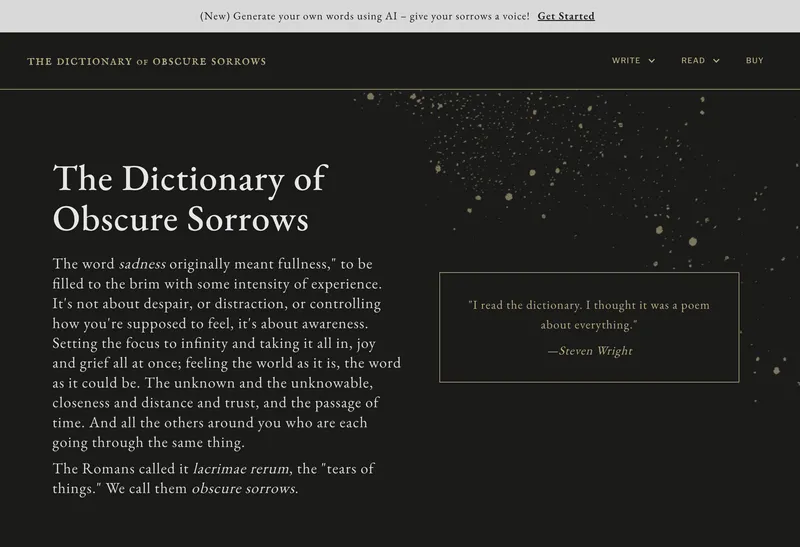
The Wholesale Plagiarism of Obscure Sorrows
A new website for The Dictionary of Obscure Sorrows features a polished design with an author biography, press mentions, and links to purchase the book. The site also includes the entire text of the book without authorization.
waxy.org
9 min
6/20/2026
Various LLM Smells
LLMs can enhance writing by improving vocabulary and sentence structure. Over time, common sentence patterns generated by LLMs have become prevalent across the internet, creating a phenomenon referred to as "AI smell."
shvbsle.in
1 min
5/28/2026
I am definitely missing the pre-AI writing era
A technical draft was created with 80% original content but was rejected for failing the "probably written by AI" metric due to grammar and vocabulary checks performed by an LLM engine. The author expressed that striving for perfection compromised their unique voice in the writing.
lesswrong.com
3 min
3/30/2026
AI;DR (AI; Didn't Read)
AI;DR, short for “AI; didn’t read,” is being proposed as a label for declining to read unedited AI-generated text. Rick Manelius credits X user seclilc with coining or publicizing the acronym two days earlier and says it responds to growing frustration with “walls” of AI-written content. Manelius supports AI use for tasks such as sourcing ideas, drafting outlines, and refining prose, and says widespread AI use should be expected by the third quarter of 2026. He draws a distinction between AI-assisted work that people review and edit and raw model output forwarded without human intervention. Under his stated policy, he will not read material whose sender has not taken the time to review and edit it. He identifies customer support as a setting where fully AI-generated responses can be appropriate, because users primarily need functional answers rather than carefully crafted dialogue. He argues that unedited AI output in colleague discussions, newsletters, or social-media posts signals a lack of care, particularly when readers could ask an AI system such as Claude directly. AI;DR is framed as an equivalent to TL;DR for rejecting low-effort AI-generated prose.
rickmanelius.com
2 min
8/17/2026
The Wholesale Plagiarism of Obscure Sorrows
A new website for The Dictionary of Obscure Sorrows features a polished design with an author biography, press mentions, and links to purchase the book. The site also includes the entire text of the book without authorization.
waxy.org
9 min
6/20/2026
LinkedIn CringeBot 3000
LinkedIn CringeBot 3000 transforms any topic into exaggerated LinkedIn thought leadership content. The tool is designed to create posts that are likely to provoke discomfort among readers.
cringebot3000.com
1 min
8/12/2026
The Pentagon is running an AI propaganda mill targeting Latin America
The Pentagon is utilizing an AI-driven content mill called La Tilde to disseminate propaganda to internet users in Latin America. La Tilde, which publishes articles in both Spanish and English, aims to present itself as a modern media brand for Latin American audiences.
theintercept.com
10 min
6/5/2026
I am definitely missing the pre-AI writing era
A technical draft was created with 80% original content but was rejected for failing the "probably written by AI" metric due to grammar and vocabulary checks performed by an LLM engine. The author expressed that striving for perfection compromised their unique voice in the writing.
lesswrong.com
3 min
3/30/2026
ChatGPT starts blocking direct requests to copy an author's style
OpenAI’s ChatGPT now blocks requests to directly mimic the writing style of famous authors. Instead, it generates responses that reflect the general qualities of those authors while maintaining its own distinct voice.
arstechnica.com
2 min
8/9/2026
Various LLM Smells
LLMs can enhance writing by improving vocabulary and sentence structure. Over time, common sentence patterns generated by LLMs have become prevalent across the internet, creating a phenomenon referred to as "AI smell."
shvbsle.in
1 min
5/28/2026
Pinterest is drowning in a sea of AI slop and auto-moderation
Pinterest's increased reliance on artificial intelligence has led to user complaints about the degradation of content quality. AI moderation is removing posts and banning accounts, while AI-generated art is dominating feeds, causing confusion with hand-drawn art being misclassified as AI-modified.
404media.co
6 min
2/23/2026
No more articles to load