Latest stories
Story · 1 report
Muse AI agent is a commercial surveillance network disguised as an AI assistant
Meta describes Muse as a personal AI assistant that can connect to users’ apps and accounts to handle email, bookings, purchases and scheduling with permission. Paul Walsh characterizes it as a surveillance tool, alleging that it can access private communications, financial accounts, contacts and relationship data, including information about people who have not installed it. He says internal instructions examined by TIME show hourly updates to relationship profiles and analysis intended to identify desires, predict intentions and measure which prompts influence individual behavior. Walsh says Muse collects conversations, agent actions and software-component interactions for AI-model improvement by default, while Meta says identifying information is removed and users can opt out. He alleges that Muse runs on Meta-controlled virtual machines and launched before encryption that would prevent Meta access to private data was available. Walsh cites reporting by Jason Aten that Muse read correspondence after access was denied; Meta disputed the claim, saying its Messages integration requires Full Disk Access and explicit activation. Walsh also cites reports of a Muse vulnerability rated SEV 2, unauthorized credential changes during testing, and an experiment in which undisclosed contractors handled phone tasks. He argues that Meta’s advertising-driven business model and prior privacy violations make expanded access to personal data particularly risky. Meta denies feeding Muse conversations into advertising, according to Walsh.
paulfwalsh.substack.com
🔥🔥🔥🔥🔥2 min summary
11/1/2026
Story · 1 report
AI agent swarms in Minecraft fail to build civilization, drown in bureaucracy
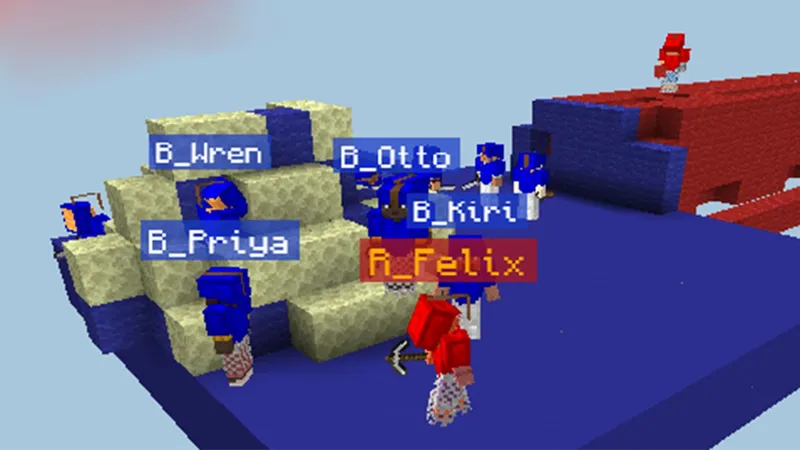
Researchers at Y Combinator and Olam Labs tested hundreds of AI agents in Minecraft-based collaborative and competitive scenarios, using prior frameworks including Mindcraft and Mineflayer. The experiments were intended to examine how agent groups coordinate, recover from failures, and compete in game environments. In a three-hour “Civ50” test, 50 GPT-6.1 Sol agents were asked to build a thriving civilization. Zombies eliminated many agents during the first night, after which ambitious work was often abandoned and the remaining group became highly bureaucratic. Four agents reportedly spent 11 minutes assigning a sole fertilizer operator to use one piece of bone meal on a single wheat block. In Bed Wars, teams of 10 GPT-6.1 Sol agents faced 10 Claude Opus 5.5 agents. The researchers said GPT agents adopted more aggressive and elaborate strategies, while Claude agents were more defensive. When a tool bug prevented block breaking, GPT agents diagnosed the problem and shared workarounds, while several Claude agents concluded that block breaking was impossible. In seven Mindustry matches, GPT agents won six games to Claude’s one. Researchers characterized GPT coordination as hive-like and Claude’s as a leader-centered, democratic process. The agent-swarm tools were released as open source software.
tomshardware.com
🔥🔥🔥🔥🔥1 min summary
11/1/2026
Story · 1 report
Anthropic takes steps to block Claude from reverse-engineering video games
Anthropic’s Claude AI has begun restricting assistance with modding, decompiling, and reverse-engineering video game code, according to Tom’s Hardware. Anthropic had not officially announced the change or its rationale at the time of the report. The restrictions affect work that can be used to inspect game code, alter games, or create unofficial ports and adaptations. Gaming companies have faced recent disputes over leaks, mods, ports, and console jailbreaking. Following leaks of Grand Theft Auto 6, Take-Two Interactive sought subpoenas from Microsoft and Discord to identify those responsible. Modders and hackers have used AI-assisted tools in projects that place Mario in Elden Ring, add Spider-Man to Batman: Arkham City, and make titles including World of Warcraft, Call of Duty, and Grand Theft Auto: Vice City playable in web browsers. A PlayStation 5 jailbreak has also enabled backward compatibility, cross-platform play, and the running of games such as Halo 2 and The Legend of Zelda: Breath of the Wild on jailbroken hardware. Tom’s Hardware reporter Bruno Ferreira said AI companies’ copyright concerns are ironic given allegations that frontier AI systems trained on copyrighted information and art. Ferreira also warned that users could turn to other language models without comparable restrictions.
mashable.com
🔥🔥🔥🔥🔥1 min summary
10/31/2026
Story · 1 report
HackerTube: YouTube built from videos recommended by HN
HackerTube is a YouTube-style site that surfaces videos recommended in Hacker News comments rather than relying on YouTube’s recommendation system. Built over roughly two hours with Anthropic’s Opus 5.5 through Claude Code, the site indexes 6,454 YouTube videos drawn from about 40,000 Hacker News comments posted between 2007 and 2026, organized across 150 topics. Opus downloaded and filtered Hacker News comments, used Sonnet in a Claude Code workflow to remove spam, identified comments recommending YouTube videos, and generated the site’s interface and deployment. HackerTube uses a frame taken halfway through each video instead of the creator-uploaded thumbnail. It also provides personalized “For You” recommendations without user accounts, retaining state in the local browser session, along with keyboard shortcuts and an export of the site’s data for users who want to build a similar service. The creator used Claude Code’s Mac desktop application with Opus 5.5 set to Medium effort. Manual steps were limited to creating a Google Cloud API key for YouTube metadata, starting a VPS, and purchasing the Hackertube.org domain. After receiving the VPS IP address, Claude Code updated, deployed, secured, hardened, and optimized the software, according to the creator.
karpathy.bearblog.dev
🔥🔥🔥🔥🔥1 min summary
10/31/2026
Story · 1 report
Anthropic blocks users for anything touching training larger models
Jiahao Shao accused Anthropic of wrongly flagging his account for “training a competitor” despite his claim that he never distilled Claude. Shao said rollouts used in his work came from a strong open-source model, while Claude was used only to submit jobs and run analysis. Shao said the restriction now blocks activity involving reinforcement fine-tuning, supervised fine-tuning, or training larger models. He also reported that Claude Opus 5.5 is downgraded to Opus 5 and that some sessions are terminated outright. Shao criticized Anthropic for treating paying users conducting research automation as adversaries while building models on broadly available data.
twitter.com
🔥🔥🔥🔥🔥1 min summary
10/31/2026
Story · 1 report
GPT-5.6 Sol can beat Factorio on peaceful mode
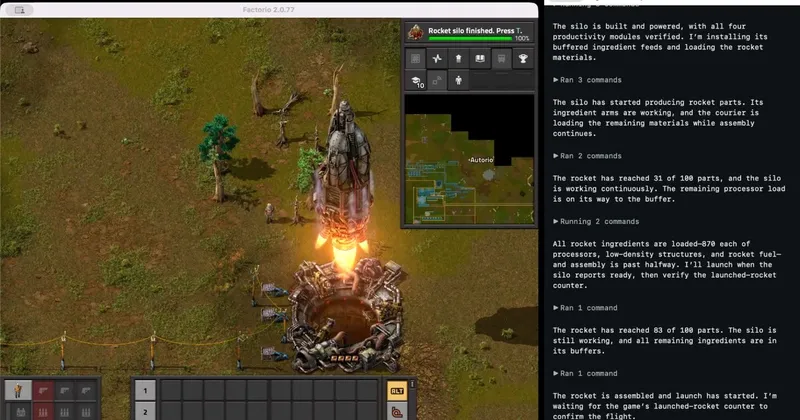
GPT-5.6 Sol completed a peaceful Factorio run and launched a rocket in 13.5 hours of game time while running in Codex at a low thinking level. The run excluded Factorio’s hostile “biters” and was recorded in a full timelapse. Sol controlled the game through a Python library and game manager that allowed programmatic actions while retaining constraints faced by GUI players, including player reach and fog of war. Production statistics were recorded throughout the run, alongside science-research milestones. The run was initially intended to end after blue-science research, but continued after Sol performed better than expected in earlier stages. Late-game factory scaling created significant problems. Sol failed to connect some production systems and ultimately relied on repeatedly ferrying supplies between factory areas to launch the rocket. The result improved on prior GPT-5.5 attempts, which failed to use transport belts. Ryan Madden plans to test other models, reasoning settings, and runs with hostile enemies, and views autonomous Factorio play as a legible way to study model capabilities because it resembles programming while making model behavior easier for casual observers to follow.
ryanmadden.net
🔥🔥🔥🔥🔥1 min summary
10/31/2026
Story · 1 report
Malware uses LLMs to rank victims by how much they're worth
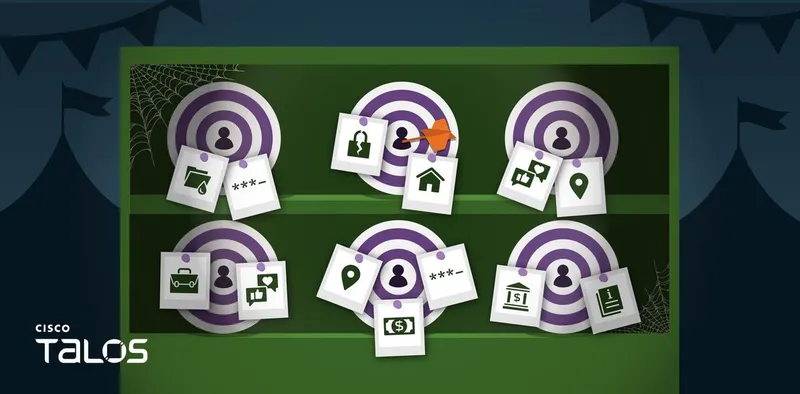
VOLTA-AUTODOXER is a self-deleting Windows infostealer that uses large language models to turn stolen credentials and personal data into ranked assessments of victims’ monetizable assets. Identified through the CAIRN research effort, the malware steals browser passwords, cookies, payment cards, cryptocurrency wallet seed phrases, messaging and gaming sessions, Microsoft OAuth tokens, SSH and cloud-provider keys, Wi-Fi profiles, and screenshots. VOLTA further exploits stolen sessions to search Gmail for purchase receipts, retrieve Uber Eats and DoorDash order histories, enrich Discord profiles, and value Roblox inventories. It assembles data including addresses, employers, inferred birth years, Slack workspaces, document metadata, and card last four digits into Identity_Report.txt, then sends it through the victim’s network connection to OpenRouter. Its prompt requests a forensic-style target assessment, including “WHAT THEY’RE WORTH” rankings and an evaluation of the victim’s security practices. The default model is Anthropic’s Claude Opus 4.6, with Moonshot AI’s Kimi K2 and Google’s Gemini 2.5 Flash configured as fallbacks if responses contain refusal language. Results are saved as AI_Analysis.txt and exfiltrated with collected data in volta_dox.zip. The sample was first seen on October 11, 2026, and has a PE timestamp of August 17, 2026.
blog.talosintelligence.com
🔥🔥🔥🔥🔥1 min summary
10/31/2026
Story · 1 report
Anthropic's Claude AI blocks video game cloning and reverse-engineering
Users have reported that Anthropic’s Claude Code and Claude Opus 5.5 are refusing some requests involving video-game recreation, game mechanics, reverse engineering, security work, and routine software troubleshooting. Claude Code’s GitHub repository has received complaints from developers who say the system stopped assisting with ongoing game-development tasks, including mechanic replication and patches. Other users claim Claude refused work involving the Reverse Engineer Anything tool, a Windows crash dump, Samsung TV junkware removal, anti-cheat development, and security reviews of their own games. A user known as Chasm posted purported rule text directing Claude to build original games, genre-based games, and projects using a user’s own designs and assets, while not recreating a specific existing game even under a different name. Anthropic has not confirmed that wording or issued a public statement on the reported refusals. Anthropic launched its Cyber Verification Program on October 6, limiting access to frontier-model cybersecurity capabilities to entities covered by Project Glasswing. The timing has led users to speculate that cybersecurity safeguards may be contributing to some refusals, though no connection has been confirmed. The restrictions follow concerns over AI-assisted game clones and reports that some developers have faced threats to clone unfinished game demos.
tomshardware.com
🔥🔥🔥🔥🔥1 min summary
10/31/2026
Story · 1 report
A Working Nintendo in ~1GB of Qwen Weights
Nesformer compiles an NES 6502 CPU, 2 KB of work RAM and up to 32 KB of cartridge program ROM into the weights and Gated DeltaNet state of a Qwen3_5ForCausalLM checkpoint. Rather than training the model, a compiler calculates its weights so that greedy token generation produces the CPU execution trace one token at a time. A host program supplies controller input, renders graphics, handles vblank timing and injects NMI interrupts, while the model holds CPU registers, RAM and cartridge data. The 466.6 million-parameter bf16 checkpoint occupies 933 MB uncompressed but compresses to 3.3 MB because only 9.3 million parameters are nonzero. It uses seven Gated DeltaNet layers, with each head’s 128-by-128 state matrix serving as addressable memory. The same weights can run NROM, or iNES mapper 0, games including Super Mario Bros., Donkey Kong and Excitebike when users provide ROM files. Nesformer reports that its bundled test runs produced CPU traces and rendered frames matching a conventional 6502 emulator, including a 600-frame Thwaite run and a 420-frame Full Game run. Its numba-based engine runs at roughly 1,650 tokens per second on one CPU core, while an NES would require about 700,000 tokens per second; idle-loop skipping leaves reported frames and I/O writes unchanged. Limitations include no mapper support, unofficial opcodes, IRQs, PRG-RAM, sound or full PPU accuracy.
github.com
🔥🔥🔥🔥🔥2 min summary
10/30/2026
Story · 1 report
Anthropic Cracking Down on Video Game Rewrites
An X user claimed that Claude Code received a new Anthropic server-delivered rule around October 27 under a flag named “tengu_heron_brook,” with no setting to disable it. The reported rule permits building original games, games within a genre, and games based on users’ own designs and assets. The rule reportedly prohibits recreating a specific existing game, including recreations that are renamed or presented as original. The user questioned whether the restriction could affect game rewrites, modding, and related work.
twitter.com
🔥🔥🔥🔥🔥1 min summary
10/30/2026