
PyTorch: A Reference Language
PyTorch serves as a reference language for deep learning, providing a common framework of APIs and conventions. Reference implementations prioritize clarity over performance, leading to some confusion regarding the term "reference language" in the context of PyTorch.
docs.pytorch.org
4 min
16h ago

Mechanistic interpretability researchers applying causality theory to LLMs
Large language models can perform tasks such as writing essays, solving math problems, and generating code, but their internal reasoning processes are not fully understood. Researchers are exploring ways to make these models and deep neural networks more mechanistically interpretable.
cacm.acm.org
4 min
7/12/2026

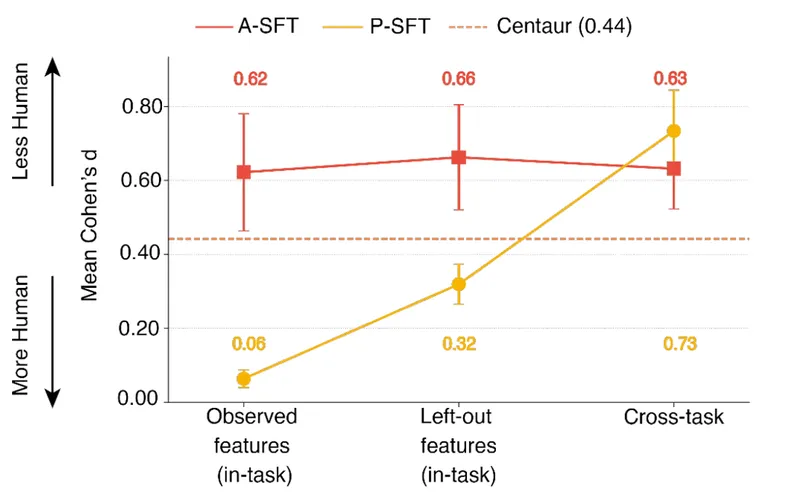
CAPTCHAs can still detect AI agents
AI systems can surpass humans in various tasks but utilize different cognitive processes, allowing for the detection of AI agents and bots. Despite advancements in AI, CAPTCHAs remain effective in certain scenarios, as visual language models can recognize specific objects but may struggle with more complex tasks that require human-like reasoning.
research.roundtable.ai
4 min
5/29/2026

There Will Be a Scientific Theory of Deep Learning
A scientific theory of deep learning is emerging that characterizes key properties and statistics related to the training process, hidden representations, final weights, and performance of neural networks. The research consolidates various ongoing studies in deep learning theory.
arxiv.org
2 min
4/24/2026
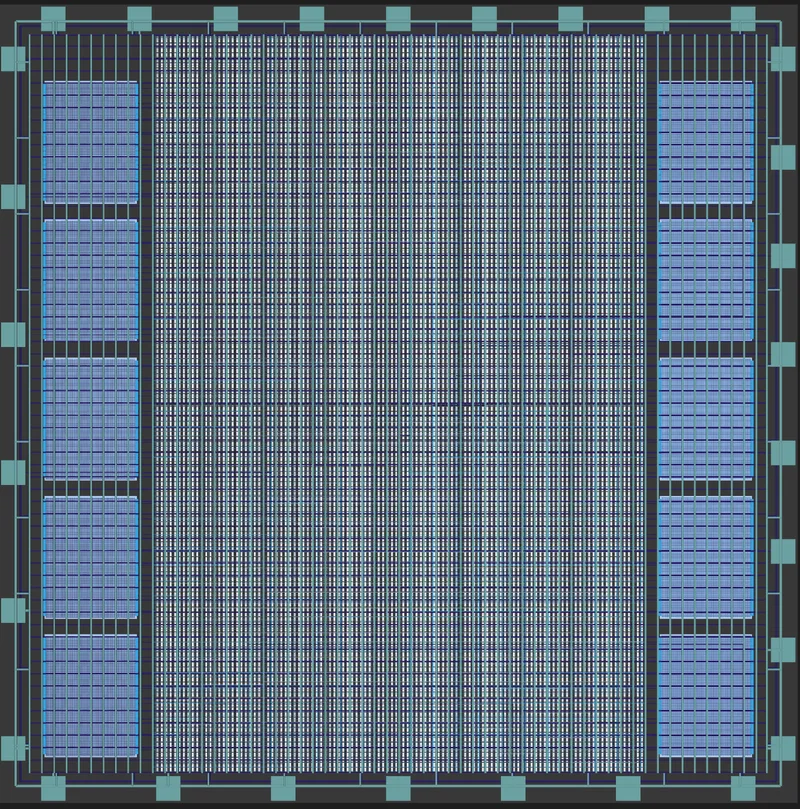
Talos: Hardware accelerator for deep convolutional neural networks
Talos is a custom FPGA-based hardware accelerator designed specifically for executing Convolutional Neural Networks with high efficiency. It reimagines deep learning inference at the circuit level rather than merely reimplementing existing software logic in hardware.
talos.wtf
14 min
3/3/2026

DjVu and its connection to Deep Learning (2023)
DjVu is a file format that offers superior efficiency for storing books and mathematical papers compared to PDF. It incorporates innovations that enhance text processing and storage, particularly beneficial for deep learning applications.
scottlocklin.wordpress.com
9 min
2/15/2026
PyTorch: A Reference Language
PyTorch serves as a reference language for deep learning, providing a common framework of APIs and conventions. Reference implementations prioritize clarity over performance, leading to some confusion regarding the term "reference language" in the context of PyTorch.
docs.pytorch.org
4 min
16h ago
30papers.com – Ilya's 30 essential ML papers, in a beginner friendly format
Ilya Sutskever provided John Carmack with a curated reading list of 30 foundational AI and deep learning papers. The list includes full papers and plain-language explanations of complex terms.
30papers.com
1 min
7/7/2026
CAPTCHAs can still detect AI agents
AI systems can surpass humans in various tasks but utilize different cognitive processes, allowing for the detection of AI agents and bots. Despite advancements in AI, CAPTCHAs remain effective in certain scenarios, as visual language models can recognize specific objects but may struggle with more complex tasks that require human-like reasoning.
research.roundtable.ai
4 min
5/29/2026
Talos: Hardware accelerator for deep convolutional neural networks
Talos is a custom FPGA-based hardware accelerator designed specifically for executing Convolutional Neural Networks with high efficiency. It reimagines deep learning inference at the circuit level rather than merely reimplementing existing software logic in hardware.
talos.wtf
14 min
3/3/2026
Mechanistic interpretability researchers applying causality theory to LLMs
Large language models can perform tasks such as writing essays, solving math problems, and generating code, but their internal reasoning processes are not fully understood. Researchers are exploring ways to make these models and deep neural networks more mechanistically interpretable.
cacm.acm.org
4 min
7/12/2026
DeepSeek open-sources inference optimizations with 60–85% faster generation [pdf]
DeepSpec is an AI tool designed for formal verification of software systems. It utilizes the DSpark framework to enhance the reliability and security of software through formal methods.
github.com
1 min
6/27/2026
There Will Be a Scientific Theory of Deep Learning
A scientific theory of deep learning is emerging that characterizes key properties and statistics related to the training process, hidden representations, final weights, and performance of neural networks. The research consolidates various ongoing studies in deep learning theory.
arxiv.org
2 min
4/24/2026
DjVu and its connection to Deep Learning (2023)
DjVu is a file format that offers superior efficiency for storing books and mathematical papers compared to PDF. It incorporates innovations that enhance text processing and storage, particularly beneficial for deep learning applications.
scottlocklin.wordpress.com
9 min
2/15/2026
PyTorch: A Reference Language
PyTorch serves as a reference language for deep learning, providing a common framework of APIs and conventions. Reference implementations prioritize clarity over performance, leading to some confusion regarding the term "reference language" in the context of PyTorch.
docs.pytorch.org
4 min
16h ago
DeepSeek open-sources inference optimizations with 60–85% faster generation [pdf]
DeepSpec is an AI tool designed for formal verification of software systems. It utilizes the DSpark framework to enhance the reliability and security of software through formal methods.
github.com
1 min
6/27/2026
Talos: Hardware accelerator for deep convolutional neural networks
Talos is a custom FPGA-based hardware accelerator designed specifically for executing Convolutional Neural Networks with high efficiency. It reimagines deep learning inference at the circuit level rather than merely reimplementing existing software logic in hardware.
talos.wtf
14 min
3/3/2026
Mechanistic interpretability researchers applying causality theory to LLMs
Large language models can perform tasks such as writing essays, solving math problems, and generating code, but their internal reasoning processes are not fully understood. Researchers are exploring ways to make these models and deep neural networks more mechanistically interpretable.
cacm.acm.org
4 min
7/12/2026
CAPTCHAs can still detect AI agents
AI systems can surpass humans in various tasks but utilize different cognitive processes, allowing for the detection of AI agents and bots. Despite advancements in AI, CAPTCHAs remain effective in certain scenarios, as visual language models can recognize specific objects but may struggle with more complex tasks that require human-like reasoning.
research.roundtable.ai
4 min
5/29/2026
DjVu and its connection to Deep Learning (2023)
DjVu is a file format that offers superior efficiency for storing books and mathematical papers compared to PDF. It incorporates innovations that enhance text processing and storage, particularly beneficial for deep learning applications.
scottlocklin.wordpress.com
9 min
2/15/2026
30papers.com – Ilya's 30 essential ML papers, in a beginner friendly format
Ilya Sutskever provided John Carmack with a curated reading list of 30 foundational AI and deep learning papers. The list includes full papers and plain-language explanations of complex terms.
30papers.com
1 min
7/7/2026
There Will Be a Scientific Theory of Deep Learning
A scientific theory of deep learning is emerging that characterizes key properties and statistics related to the training process, hidden representations, final weights, and performance of neural networks. The research consolidates various ongoing studies in deep learning theory.
arxiv.org
2 min
4/24/2026
No more articles to load