Top stories
Story · 1 report
HackerTube: YouTube built from videos recommended by HN
HackerTube is a YouTube-style site that surfaces videos recommended in Hacker News comments rather than relying on YouTube’s recommendation system. Built over roughly two hours with Anthropic’s Opus 5.5 through Claude Code, the site indexes 6,454 YouTube videos drawn from about 40,000 Hacker News comments posted between 2007 and 2026, organized across 150 topics. Opus downloaded and filtered Hacker News comments, used Sonnet in a Claude Code workflow to remove spam, identified comments recommending YouTube videos, and generated the site’s interface and deployment. HackerTube uses a frame taken halfway through each video instead of the creator-uploaded thumbnail. It also provides personalized “For You” recommendations without user accounts, retaining state in the local browser session, along with keyboard shortcuts and an export of the site’s data for users who want to build a similar service. The creator used Claude Code’s Mac desktop application with Opus 5.5 set to Medium effort. Manual steps were limited to creating a Google Cloud API key for YouTube metadata, starting a VPS, and purchasing the Hackertube.org domain. After receiving the VPS IP address, Claude Code updated, deployed, secured, hardened, and optimized the software, according to the creator.
karpathy.bearblog.dev
🔥🔥🔥🔥🔥1 min summary
10/31/2026
Story · 1 report
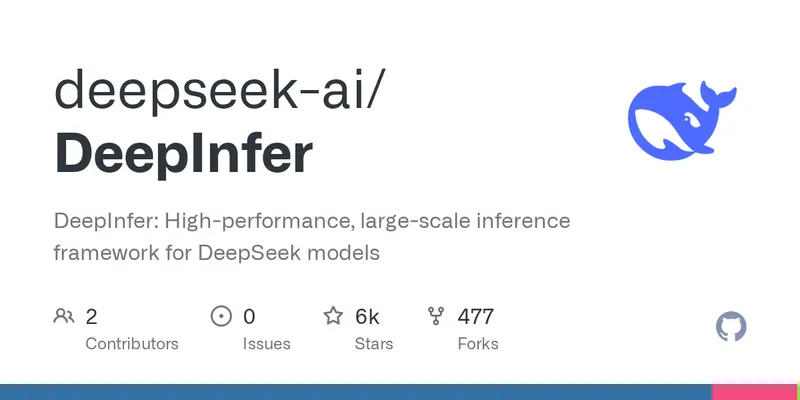
DeepSeek just open-sourced its inference engine
DeepSeek has open-sourced DeepInfer, the high-performance inference framework used in its large-scale production services. The release supports offline inference for DeepSeek-V4.1-Flash and includes optimized kernels and model and sampler runtimes. Its parallelism features include attention data parallelism, balanced context parallelism, mixture-of-experts expert parallelism, and expert parallel load balancing. DeepInfer uses FlashMLA, DeepGEMM, DeepEP, TileKernels, DeepSelect, and custom TileLang kernels. The framework supports DSpark and confidence-scheduled verification to accelerate decoding with draft tokens, decoder sliding-window-attention bounded replay to reduce prefill work, and asynchronous scheduling that overlaps CPU batch scheduling with device execution. It can provide batch-invariant inference and deterministic sampling on NVIDIA hardware, and it can constrain outputs with regular expressions, JSON schemas, or EBNF grammars. Supported hardware includes NVIDIA SM100 GPUs and Huawei Ascend 950 NPUs. DeepInfer requires Linux, GCC 13 or newer, and Python 3.12, plus CUDA 13 for NVIDIA or CANN 9.2 for Ascend. A complete serving system still requires components such as a KV-cache system, prefill/decode disaggregation, and load balancing across data-parallel replicas. DeepInfer is available under the Apache License 2.0.
github.com
🔥🔥🔥🔥🔥1 min summary
10/20/2026
Story · 1 report
We're releasing the weights of Mistral Large 4
Mistral has released the weights for Mistral Large 4, also called Le Chonk, a 1-trillion-parameter natively multimodal mixture-of-experts model that had entered public preview earlier in the month. The open-weight model is designed for coding, agentic workflows, defensive cybersecurity and enterprise tasks, and offers low, medium and high reasoning modes to balance cost and performance. Mistral says the model was trained from scratch on European infrastructure and can be inspected, customized and self-hosted. Mistral reports that three additional weeks of reinforcement learning raised its FrontierCode 2.0 score to 19.7% and its Terminal-Bench 4.0 result by 13 percentage points to 41%. On the Artificial Analysis Coding Agent Index, it scored 48% while using 47% fewer tokens per task on average than GLM-5.3, according to Mistral. The company also reports a 51% score on the Artificial Analysis Cyber Index and a 96.6% average refusal rate for malicious cybersecurity requests. A specialized cybersecurity version is being previewed with vetted enterprise partners for authorized testing. Mistral Large 4 is available through Mistral Studio, the Mistral API, OpenRouter, Hugging Face, Microsoft Foundry and NVIDIA-hosted endpoints. API pricing starts at $0.70 per million input tokens and $2.10 per million output tokens. Its modified MIT-style license permits use, modification, fine-tuning and commercialization, except Model-as-a-Service providers require a separate commercial license.
mistral.ai
🔥🔥🔥🔥🔥2 min summary
10/29/2026
Story · 1 report
Anthropic S-1
An SEC filing link identifies Anthropic, PBC and an S-1 document labeled “Q2.” The source provides no filing details, financial figures, dates, business information, or statements from Anthropic. The link was posted by SiNTEx and had a score of 1,064 points and 989 comments at the time reflected in the source.
sec.gov
🔥🔥🔥🔥🔥1 min summary
10/26/2026
Story · 1 report
Kimi K3.1 Pro and K3.1 Pro Highspeed
Kimi has introduced Kimi K3.1 Pro, a post-trained successor to Kimi K3 and its most capable 3-trillion-parameter-class open-weight model, with a one-million-token context window. Kimi K3.1 Pro Highspeed is also available, offering two to three times the standard model’s speed. Both models are available through Kimi.ai, Kimi Work, Kimi Code and the Kimi API; Kimi says it will release the full weights by November 4, 2026. Kimi reports that K3.1 Pro scored 65.7% on Terminal-Bench 4.0, compared with 58.2% for GPT-6 Astra and 66.4% for Claude Opus 5.5, and 61.2% on its internal Kimi Code Bench 3.0 Long-horizon, up from K3’s 55.95%. It reported a 92.7% tool-enabled score on BenchCAD and an OfficeQA Pro v2 score of 64.4. Kimi also said its internal stress test measured a claim-level hallucination rate of 8.3%, down from 23.4% for K3; those figures are not daily-use error rates. For the open-weight release, Kimi removed cyber-related data from mid-training and filtered cyber tasks from reinforcement-learning environments. On its xdev-bench-hard vulnerability benchmark, Kimi said a checkpoint without those measures achieved 90.5% pass@3, while the final model achieved 81.0%. Kimi said the controls reduced cyber capability while retaining general coding usefulness.
kimi.ai
🔥🔥🔥🔥🔥1 min summary
10/23/2026
Story · 1 report
Backdoor in Claude Code for VS Code extension on the Cursor Marketplace
Phorion reported that version 2.1.313 of the official Claude Code for VS Code extension on the Cursor Marketplace was compromised with a backdoor for macOS, Linux, and Windows. Cursor removed the release and also pulled version 2.1.313 from the NPM and VS Code registries. The injected code runs when Node loads the extension bundle, before users interact with the extension, and inherits the permissions of the IDE and signed-in user. The payload adds an attacker-controlled Ed25519 key, labeled svc-telemetry, to the user’s ~/.ssh/authorized_keys file, then attempts to enable SSH and create a reverse SSH tunnel to 134.209.82[.]225. It establishes persistence through a macOS LaunchAgent, a Linux @reboot cron entry, or Windows scheduled-task and Startup-folder mechanisms. The malware also reports host details, Git email, public IP address, setup status, and up to 40 environment-variable names matching terms such as KEY, TOKEN, SECRET, AWS, or GCP; it does not collect those variables’ values. On macOS, a privilege-checking flaw can prevent the payload from enabling Remote Login when SSH was previously disabled, reducing the effectiveness of inbound access. The installed SSH key and persistence mechanisms can still remain active, and the backdoor can work if Remote Login is already enabled or enabled later. Phorion advised organizations to investigate systems that used version 2.1.313 and remove persistence artifacts, planted keys, and active tunnels.
phorion.io
🔥🔥🔥🔥🔥2 min summary
10/30/2026
Story · 1 report
Gemini 4 Carbon
Google has announced Gemini 4 Carbon, a frontier AI model focused on long-horizon engineering, coding and cybersecurity defense. Google says Carbon leads version 5.0 of the Artificial Analysis Intelligence Index with a score of 59 and will initially be available this week to a subset of cyber defenders, with broader access phased through its Fairwind Program. Google is participating in the U.S. government’s voluntary pre-release model-testing process before extending access to developers, businesses and consumers. Carbon is priced at $2 per million input tokens and $10 per million output tokens, matching Gemini 4 Argon’s introductory pricing; cached input tokens receive a 95% discount. Google says the model can sustain agentic engineering workflows for days, including diagnosing and patching subtle defects in large codebases. It scored 88.2% on SEC-bench Pro for vulnerability discovery, 54.8% on ExploitGym for exploitation, and 71.0% on CWE-bench for patching, all evaluated without guardrails. Google reports that Carbon reduced high-severity misalignment alerts by almost 80% in internal live coding environments, cut unsupported claims by about half relative to Argon, and achieved a 0.0% attack-success rate on Gray Swan’s Indirect Prompt Injection benchmark. It also scored 1768 on WebDev Arena, ranking fourth after an 89-point increase.
blog.google
🔥🔥🔥🔥🔥1 min summary
10/28/2026
Story · 1 report
We should be more ambitious with the software we build
Dan Luu argues that increasingly capable coding models let individuals build software projects that were previously too costly in time or expertise, while warning that fast generation does not ensure correctness, performance, or maintainability. He says he built a customizable regex engine, a faster ripgrep fork for his workloads, and a Rust-related build-speed tool in a low single-digit number of hours with AI assistance; he estimates these projects would previously have taken a year or more to reach “works for me” quality. He says newer models have also made it easier to implement techniques from papers and codebases in specialized areas such as board-game AI. Luu reports that GPT-6 Astra passed registered zstd implementation tests more than 99% of the time in his evaluations and cost about $1 per implementation, though he says more ambitious tasks such as IMAP and Pandoc remained useful tests. He advocates building systems with self-checking properties, including fuzzing, property-based testing, consistency checks, and formal verification, rather than relying on one-shot AI output. Yossi Kreining cautions that most users should moderate their ambitions because many problems lack clear pass/fail criteria and AI-generated systems can become opaque, brittle, and hard to maintain. Luu also says pgrust is not yet suitable as a primary production database, citing founder Michael Malis’s September 17, 2026 statement that its query engine still has regressions and unsupported complex queries.
danluu.com
🔥🔥🔥🔥🔥2 min summary
10/24/2026
Story · 1 report
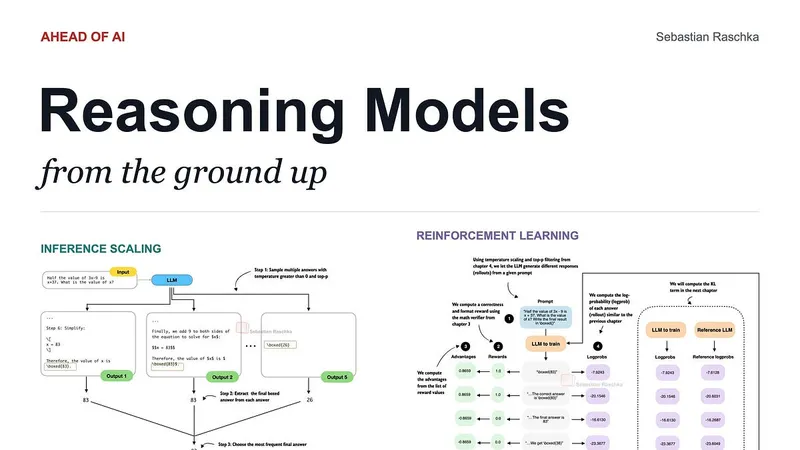
Sebastian Raschka's from-scratch video course on building reasoning models
An eight-video, 11-hour coding course teaches developers to build and improve a small reasoning model in Python and PyTorch, beginning with a pre-trained Qwen3 0.6B model. The materials cover model loading, streaming text generation, KV caching, model compilation, evaluation, inference-time scaling, reinforcement learning, and distillation. Python and PyTorch familiarity are recommended; early generation and evaluation exercises can run on a CPU, while later training experiments are more practical on a GPU. The course builds a math-answer verifier and uses the MATH-500 benchmark to evaluate models. It implements temperature scaling, multinomial sampling, top-p filtering, self-consistency voting, scoring based on token and sequence log probabilities, and self-refinement. Later lessons implement a simplified Group Relative Policy Optimization method for reinforcement learning with verifiable rewards, including response groups scored by the verifier, training metrics, clipped policy ratios, and KL-loss terms. The final lesson distills reasoning behavior from DeepSeek R1-generated answers through supervised training and compares distilled-model results on MATH-500. The videos accompany the book Build a Reasoning Model (From Scratch), and a separate 90-minute LinkedIn Learning course provides a conceptual overview of inference-time scaling, reinforcement learning, and distillation.
magazine.sebastianraschka.com
🔥🔥🔥🔥🔥1 min summary
10/26/2026
Story · 1 report
Hacker reverses Samsung TV, finds on-board AI listening OpenAI account suspended
A Reddit page titled “Hacker reverse engineers his Samsung TV and finds on-board AI listening for sounds of dog and baby, proceeds to get his account suspended by OpenAI” is linked from the r/antiai community. The available page text does not provide evidence or details supporting the title’s claims about Samsung televisions, sound detection, reverse engineering, OpenAI, or an account suspension. The visible content consists of Reddit’s general site messaging, including “This is wild,” an invitation to join the platform, and references to its User Agreement and Privacy Policy. No technical findings, dates, device models, software details, or statements from Samsung or OpenAI are included in the supplied text.
reddit.com
🔥🔥🔥🔥🔥1 min summary
10/24/2026