Autoresearch: Agents researching on single-GPU nanochat training automatically
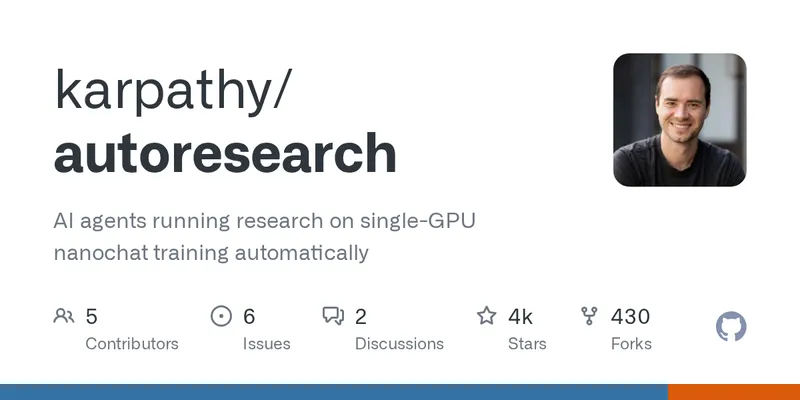
github.com
March 7, 2026
4 min read
🔥🔥🔥🔥🔥
57/100
Summary
GitHub repository karpathy/autoresearch features AI agents that autonomously conduct research on single-GPU nanochat training. These agents represent a significant evolution in AI research methodology, operating independently within compute cluster environments.
Key Takeaways
- The GitHub repository contains a framework for autonomous AI agents to conduct research on a single-GPU nanochat training setup.
- The AI agents modify training code, run experiments for 5 minutes, and log results to improve model performance without human intervention.
- The project requires a single NVIDIA GPU and includes three main files: prepare.py, train.py, and program.md, which facilitate data preparation, training, and agent instructions, respectively.
- The training metric used is validation bits per byte (val_bpb), with a lower value indicating better performance.
Coverage & discussions
Hacker News · github.com
Community discussions
Community Sentiment
Positives
- The concept of agents autonomously conducting research could revolutionize how we approach AI development, making it more efficient and scalable.
- As AI capabilities advance, the potential for automating tasks through trial and error environments suggests a future where human oversight is minimized.
Concerns
- The reliance on hyperparameter changes raises questions about whether the LLM's approach is genuinely innovative or merely random adjustments that may not yield significant improvements.
- There is skepticism about the effectiveness of using a less capable LLM for research, as it may not lead to meaningful breakthroughs despite the interesting methodology.
Related Articles
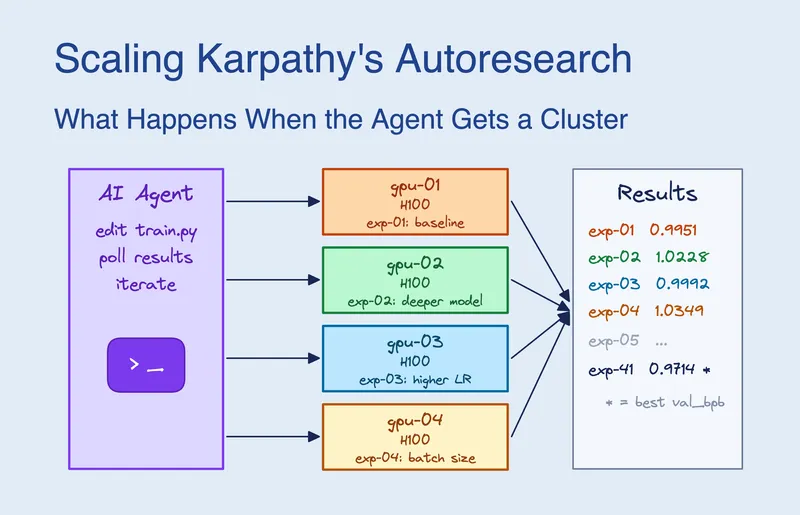
Scaling Karpathy's Autoresearch: What Happens When the Agent Gets a GPU Cluster
Mar 19, 2026
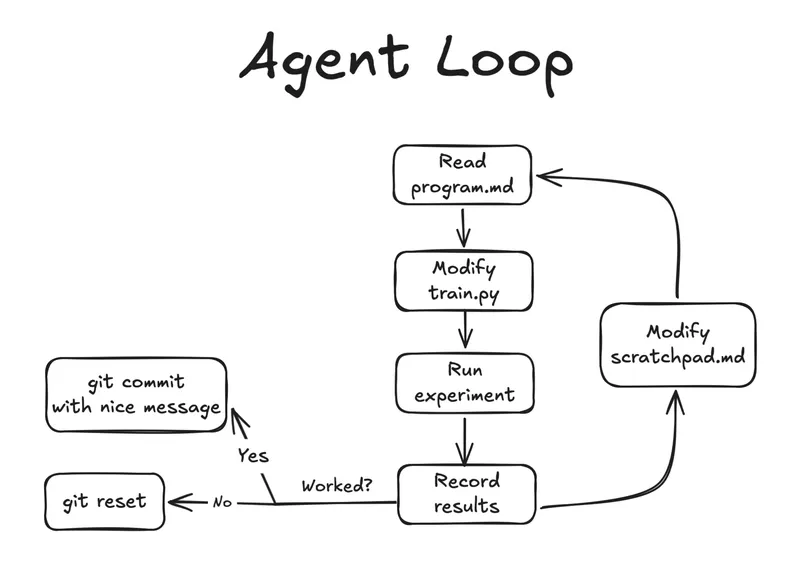
Autoresearch on an old research idea
Mar 23, 2026
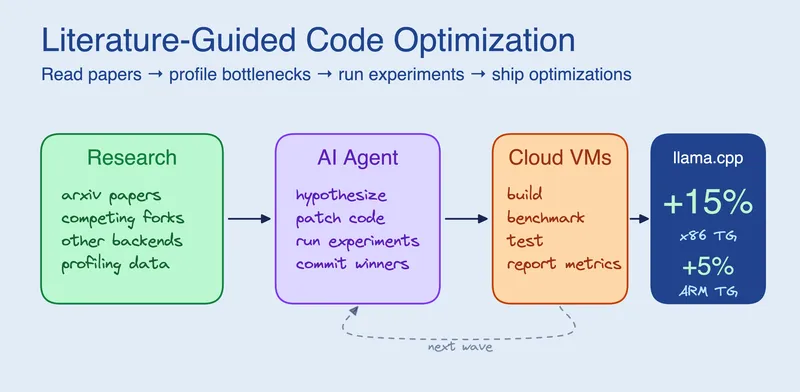
Research-Driven Agents: When an agent reads before it codes
Apr 9, 2026
Nanobot: Ultra-Lightweight Alternative to OpenClaw
Feb 5, 2026
Autoresearch for SAT Solvers
Mar 19, 2026