Research-Driven Agents: When an agent reads before it codes
blog.skypilot.co
April 9, 2026
9 min read
🔥🔥🔥🔥🔥
58/100
Summary
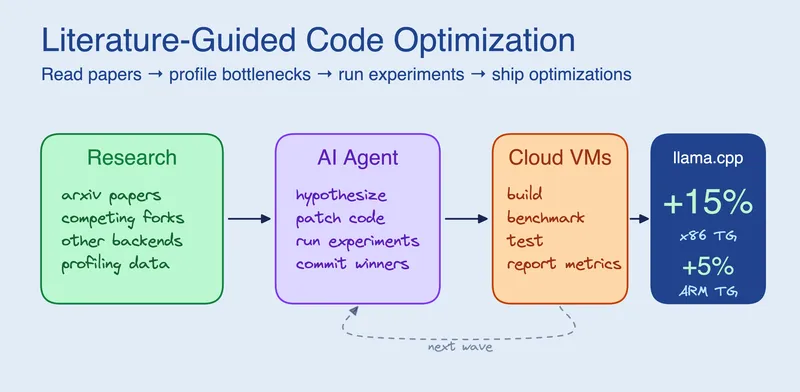
Coding agents achieve improved optimizations by incorporating a literature search phase before coding. In a test using llama.cpp with four cloud VMs, the agents generated five optimizations that enhanced flash attention text generation by 15% on x86 and 5% on ARM within approximately three hours.
Key Takeaways
- Coding agents that read research papers and study competing projects generate optimizations that code-only agents miss, leading to significant performance improvements.
- In experiments, the addition of a literature search phase resulted in five optimizations that enhanced flash attention text generation speed by 15% on x86 and 5% on ARM.
- The total cost for the optimization process was approximately $29, utilizing four cloud VMs over three hours.
- Code-only agents struggle with optimization problems where the solution lies outside the codebase, as they lack the necessary domain knowledge to identify performance bottlenecks.
Community Sentiment
Positives
- Utilizing RST for feeding Arxiv papers to LLMs improves token efficiency and fidelity, which is crucial for effective summarization and knowledge extraction.
- Agent Tuning provides a method to quantify an agent's self-reflection capabilities, enhancing the understanding of how coding agents process instructions.
- Incorporating a directory of annotated papers in projects can significantly improve the quality of AI applications by leveraging existing research, thus fostering innovation.
Concerns
- The reliance on guessing optimizations without profiling indicates a lack of systematic approaches in AI development, which could lead to inefficient solutions.
Related Articles
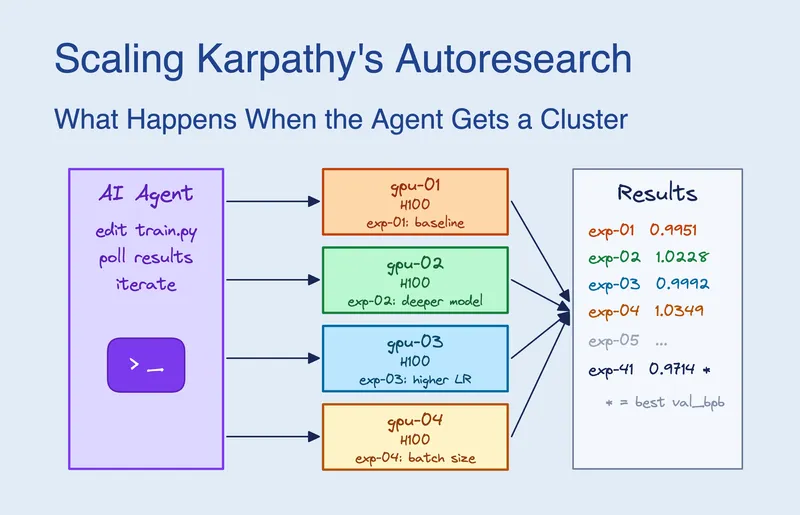
Scaling Karpathy's Autoresearch: What Happens When the Agent Gets a GPU Cluster
Mar 19, 2026
Autoresearch: Agents researching on single-GPU nanochat training automatically
Mar 7, 2026
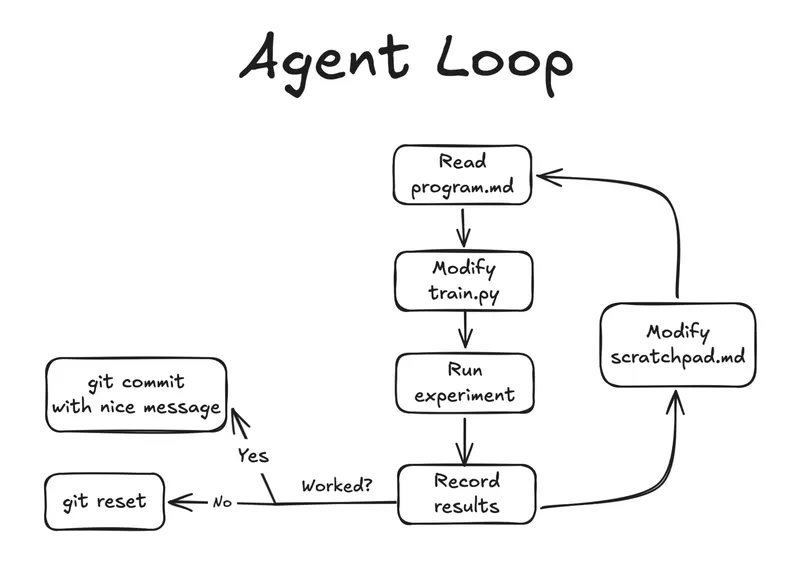
Autoresearch on an old research idea
Mar 23, 2026
Laguna S 2.1
Jul 21, 2026
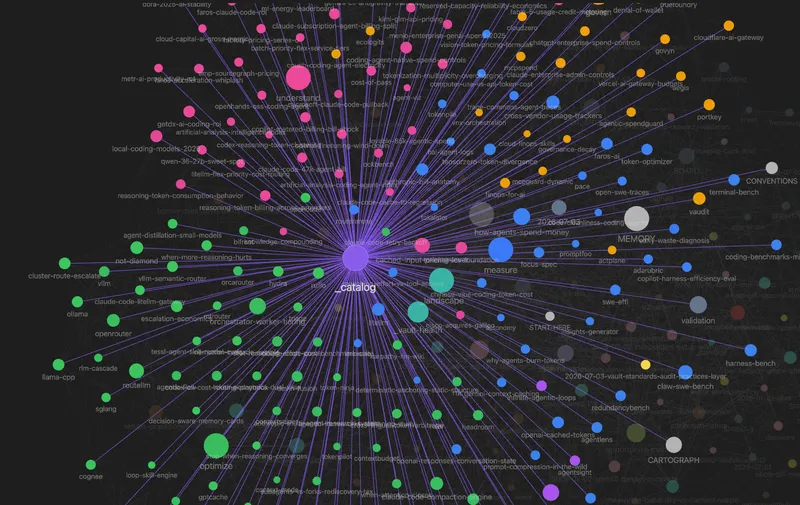
I burned all my tokens researching how to save tokens
Jul 19, 2026